
News
Choosing Curtains and Blinds: Fabric, Pattern and Colour in a Bespoke Interior

Nov
Photograph by Beata Heuman.
Choosing bespoke curtains and blinds involves more than selecting a fabric and pattern. The proportions of the room, the character of the textile and the way a motif is arranged all contribute to the finished result. Here, we explore some of the choices involved, from Italian linen and hand-printed designs to decorative fabric panels.
Start with the Room
Before selecting a fabric or a pattern, it helps to look at the room as a whole. Its proportions, the architecture of the windows, the colours already present and the way natural light enters all have a part to play. A room with patterned wallpaper or richly decorated furnishings presents different possibilities from one with plain walls and a more restrained interior.
The size of the room is worth considering, but it doesn’t dictate the choice. A small living room with walls painted in a soft shade such as Dimity, for example, might benefit from a little more colour and character at the window. A botanical design in green could introduce a welcome contrast and give the room a focal point. In a larger living room, perhaps with wallpaper throughout or a strongly coloured wall, curtains or blinds might pick up one or two existing shades, connecting different elements of the decoration.
The pattern itself should feel at home in its surroundings. Its scale, the amount of detail and the way it is arranged all influence the effect it creates. Practical considerations matter just as much: privacy, the amount of daylight required and the way a room is used help determine what will work well at the window.
Choosing the Fabric
The character of a curtain or blind begins with the textile itself. Weight and weave also influence the choice, as two fabrics in a similar shade can have quite a different appearance and feel.
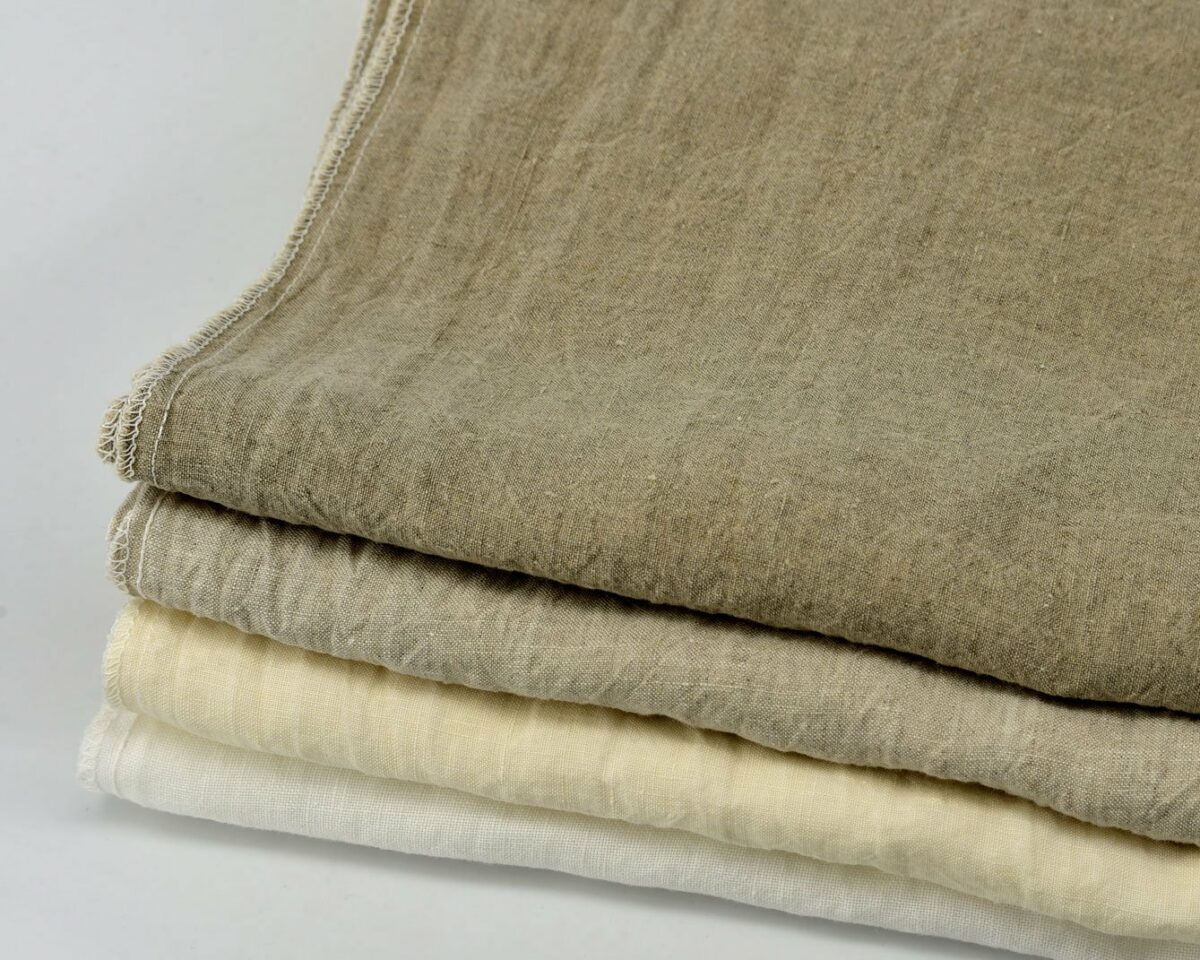
Linen is central to AllÓRA’s selection for curtains and blinds. Three options are available: Canapone Linen, at 500 g/m²; Linen 500, at 200 g/m²; and Canvas Linen, at 400 g/m². Each has its own weight and texture, offering a different starting point for a project.
Canapone Linen is the fabric most frequently selected for AllÓRA curtains and blinds. It has a substantial weight and a pronounced woven texture. Linen 500, at 200 g/m², and Canvas Linen, at 400 g/m², offer alternatives to its heavier weight. The most suitable fabric depends on the window, the intended decoration and the overall effect sought.
To help with the decision, AllÓRA can provide samples of the plain fabrics, as well as sections showing the available hand-painted and hand-block-printed designs. Seeing and handling the textiles makes it easier to appreciate their qualities before settling on a particular combination.


You can explore the available options in AllÓRA’s linen fabrics collection.
Choosing the Decoration
Once the fabric has been selected, the next decision is how much decoration the interior calls for. Plain linen allows the weave to remain the main feature. Alternatively, the fabric can be hand-painted in a single shade chosen from the available colour chart, or decorated with a printed motif.
The designs range from botanical patterns, with flowers and leaves, to geometric motifs and stripes. More elaborate ornamental and brocade-inspired designs offer another possibility, particularly when a more detailed pattern is wanted.
The background colour, the size of the motif and the space between its elements all influence the finished appearance. A pattern that looks prominent on a small fabric sample may have a very different effect when repeated across the full width and height of a curtain. Equally, a more restrained motif can become a defining detail against a simple interior.
A plain or painted fabric may be a good choice alongside patterned wallpaper or elaborate furnishings. In a quieter setting, a printed design can bring more detail to the window. Looking at the fabric in relation to the other elements in the room helps guide the decision.
When Stripes Become Part of the Interior
Stripes can emphasise the shape of a window and introduce a strong line into a room. Their effect depends on their width, spacing and arrangement, as well as the colours used.
The interiors designed by Beata Heuman offer two examples. In the kitchen, the Roman blinds feature hand-printed stripes, bringing colour and definition to the windows. In the dining area, hand-printed striped curtains carry the motif into a different setting. Together, the photographs show how the same type of decoration can be used across different window dressings.


Adapting a Design to a Window
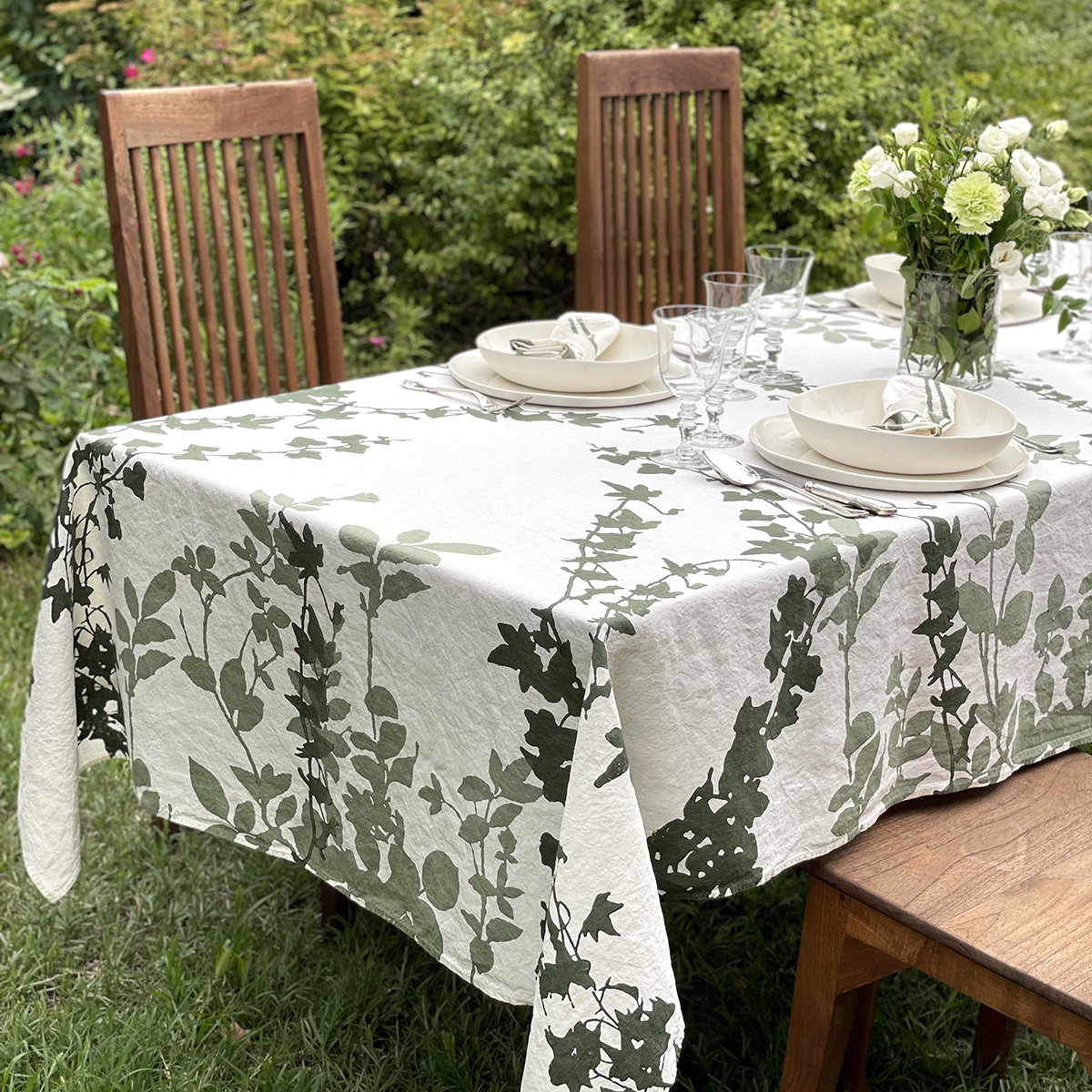
Existing designs can provide a starting point for a bespoke project. Clients and interior designers can explore patterns in AllÓRA’s Design Archive and among the designs available in our Homeware collection, then consider how a chosen motif might be adapted in its colour, scale or arrangement to suit a particular window. The Acanthus and Fleure Sauvage curtains show how these decisions can alter the appearance of a design.
For one client, the Acanthus motif was block-printed in grey on natural Canapone Linen, with the arrangement chosen for her curtains. The same design appears on the yellow blind shown in the hero photograph. Here, the background colour and placement are different, giving the motif another expression.
The photographs of the curtains show part of the process, from selecting the colour to seeing the printed sample and the completed work.


The Fleure Sauvage curtains offer a different example. Here, the motif remains the same, but its position changes. In one version, the floral pattern runs down the sides of the curtain; in the other, it forms bands across the top and bottom. The two arrangements frame the window in distinct ways.


The Work Behind the Design
Some projects begin with an existing motif that needs adapting; others call for a new design. In the latter case, the design is developed with AllÓRA and its Italian artisan partners, taking account of the chosen fabric, the colours and the intended use.
Two techniques used on AllÓRA’s decorated textiles are hand-painting and hand-block printing. In block printing, a carved wooden block transfers the motif onto the cloth. With hand-painting, the artisan applies colour and detail directly to the fabric using a brush. The techniques can also be combined, bringing painted areas and printed details together in a single composition. The choice depends on the motif and how it is to be expressed on the fabric.
Velvet offers another option for decorated curtains and blinds. Unlike linen, it has a pile, giving the textile a softer feel and a different appearance. The photograph shows an ornamental motif against the velvet, bringing together the texture of the material and the detail of the decoration. It is an alternative to explore when the character of the textile is as important to the design as the motif itself.

Beyond the Window: Decorative Fabric Panels
Decorated fabric can also be used to create panels for walls. AllÓRA can prepare these using designs and colours from the collection, or develop an arrangement for an individual project.
The fabric need not be the same as the one chosen for the curtains or blinds. Linen 500, for example, may be selected for a panel even when a different material has been used elsewhere in the room. The decoration can be hand-painted, hand-block-printed or created using both techniques.
AllÓRA supplies the decorated fabric sections, prepared to the measurements requested for the project. Frames and hanging structures are not supplied; the client or interior designer chooses the mounting system. The fabric might be stretched within a frame, fixed to a wooden or other structure, or hung from a simple pole. Depending on the arrangement, it can sit almost flush with the wall or project slightly, with the fabric hanging freely.
A larger composition, measuring approximately 7 metres wide by 3 metres high, can be made from several sections rather than one continuous piece. The motif is planned across them so that it continues coherently when they are brought together. For instance, six wooden frames of different sizes can be accompanied by six corresponding pieces of decorated fabric, each made to the required measurements and forming part of the same overall layout.
There is no standard size or fixed arrangement. A large wall might call for one substantial panel; another space may be better suited to several smaller sections. The dimensions and layout are worked out around the available area.

The fabric is first painted by hand and left to dry before the artisan applies the motif using carved wooden blocks.
Colour and Sunlight
Sunlight deserves attention when choosing textiles for windows. The amount of direct exposure depends on the orientation of the window, its surroundings and the time of year. A fabric in a bright room may experience quite different conditions from one used in a less exposed setting.
For certain decorated textiles, AllÓRA’s Italian artisan partners use Indanthrene dyes. These are valued in the textile industry for their colourfastness, including resistance to light. On the decorated fabrics discussed here, colour and motif are applied through hand-painting, hand-block printing or a combination of the two, rather than by dyeing the entire fabric as a single process.
This is a useful consideration when discussing a project, but it does not mean that all windows receive the same exposure or that colour is unaffected by prolonged sunlight. The position of the window and the conditions in the room should form part of the conversation when selecting the material and decoration.

Why Samples Matter
A photograph can give a good impression of a colour or pattern, but it cannot show every aspect of a textile. Looking at samples in the room where the curtains or blinds will be used gives a more reliable sense of how they will appear.
Daylight and artificial lighting can alter the appearance of a shade, while nearby walls, flooring and furnishings influence how it is seen. If the window receives direct sunlight, it is worth observing the sample in those conditions too.
When choosing a decorated fabric, consider the motif alongside the background. Its scale and spacing on a small section will not necessarily give the same impression as the full design across a curtain or blind. Comparing a plain fabric with a decorated one can also help establish how much pattern feels right for the interior.
Taking time to reflect on the samples in their intended setting gives clients and interior designers a clearer basis for discussing the choices before the bespoke work proceeds.
Smaller Curtains
Smaller curtains can bring the same attention to fabric and decoration to other parts of the home. They can be made beneath kitchen or bathroom sinks, across open cupboards or doorways, or wherever a client would like to cover an open space with fabric.
A Considered Conclusion
Each project brings together decisions about the window, the textile and the decoration. AllÓRA’s Bespoke Home Decor Service gives clients and interior designers the opportunity to explore these choices, from selecting a fabric and adapting an existing motif to developing a new design with AllÓRA and its Italian artisan partners.
To begin exploring the materials, visit the linen fabrics collection, or get in touch to discuss a project.