
News
Curating the Winter Dining Table: Provenance, Craft, and Longevity

Sep
When the colder weather draws gatherings indoors, the styling of the dining room naturally becomes the focus of the home. For those who curate an interior around genuine craft and tactile textures, seasonal entertaining requires a different approach entirely. Table linens should ground a room through physical weight, natural drape, and artisan provenance rather than acting as a temporary decorative accessory. By exploring individual designs—ranging from timeless botanical prints to archival statement pieces—it becomes possible to compose a dining table that feels entirely personal, rooted in tradition and made to last.
Linear Precision and Organic Studies

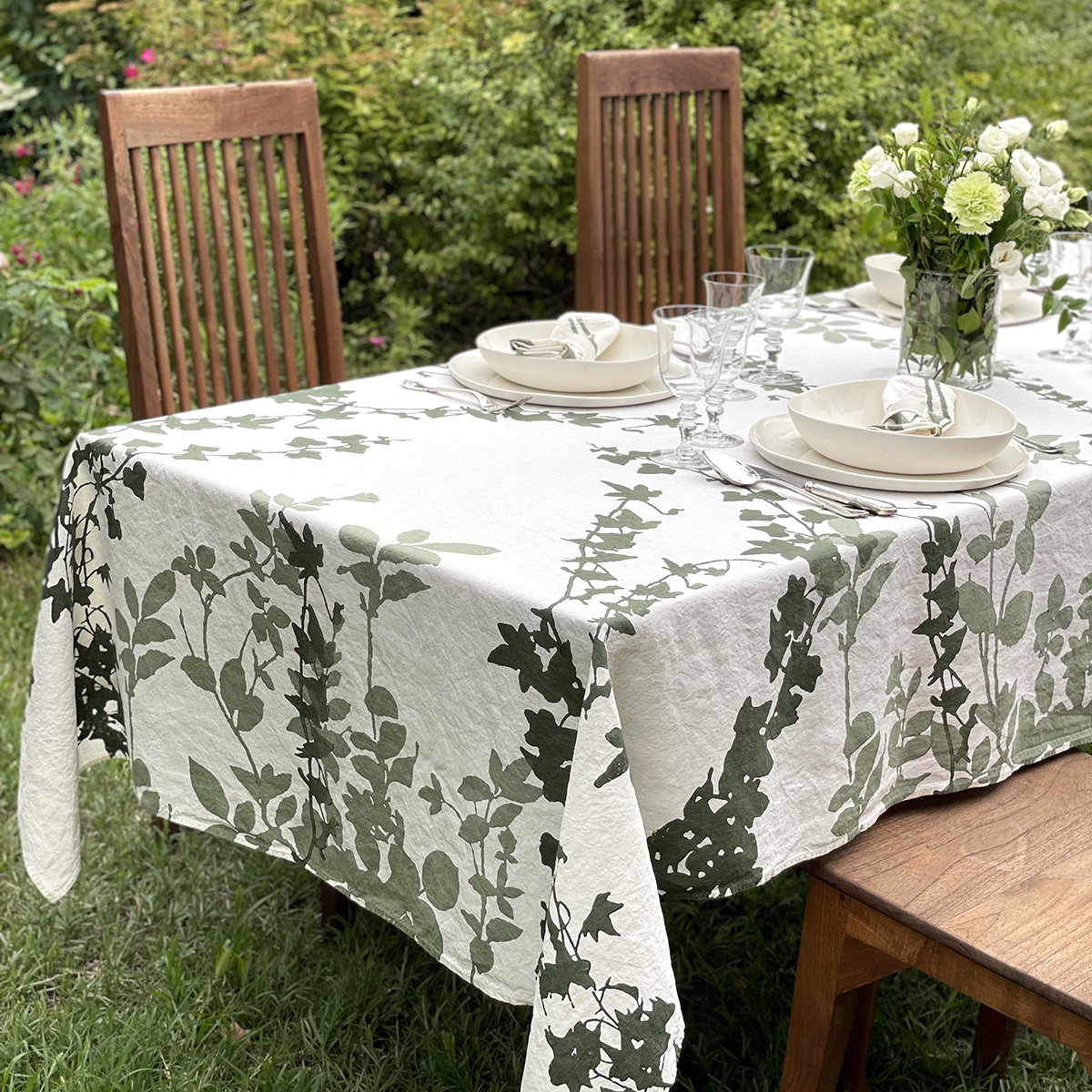
The Fronde and Rigatino designs are built on visual restraint. The Fronde layout features a botanical scatter print derived from branch motifs, hand-stamped directly onto a hand-painted linen background. It pairs naturally to late-year gatherings with the addition of simple brass or gold tableware accents.

By contrast, the Rigatino pattern provides a geometric alternative. Characterised by fine linear stripes in earthy brown tones, it adds a clean border across the cloth, offering a sharp option for dining rooms that favour clean alignment over organic layouts. As a styling option, mixing the organic Fronde motif with the geometric lines of Rigatino napkins—when kept in the same brown shades—creates a balanced, quiet visual relationship on the table.

When the table requires a lighter distribution of print, our botanical layouts leave the centre of the fabric uncovered. The Rami design features delicate, sweeping branches woodblock-printed in metallic green, bronze, silver, and gold over a natural linen base.
Similarly, the Wild motif concentrates on fine wildflower elements, bringing movement to the edges of the fabric without crowding the layout. For homes that reject traditional repeat patterns entirely, the Via Lattea design moves away from woodblocks completely. Instead, artisans utilize a brush to apply random drops and fine streaks of gold pigment across deep blue linen. Reminiscent of a clear winter night sky, it brings a quiet warmth to the table using entirely original imagery.

Heritage and Opulence: Archival Motifs Reinterpreted

For formal settings or occasions that call for a pronounced sense of ceremony, traditional regional motifs provide a distinct presence. The Frangia design, drawn from the oldest archive blocks of the Stamperia Bertozzi workshop, represents a highly classical layout. Hand-stamped in white gold on natural flax or a hand-painted grey background, the restraint of the pale palette softens the grand, traditional border. This balance is well suited for contemporary dining rooms where high-contrast texture is preferred over bright colour.

The core of the Stamperia Bertozzi workshop’s heritage—the Thistle and Pomegranate motifs—are turned into premium statement pieces when block-printed in gold leaf onto natural or painted backgrounds. These designs anchor a room with centuries of artisan lineage, offering a focal point that feels both concrete and sumptuous. Because every metre of fabric is hand-printed using woodblocks, the physical pressure applied to the natural flax leaves minor variations in density and pigment coverage across the cloth. Every finished tablecloth carries the direct, unrepeatable history of that day’s print.
Dedicated Festive Motifs and Coordinated Tableware

For environments that focus on traditional winter flora, our specific seasonal textiles offer a sophisticated hand-crafted approach. The Holly design merges a hand-painted backdrop with block-printed boughs in deep greens and rich berry reds on natural linen. The palette is derived entirely from natural woodland tones, keeping the look focused and clean. For a more understated look, the Fir Tree design focuses on clean, elegant evergreen boughs, providing a focused winter motif that works beautifully as a standalone tablecloth or table runner.

Because the artisans utilize the exact same green oxide dye recipes across both collections, these two distinct families can be layered together with complete harmony. A Fir Tree runner can sit directly over a Holly tablecloth, or napkins from both designs can be mixed around the settings. This shared pigment tones tie the elements together naturally rather than overcrowding the table surface.

To achieve total cohesion across the dining room, matching botanical and heritage motifs can also be hand-stamped directly onto fine Limoges porcelain dinnerware through our bespoke atelier service, creating a direct link between the fabric and the tableware. Complement these linens with simple, organic centerpieces: bare-branched eucalyptus, dried seed pods, and terracotta bowls filled with seasonal citrus
For further layouts combining natural foliage with handcrafted styling, the House & Garden Christmas Table Archive provides excellent structural inspiration.
Atelier Commissions for the Hosting Season
Standard retail dimensions do not always accommodate antique dining tables, long custom tables, large dining settings, or specific architectural proportions. Beyond the collections showcased on our website, our workshop accommodates custom commissions for late-year gatherings. Whether adapting a preferred botanical motif to an unconventional table length or creating custom colourways for specific tableware palettes, custom festive linens can be ordered directly to ensure a natural drape and a precise fit for your home.
—
FAQ
Q: How do I transition year-round metallic prints into a festive winter layout?
A: Designs featuring gold or bronze highlights—such as Via Lattea or Rami—reflect the ambient room light and create a distinct sense of occasion. Pairing these metallic prints with raw brass cutlery or gold-rimmed plates naturally highlights the pigments in the linen, establishing an elegant setting for festive hosting.
Q: Can lightweight or botanically inspired linens be used for colder months?
A: Yes. Botanically inspired linens featuring earthy tones, branches, or fine stripes—such as Fronde or Rigatino—transition easily into late-year gatherings. Pairing them with stoneware, dark ceramic serving platters, and natural seasonal foliage instantly adapts the fabric for autumn and winter hosting.
Q: What is the rule for layering patterned dinnerware over a hand-printed tablecloth?
A: The balance relies on how the print is distributed. If you are using a detailed border design like Holly, select dinnerware that features isolated, minimal stamps around the rim. If you are using an open, scattered layout like Rami, you can comfortably introduce full-coverage ceramic designs because the linen leaves enough space uncovered to balance the composition.
Q: Are custom dimensions available for unique or antique dining tables?
A: Yes. Because antique pieces and non-standard dining tables vary significantly in length and width, our atelier service lets you tailor tablecloth and runner dimensions precisely to your furniture. This ensures the drop of the fabric