
News
The Craft Behind Linen: Shuttle-Loom Linen and the Legacy of Tessitura Pardi

Dec
Linen has followed households for centuries. It has been a constant presence in kitchens, on dining tables, in sideboards, and in everyday routines long before textile production became industrial. When you hold a well-woven linen cloth, you aren’t holding something decorative or fashionable. You’re touching a material that has been part of daily life for generations, valued for its practicality, its durability, and its reassuring familiarity.
Yet not all linen is the same. The fibre may be identical, but the result can differ profoundly depending on how it is woven. Modern technology has made linen easier to produce, but at times it has distanced the textile from the characteristics that made it so dependable in the first place. Some linen is pressed quickly through machines, treated as something to manufacture at speed. Other linen is woven slowly, on shuttle looms operated by skilled weavers who understand the behaviour of the fibre. That distinction – between speed and care – changes everything.
For those who appreciate materials that feel honest and age well, shuttle-loom linen stands in a category of its own. In Italy, one of the finest examples of this heritage is Tessitura Pardi, an Umbrian weaving house that continues to produce linen on traditional looms. Their work reflects a commitment to quality that is increasingly rare. This article explores the story behind shuttle-loom linen, why the method endures, and what makes linen woven this way so valuable in modern homes.
Linen as a Material: A Fibre With a Long Memory

Linen begins with flax, a plant that grows well in cooler regions and requires remarkably few resources. According to the Food and Agriculture Organization (FAO) , flax needs significantly less water than cotton and thrives with minimal intervention, making it one of the most sustainable natural fibres available.
Once harvested, the stalks undergo a series of processes: retting, breaking, scutching, and hackling. These steps extract the long fibres that will later be spun into thread. The results are fibres that, when woven well, produce cloth with exceptional strength and breathability. Linen has always been valued for its ability to regulate temperature, absorb moisture, and soften with use. Its long lifespan is not a marketing claim but something proven repeatedly in households across Europe, where linen tablecloths, bedding, and towels were kept for decades.
The fibre’s natural qualities are only part of the story. The method used to weave linen plays a major role in how it performs, looks, and lasts. Linen woven slowly retains its integrity. Linen woven too quickly can lose much of what makes it desirable. Understanding the shuttle loom helps clarify why the distinction matters.
The Shuttle Loom: A Method That Holds Its Ground

A shuttle loom isn’t an outdated relic. It is a tool with purpose. The loom stretches dozens of threads in tension – the warp – while a shuttle carries the weft thread back and forth. Each pass of the shuttle adds another line to the cloth. The process sounds simple, but it demands constant attention from the weaver.
Unlike power looms, a shuttle loom is operated and monitored entirely by the person sitting at it. Tension is adjusted manually. The rhythm is set by the weaver, not a motor. Over the course of weaving, the weaver listens to the loom, feels the resistance of the fibres, and makes subtle corrections that keep the fabric consistent and strong.
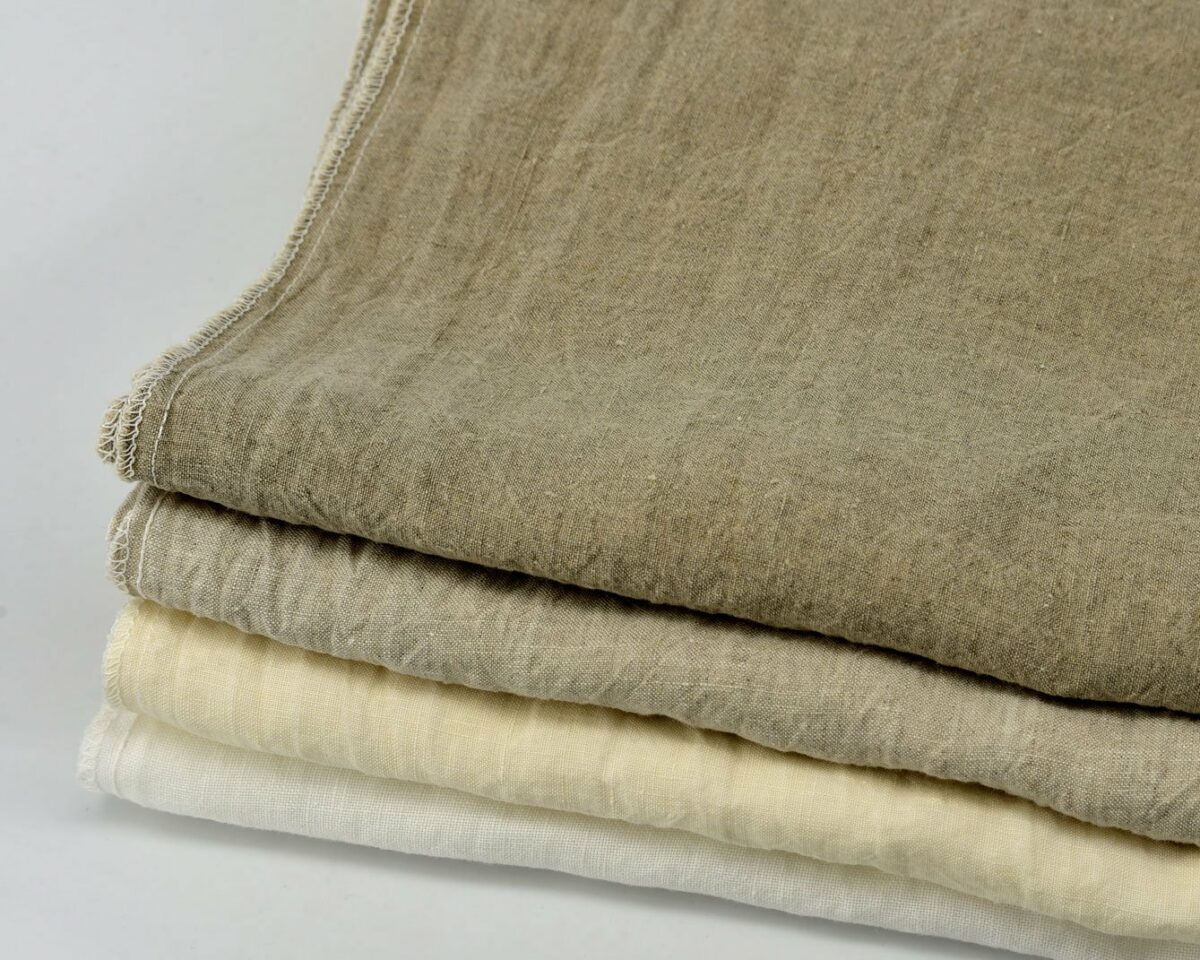
This slower method produces a distinctive result. The fabric feels denser and more stable. The selvedges – the natural edges of the cloth – are formed securely, reducing fraying. The weave holds together in a cohesive way that industrial production cannot fully replicate.
Research from the European Confederation of Linen and Hemp (CELC) notes that linen woven at moderate speed on traditional looms retains greater fibre strength over time because the threads are not subjected to mechanical stress. This helps explain why older linen survives so well and why some new linen does not.
Shuttle-loom linen may show gentle irregularities – a slight slub, a tiny variation in tension – but these variations give the fabric character without compromising quality. They reflect the behaviour of the fibre rather than the limitations of the loom.
Tessitura Pardi and the Umbrian Weaving Tradition

The Umbrian region of Italy has a long history of textile production. Weaving was once a common household skill, and many families kept looms for their own use. Over time, small weaving houses began to form, each developing its own style, patterns, and methods. Many of these workshops eventually closed or shifted to industrial production, but Tessitura Pardi held onto the techniques that define the region’s identity.
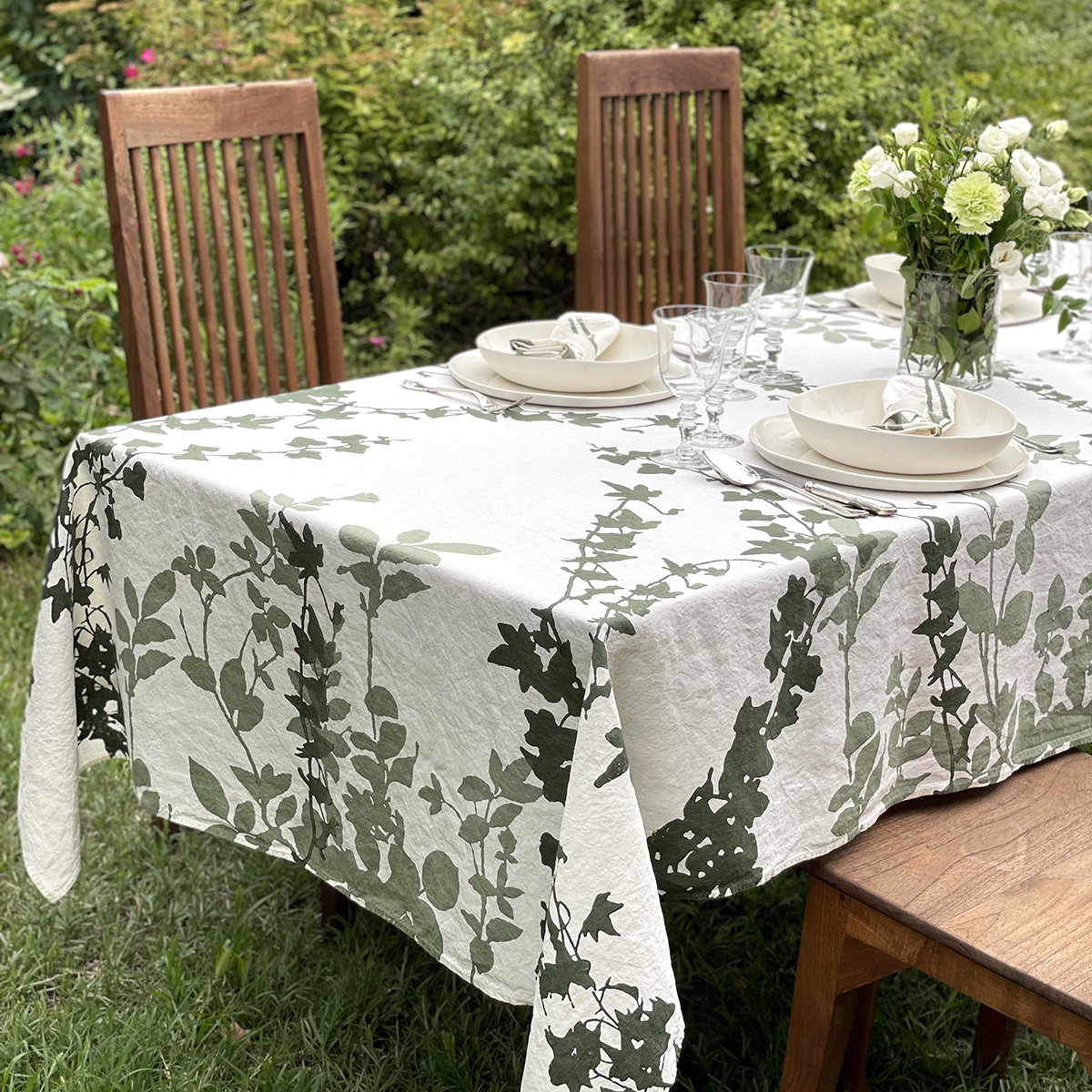
Still family-run, Tessitura Pardi continues to rely on shuttle looms for most of its weaving. Their textiles reflect a combination of regional tradition and understated sophistication. Patterns often draw inspiration from Umbrian architecture, rural motifs, and historic Italian decorative styles. Geometric borders, stylised florals, and classic motifs appear throughout their collections, yet they never feel heavy or dated. Their designs sit comfortably in modern homes precisely because of their balance: expressive but not overwhelming.
The approach at Tessitura Pardi is steady and meticulous. They select quality linen fibres, monitor the weaving closely, and finish each piece with attention to detail. There is no pressure to speed up production or adopt methods that risk compromising the material. Instead, the workshop remains committed to weaving linen as it has been done for decades, respecting the rhythm of the loom and the nature of the fibre.
You can explore some of their pieces in our collection here:
Tessitura Pardi Table Linens
How Shuttle-Loom Linen Feels in the Home

Today’s interiors often rely on hard, smooth surfaces: polished wood, glass, marble, metal. These materials create clean lines but can also make a space feel cold. Linen, particularly linen woven slowly and thoughtfully, introduces something different. It softens the environment without adding clutter and brings a sense of ease to the room.
A tablecloth woven on a shuttle loom drapes with a natural weight. It doesn’t cling rigidly to edges or collapse flatly onto the table. Instead, it falls in a relaxed, structured way that feels appropriate for both everyday meals and gatherings. Runners woven this way anchor a table setting without dominating it. Linen napkins feel substantial in the hand and develop a smooth suppleness with each wash. Cushion covers made from shuttle-loom linen add interest to living rooms, providing texture that contrasts beautifully with modern furniture.
The appeal is not decorative flair but behaviour. Linen that has been woven slowly responds differently to touch and use. It doesn’t lose its character after washing. It settles naturally into everyday use. It holds its shape. With use, it becomes softer rather than weaker.
In many homes, this is exactly what people look for: materials that settle comfortably into the environment.
Traditional vs. Industrial Linen: Understanding the Gap
Industrial weaving has made linen more accessible, but accessibility often comes at a price. Linen woven quickly on modern machines can appear crisp at first, but the fabric tends to lack substance and weight. It softens unevenly and may lose integrity sooner. These characteristics aren’t the fault of the fibre but of the process.
Traditional linen differs in clear and tangible ways. The weave feels more stable. The fabric has body and presence. The edges are stronger. The fibres haven’t been stressed by excessive speed or tension.
Studies from the Linen Industry Research Centre (Northern Ireland) highlight that linen woven at controlled speeds maintains better tensile strength because the fibres are not overheated or overstretched. This contributes to its longevity – one of the qualities that gives linen its reputation for “aging well.”
This is why vintage linen pieces have survived for generations and why new industrial linen may fail to do the same.
A Skill Carried Through Generations

Weaving on a shuttle loom is not a mechanical task. It is a skilled practice that requires experience and fluency. Setting the warp threads evenly across the loom takes time. Choosing the appropriate tension is an exercise in judgement. Monitoring the loom during weaving requires attention and responsiveness.
In workshops like Tessitura Pardi, weaving is learned through apprenticeship and practice. Knowledge is passed from one generation to the next, not through manuals but through demonstration, correction, and repetition. A weaver who understands the loom and the fibre can anticipate issues before they appear, make adjustments subtly, and maintain consistency in the cloth.
Patterns are part of this expertise. Many of Tessitura Pardi’s designs draw from Italy’s architectural and artistic heritage. They echo the geometry of arches, the forms of leaves and flowers, or the lines seen in Renaissance decoration. These influences give the fabrics personality without imposing a strong stylistic direction. They work equally well in rustic homes, modern apartments, and contemporary interiors.
This ability – to create textiles that are rooted in tradition yet suited to modern living – is one of the hallmarks of good craftsmanship.
Why Shuttle-Loom Weaving Still Matters
The survival of shuttle-loom weaving is not guaranteed. It persists because small workshops commit to it and because people recognise its value. The method is slower, but slowness is not a flaw. It is a choice – one that aligns with longevity, sustainability, and respect for craft.
Linen woven traditionally is inherently responsible. The fibre is natural and biodegradable. The weave is durable. The textile lasts for years and often looks better with age. These characteristics support a way of living that values care over consumption.
In 2025, when sustainability is discussed in terms of recycling, new materials, and green technologies, it’s worth remembering that some of the most sustainable practices are not new at all. Weaving a natural fibre on a traditional loom, producing a cloth that will last, and avoiding wasteful methods is sustainability in its most direct form.
Linen as a Companion in Everyday Life

A cloth is not just a cloth. It becomes part of the daily rhythm of a home. A linen table runner frames a meal. A towel dries hands or dishes many times a day. A cushion adds comfort to a sofa or chair. These items contribute quietly to the environment in which people live.
Shuttle-loom linen excels in this everyday role because it handles use well. It absorbs, dries, softens, and endures. It is not fragile. It becomes more familiar with time. Its subtle irregularities give it charm without drawing attention. It blends into the background while improving the way a space feels.
People often describe homes they admire as “warm” or “inviting.” Much of that impression comes from textiles that soften the space. Linen woven traditionally has this ability naturally.
Bringing the Craft Home
Choosing shuttle-loom linen is choosing a way of living with things that last. When you pick up a cloth woven by Tessitura Pardi, you feel its weight and see the precision of its weave. The fabric feels solid in the hand and clearly well made.
It has been crafted with attention, not rushed. You sense its reliability.
For those who appreciate materials that feel honest – not overly polished, not synthetic, not disposable – shuttle-loom linen becomes a natural choice. It performs well, adapts gracefully, and holds its place in the home without demanding attention.
You can explore more of our Italian-woven linens here:
Tessitura Pardi Table Linens