



Description
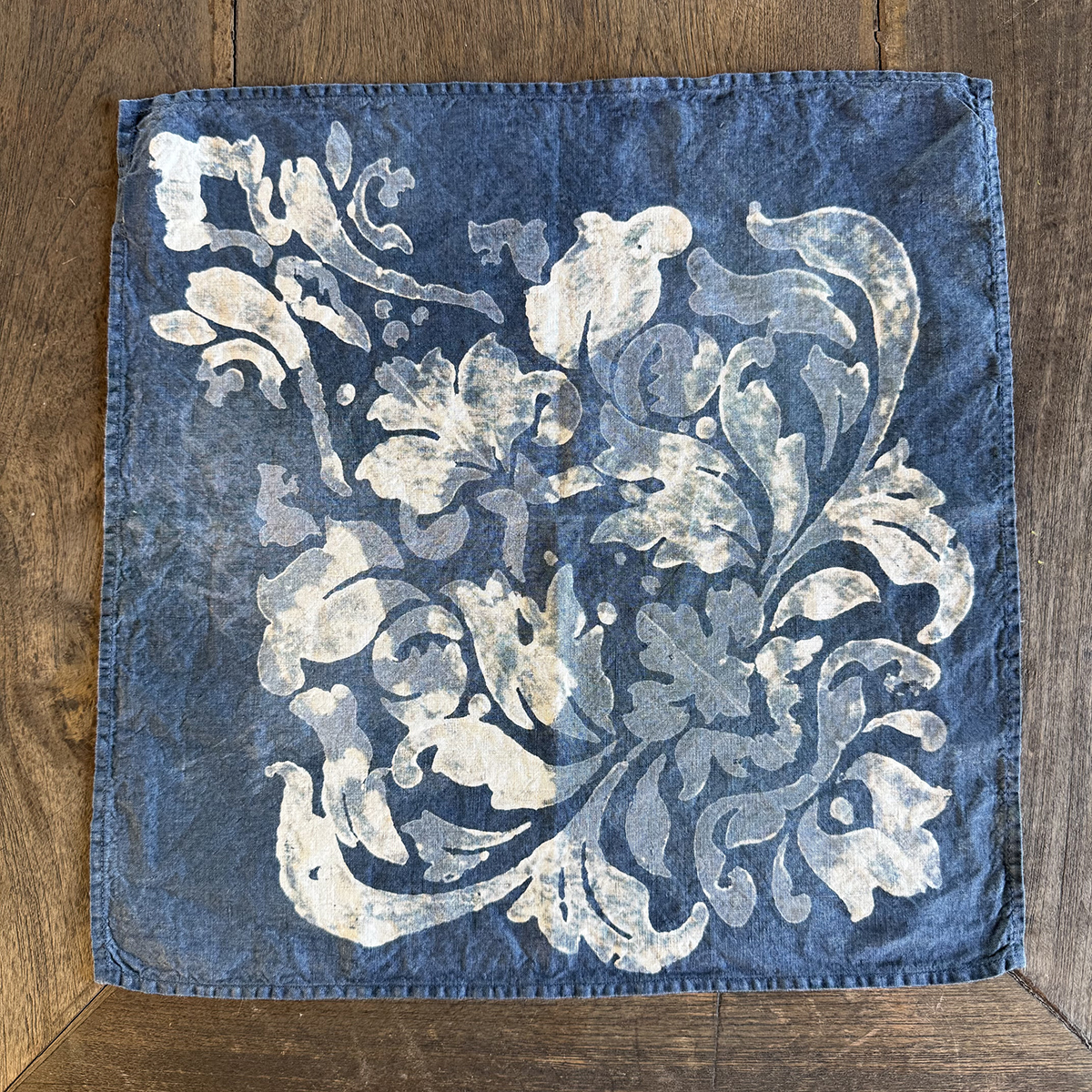
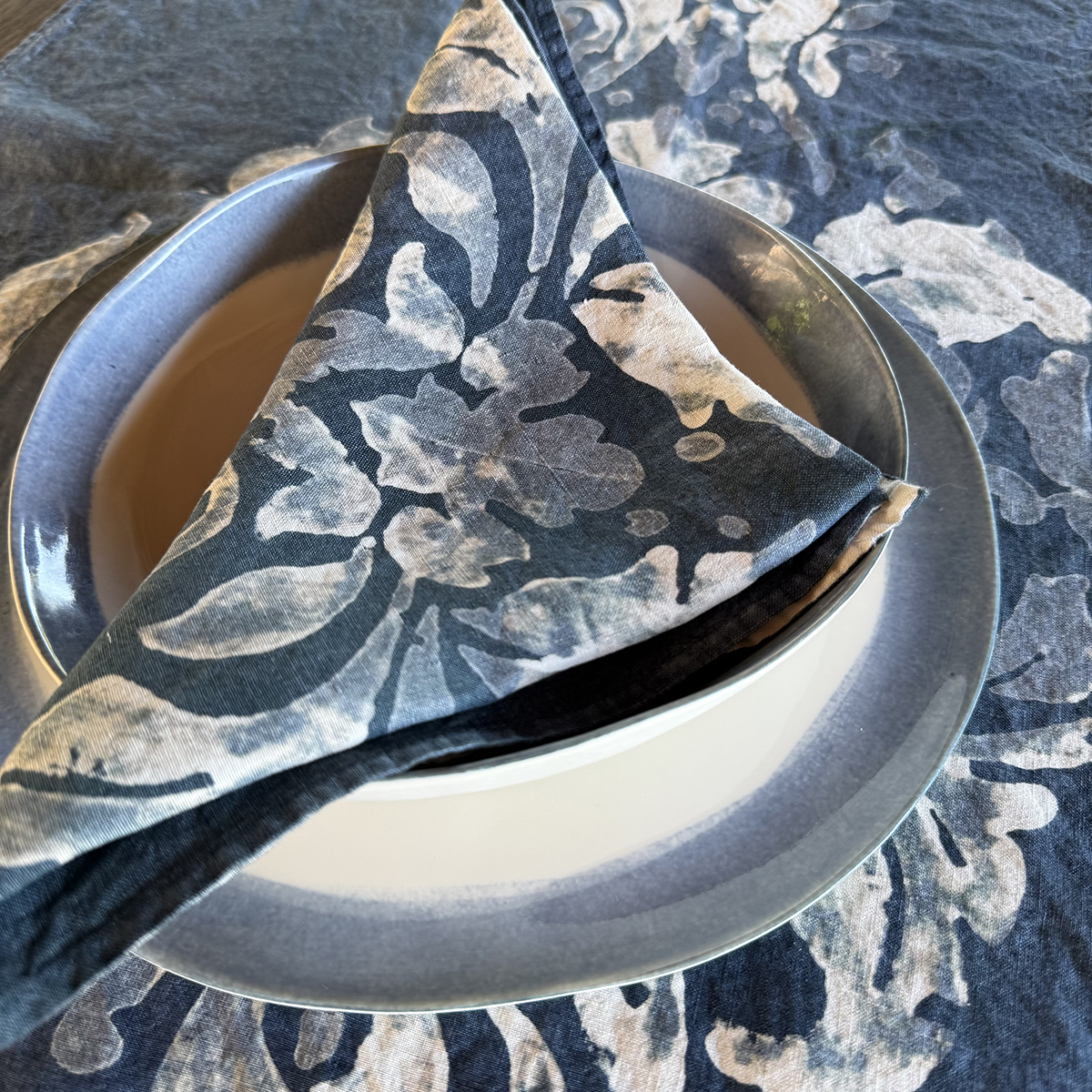
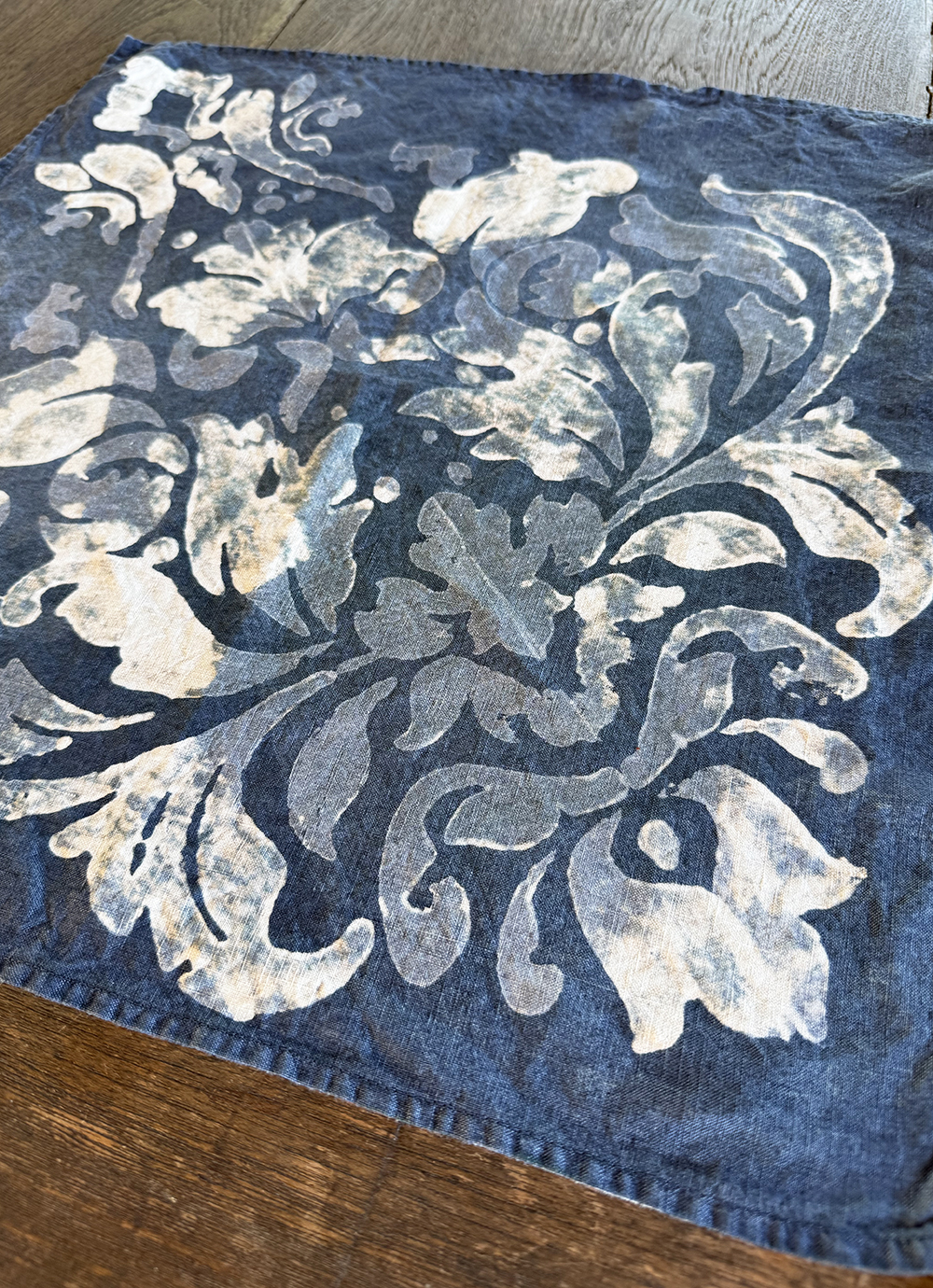
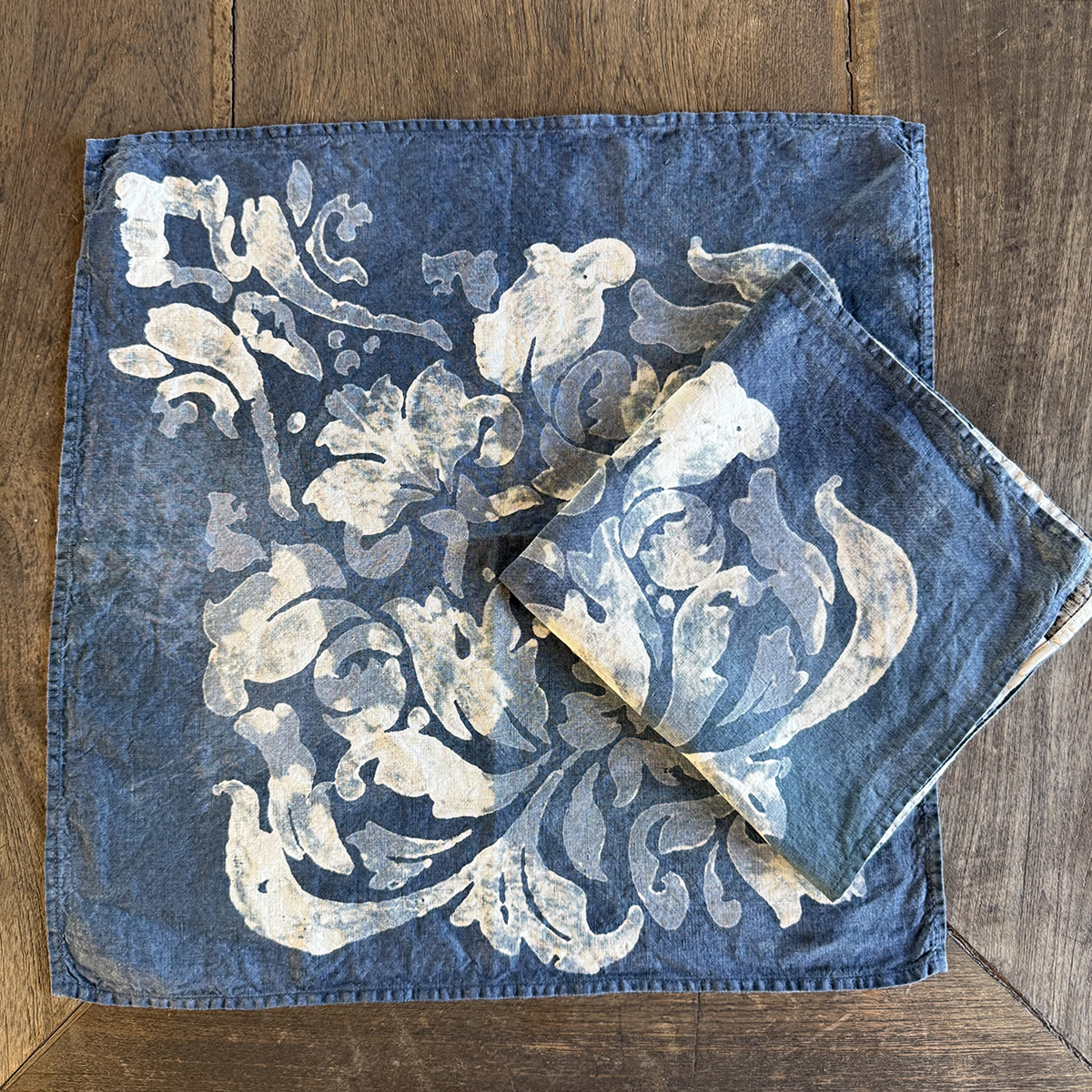
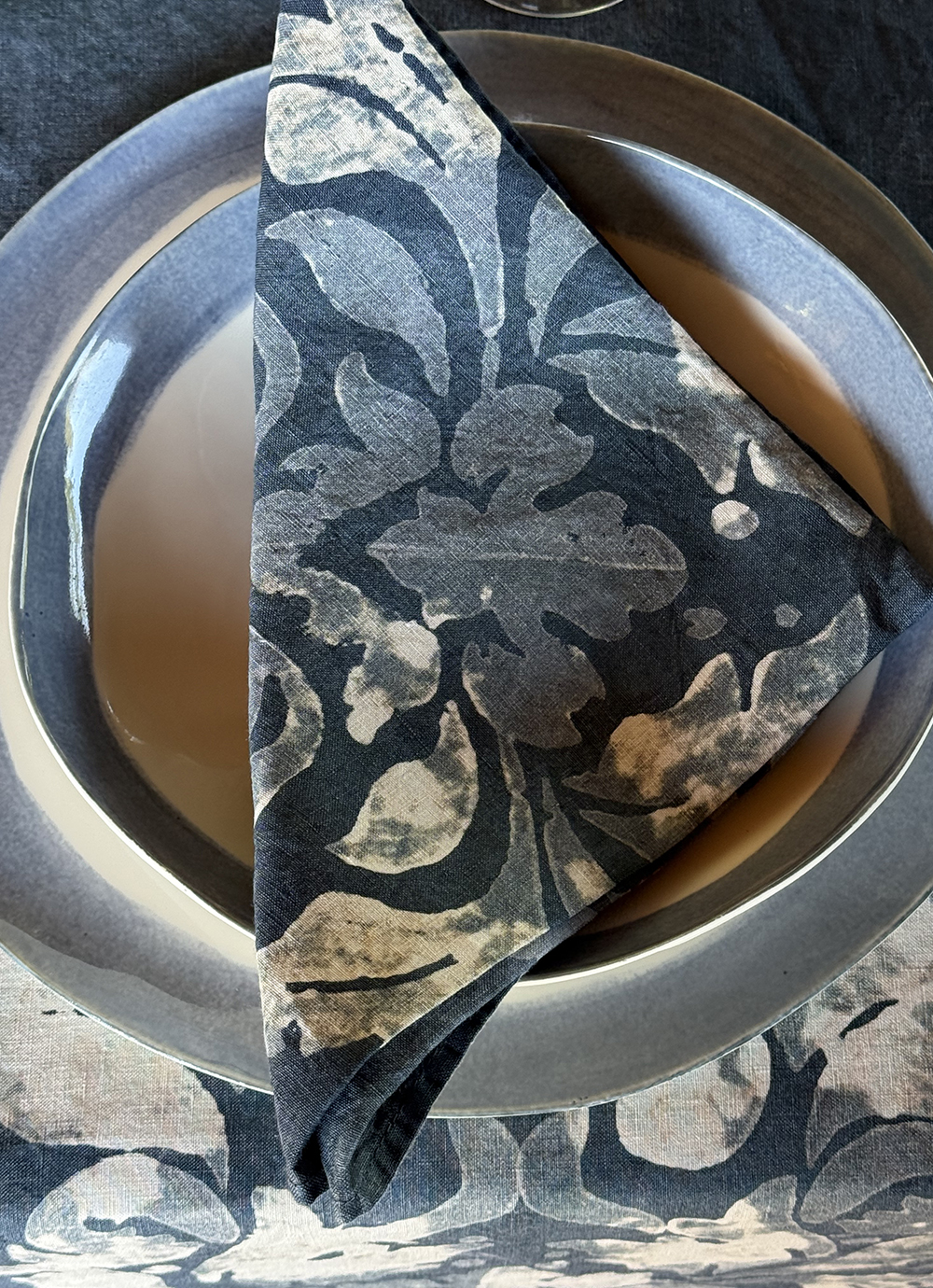
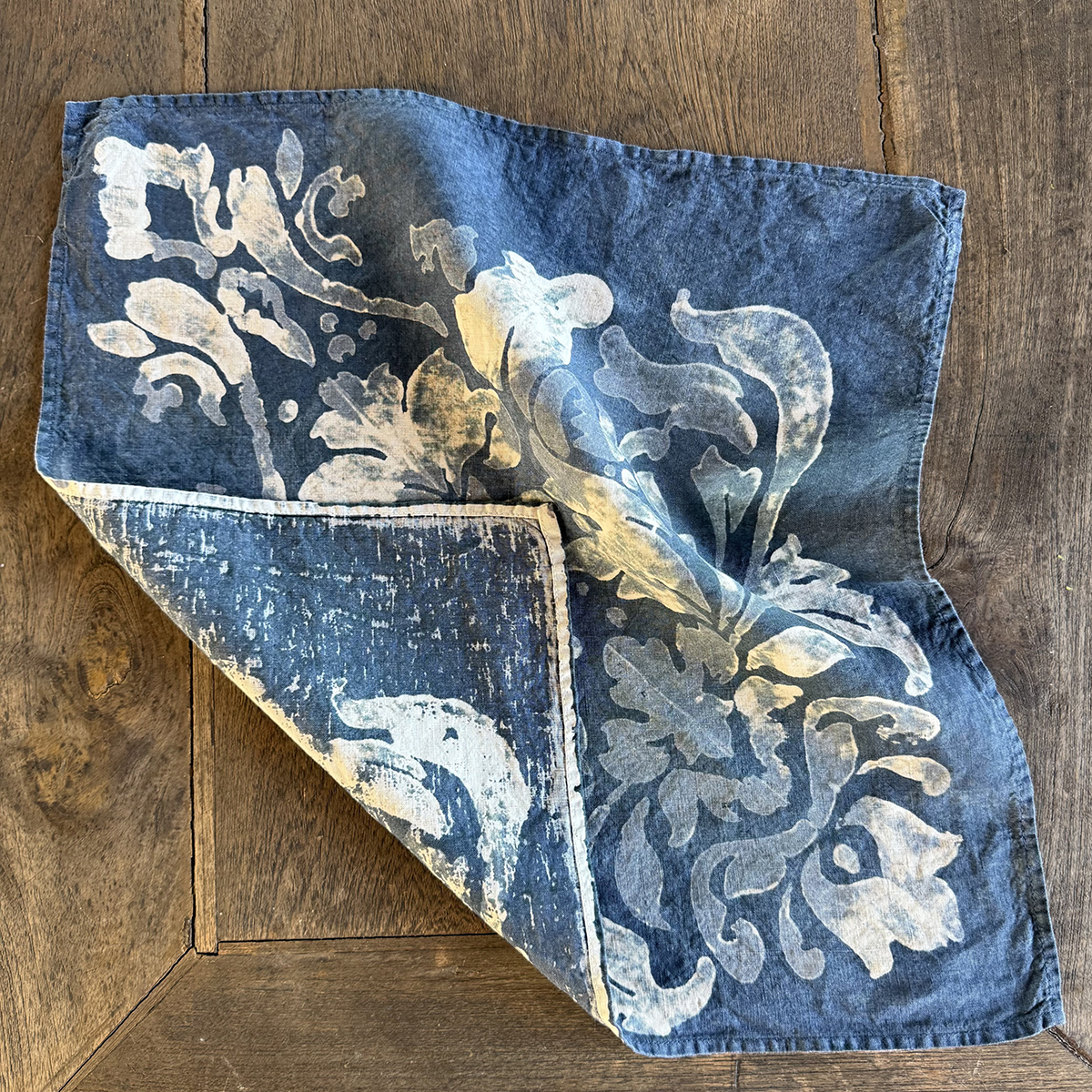
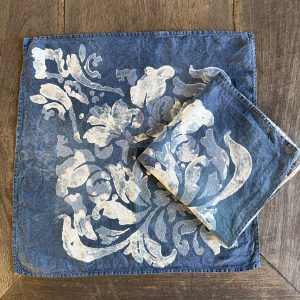
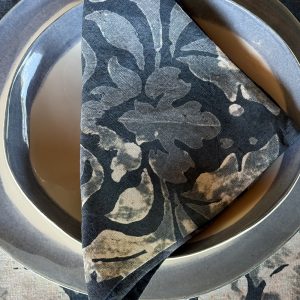
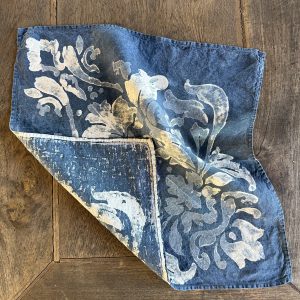
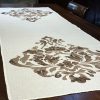
The Beatrice linen napkins feature a pattern that replicates layouts found on classic Italian woven textiles. Sized for a dining place setting, these pieces offer a soft, absorbent texture alongside tableware. This handmade collection coordinates directly with our matching tablecloth or table runner to complete a unified setting.
To create the motif, each piece is individually stamped with the damask pattern in wax before the blue mineral pigment is brushed across the canvas by hand. Once washed, the areas protected by the wax emerge with varying intensities, highlighting the manual work of the brush strokes against the white details
The History of Brocade
The Beatrice layout derives its structural geometry from classical Italian brocade textiles. The term originates from the Italian broccato, meaning embossed cloth—a direct reference to the raised surfaces that defined these early fabrics. Reserved for centuries for nobility and ceremonial garments, these textiles achieved their dimensional texture on complex draw looms. Through this mechanical method, craftspeople manually introduced additional silk, gold, or silver threads into the warp to create patterns that appeared intricately embroidered. The Beatrice collection captures the symmetry of these antique designs, translating a layout originally intended for heavy, architectural fabrics into a breathable, hand-printed format on pure flax.
The Craft of Block Printing
The craftspeople of Stamperia Bertozzi print this layout using woodblock methods established in their workshop over a century ago. The sequence begins by hand-carving the damask motif into dense pieces of aged pear wood, chosen because its tight grain allows for sharp lines without splitting under manual pressure. When the mineral pigment is applied, the raised surfaces of the carved block hold the colour before it is pressed onto the fabric. The artisan then strikes the wood firmly with a heavy wooden mallet, forcing the dye deep into the core of the flax fibres. This physical impact ensures the print withstands regular washing, allowing the textile to develop a softer texture through extended use.
| Weight | 0.100 kg |
|---|
Product enquiry
Made to order bespoke and different sizes available.
We will be more than happy to help you by discussing details with our artisan.
Please contact us for any information.
+44 (0) 20 3701 4076
info@allorashop.com
You may also like...

Cotton & Linen


Cotton & Linen
