

News
Stamperia Bertozzi: Where Tradition and Modern Italian Craftsmanship Come Together Beautifully
Oct
Italian craftsmanship has always lived at the intersection of tradition and innovation. Across generations, artisans have preserved techniques that reflect centuries of cultural heritage while continuing to reinterpret them for contemporary life.
At AllÓRA, we believe that the objects we bring into our homes should carry meaning, character, and a connection to the artisans who create them. For this reason we are proud to collaborate with Stamperia Bertozzi, a historic workshop in Romagna where the ancient art of woodblock printing on fabric continues to flourish.
Their work brings together centuries-old techniques and contemporary design, creating table linens that feel both timeless and vibrant.
History and Background
The practice of decorating table linens and soft furnishings using woodblock printing has existed in Italy since the Renaissance. At that time, these textiles were created to adorn the dining rooms of aristocratic homes and noble courts.
They appeared on beautifully arranged tables that were celebrated for their elegance, harmony, and festive richness, reflecting the refined tastes of Renaissance culture.
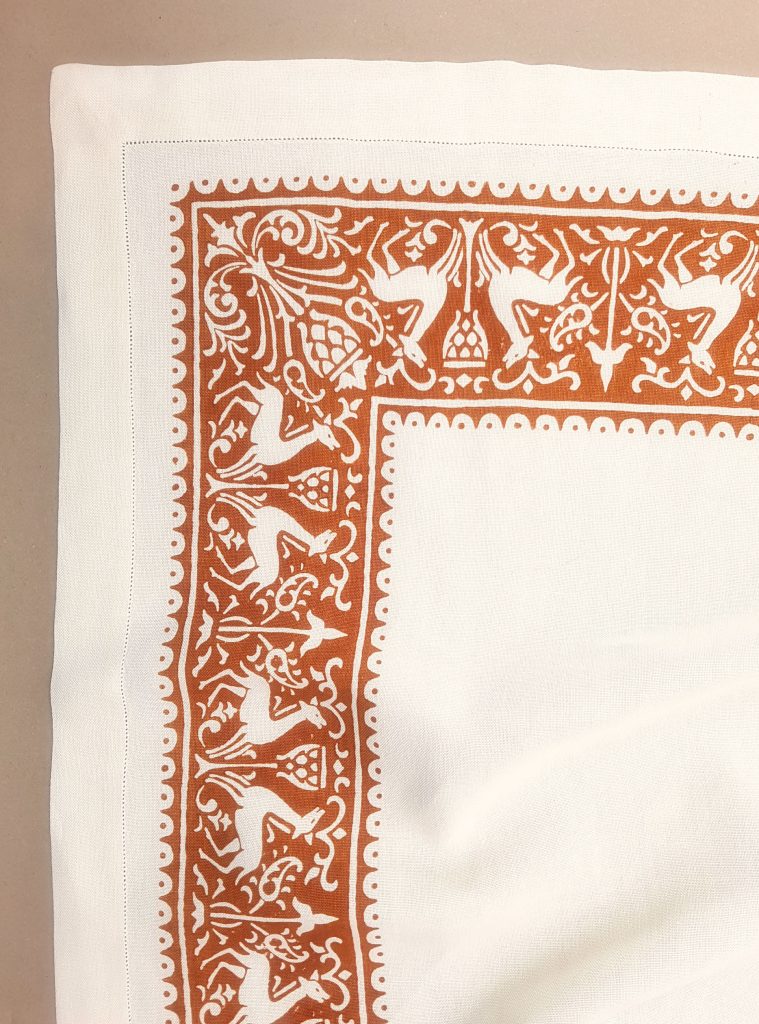
The earliest designs were inspired by five-petal roses, leaves, and ornamental vases. Elements drawn from classical mythology — such as the phoenix — also appeared, alongside animals including deer and roosters.
Over time these motifs became enriched with geometric forms, Greek keys, and architectural details inspired by capitals, thrones, and altars.
Traditionally, these patterns were printed using hand-carved wooden blocks in a distinctive rust colour. This warm tone became a hallmark of the craft and can be admired in historical paintings such as the work of Paolo Veronese, where richly decorated tablecloths of this style appear clearly in the scene.
These textiles were not merely decorative. They were part of a broader culture of hospitality in which the table served as a stage for beauty, conviviality, and celebration.
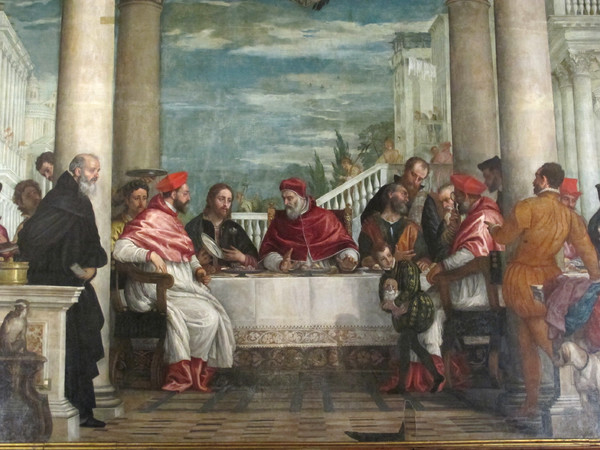
Paolo Veronese, Cena di San Gregorio Magno, 1572.
The Art of Woodblock Printing
The technique used by Stamperia Bertozzi continues this Renaissance tradition of Italian woodblock printing.
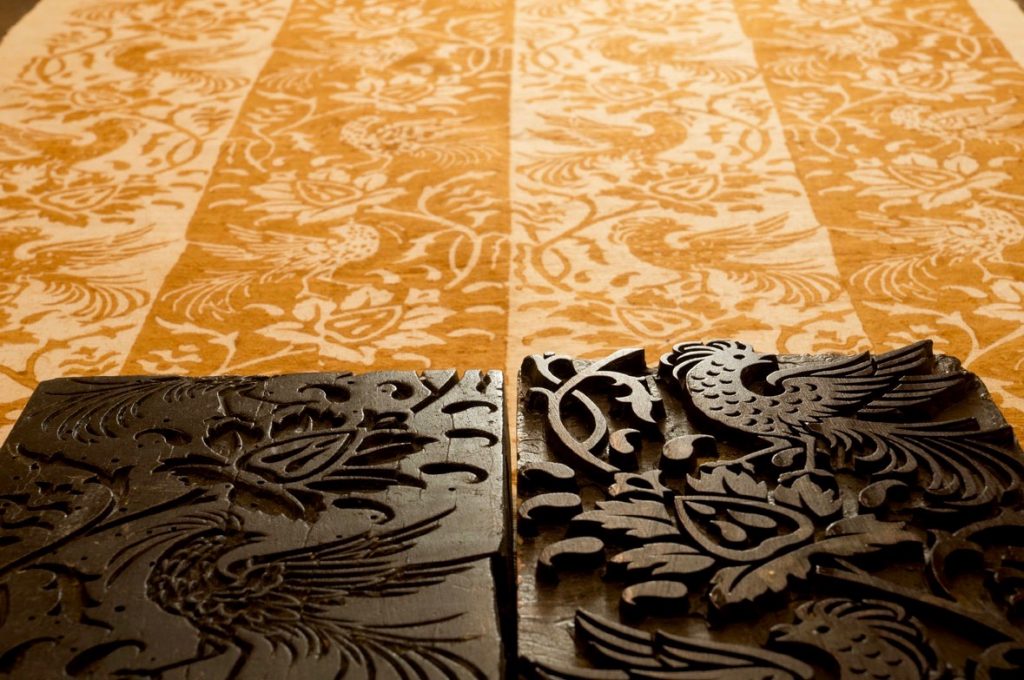
Each design begins with a hand-carved wooden block representing a single element of the pattern. Artisans press the block onto the fabric using natural pigments, gradually building the full design layer by layer.
Because the process is entirely manual, each textile carries subtle variations that reveal the human touch behind the work.
For readers interested in exploring this fascinating craft in greater depth, we have written about the history and techniques behind this process in our article on woodblock printing in Italy.
This centuries-old method connects textile production to a broader story of Italian craftsmanship, where artistry and everyday life meet.
‘Theodora’ design, inspired by the Byzantine era, hand printed about 1930s.

‘Granducale’, an Early Renaissance-inspired design, hand printed about 1930s.
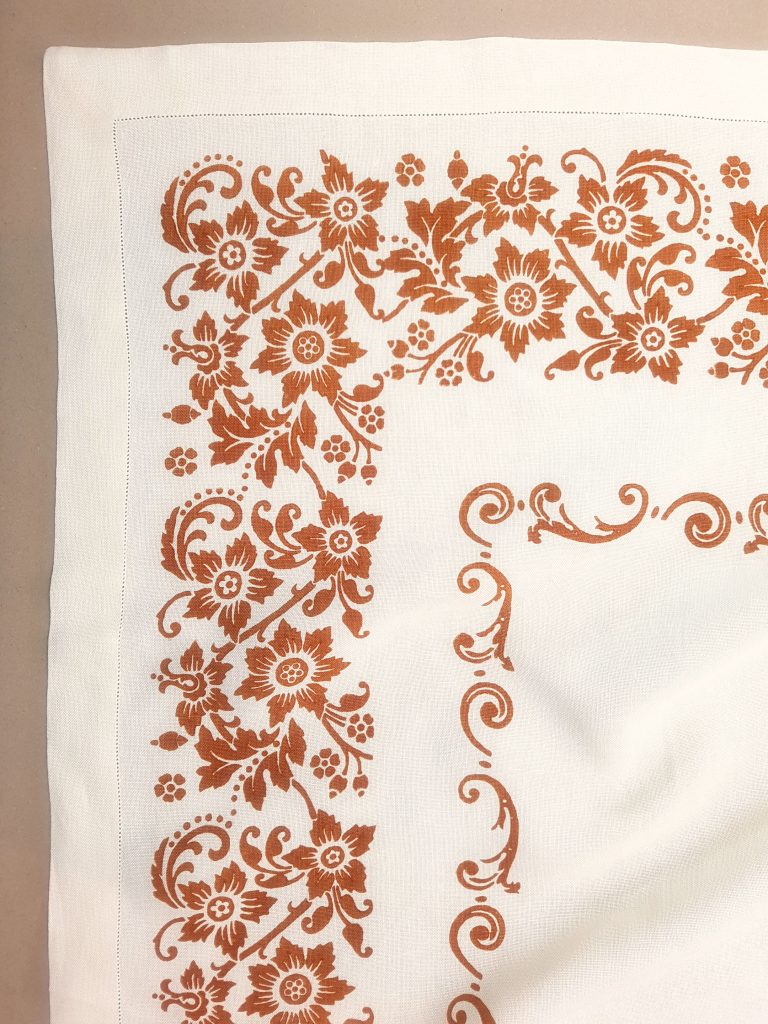
‘Flora’ design, inspired by Renaissance brocades, hand printed about 1930s.
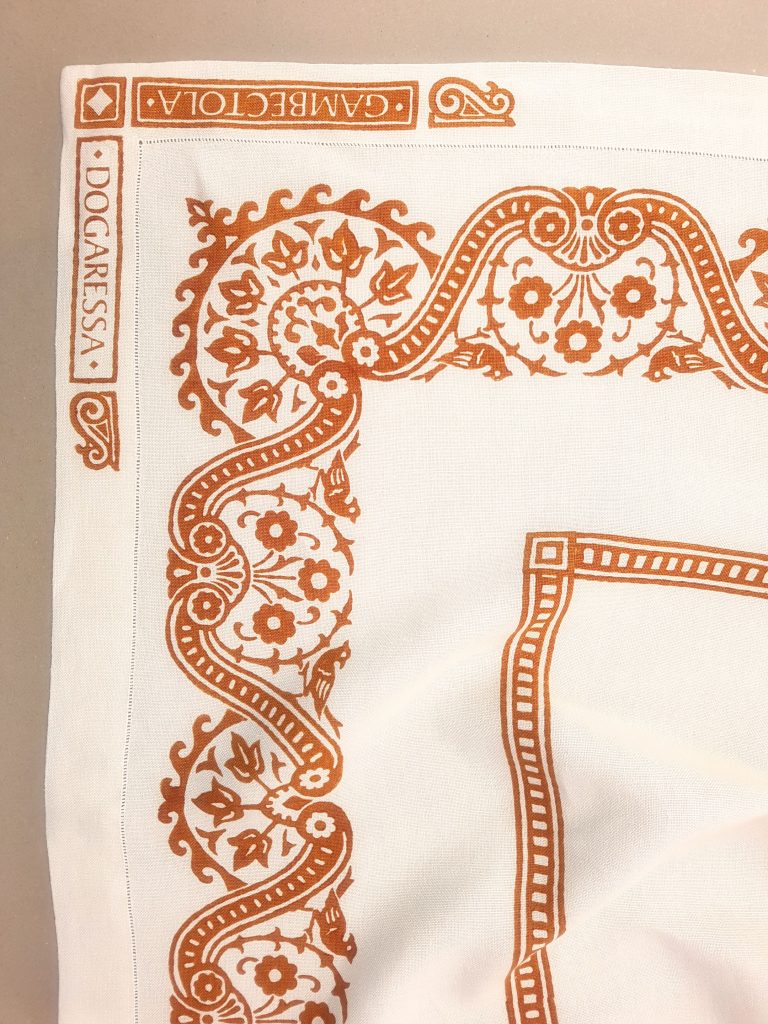
‘Dogaressa’, a Venetian School-inspired design, hand printed about 1930s.
Bertozzi’s Archive
Today, Stamperia Bertozzi is especially proud of its remarkable archive of approximately 5,000 wooden blocks, the result of three generations of passionate and dedicated work by master craftsmen.
Each block has been carefully catalogued and individually labelled, forming a collection unlike any other. Together they reveal the heritage, creativity, and artistic sensitivity that define the work of the Bertozzi artisans.
The blocks themselves are carved from pear wood, a material chosen for its durability and fine grain. Each one has been shaped meticulously by hand, preserving the marks of the craftsman who created it.
To hold one of these blocks is to experience a tangible link with the past. The smooth surface of the carved wood tells a story of patience, skill, and artistic imagination. In that moment, it becomes easy to imagine the hands that carved it, keeping alive a tradition that continues to inspire new generations.


Using techniques that date back across many centuries, these master craftsmen hand-carve blocks of pear wood to produce intricately detailed stamps. They are then used to print their own unique designs onto the cloth which has been woven on traditional looms. The age-old rust colour is still a major favourite, even after all this time. Stamperia Bertozzi create this signature rust colour using a recipe they have kept secret for generations. No-one knows quite how it is created, only that the mix is based upon the bringing together of powdered rust from aged metals, vinegar and flour. The result is nothing short of magnificent.


‘Phoenix’ design, hand printed in positive and negative.

‘Granducale’ in rust colour, recently printed.
Bertozzi’s archive is an endless source of design inspiration. Over time, other elaborate combinations of different traditional motifs have been developed, and several new rich and vibrant colours have been introduced, all created from natural mixes of pigment. Based upon tints and shades found within the Italian countryside, all the dyes are inherent and look stunning when mixed together or used on their own.

‘Granducale’ design with border, hand printed in blue.
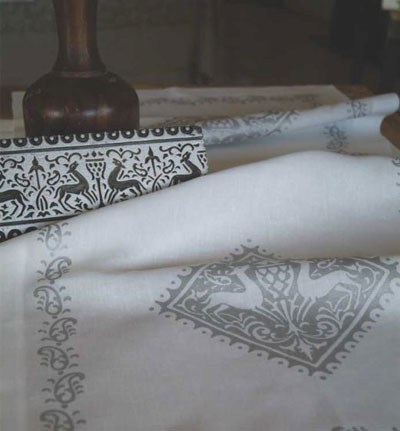

Detail of ‘Theodora’ in gold.

‘Dogaressa’ design in a mix of new colours
Textiles That Bring Character to the Table
Hand printed fabrics carry a warmth and individuality that industrial production cannot replicate.
A table dressed with artisan printed linens immediately feels more welcoming and personal. The patterns reflect the hands that created them, while the textures of linen and cotton add depth and character to the dining experience.
These textiles embody the philosophy that has long defined Italian craftsmanship: objects should be both beautiful and useful.
Whether used for everyday dining or special gatherings, they transform the table into a space where craftsmanship becomes part of daily life. Our collection of hand printed table linens by Stamperia Bertozzi reflects this same tradition of craftsmanship and design.

Tea towel with ‘Flora’ design in champagne colour.

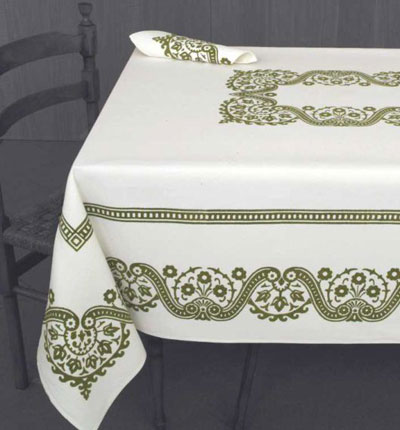
Tablecloth with ‘Flora’ design in emerald green.
Tradition Reinterpreted for Modern Living
What makes Stamperia Bertozzi particularly remarkable is its ability to bridge past and present.
While the techniques remain deeply rooted in tradition, the designs feel fresh and contemporary. Classic motifs inspired by nature and history are reinterpreted in colours and compositions that work beautifully in modern interiors.
This balance allows hand printed Italian table linens to complement both traditional homes and contemporary spaces.
The textiles feel authentic without appearing nostalgic. Instead, they celebrate heritage while remaining relevant to the way we live today.

Hand printed tablecloth with ‘Granducale’ design and hand embroidered profile.

Tablecloth with ‘Granducale’ design, hand-printed and hand painted with a délavé effect.
A Shared Commitment to Craftsmanship
Our collaboration with Stamperia Bertozzi reflects a shared commitment to preserving authentic craftsmanship.
At Allora, we seek out artisans whose work reflects the richness of Italian creative traditions. By working with workshops like Stamperia Bertozzi, we help ensure that these techniques continue to thrive.
Each printed textile carries not only a beautiful design but also the story of the artisans who created it.
In this way, craftsmanship becomes more than a tradition preserved in museums. It becomes a living practice that continues to shape the objects we use and cherish in our homes.
SIMPLY SPLENDID! I MUST HAVE LIVED THERE DURING THAT PERIOD…THIS WHOLE PROCESS EXCITES ME! VIVA ITALIA!!! Frieda Stubbe, Puerto Rico
Thanks a lot for the kind words. It’s really an amazing and inspiring process.