

News
How to Identify Genuine Hand-Painted Italian Ceramics and Block-Printed Linens
Jul
Section 1: The Importance of Material Provenance
In the world of premium interior design and hosting, sourcing authentic homeware has become a challenge due to high-speed digital copying. Modern automated screen printing, rotary transfers, and computer-guided stamping easily mimic handmade designs at a glance. For interior architects, event coordinators, and private hosts, knowing how to verify the physical authenticity of tableware is essential for protecting a financial investment.
True artisanal production determines how well an item performs over years of dinner parties and regular laundering. This guide outlines the physical markers required to separate genuine regional Italian craftsmanship from mass-market factory alternatives. By auditing subtle structural details, glaze characteristics, and textile weave patterns, collectors can confidently choose creations that bring true heritage to a residential or commercial space.
Section 2: Verifying Hand-Painted Regional Italian Ceramics
The Base Ring and Glaze Edge
The clearest sign of factory manufacturing can be found by turning a ceramic vessel over to inspect the base. During traditional wheel-throwing or moulding processes, the raw clay experiences uneven pressures that leave faint circular lines on the unglazed bottom ring. These tiny markings record the physical rotation of the wheel or the manual release from a plaster mould, proving a human hand was involved.
In authentic regional Italian maiolica production, the artisan submerses the porous clay body into a liquid glaze mixture. To stop the glaze from melting and sticking directly to the kiln shelves during firing, the craftsman must clean it away from the base ring using a wet tool or a damp sponge. This physical wiping leaves a slightly irregular boundary line where the smooth glaze ends and the raw terracotta clay begins. In contrast, automated factory lines use machine-applied wax boundaries or roller belts, which create a mathematically perfect, completely straight edge around the base.
Genuine hand-dipped items also frequently demonstrate two tiny marks near the upper rim where long metal pincer tongs clamped the wet clay during dipping. These minute indentations break the glaze continuity to reveal the raw clay underneath—an occurrence that never happens in automated factory spray booths.
Brushstroke Patterns and Thickness
Factory decoration relies heavily on digital transfers or automated ink-jet printing systems. These commercial methods print a perfectly uniform layer of ink onto the ceramic surface, leaving the decorated patterns completely flat.
To spot real human craftsmanship, the ceramic vessel must be held up to a light source at an angle. Authentic hand-painted dinnerware displays inherent variations in pigment thickness, creating a subtle texture that can be felt and observed.
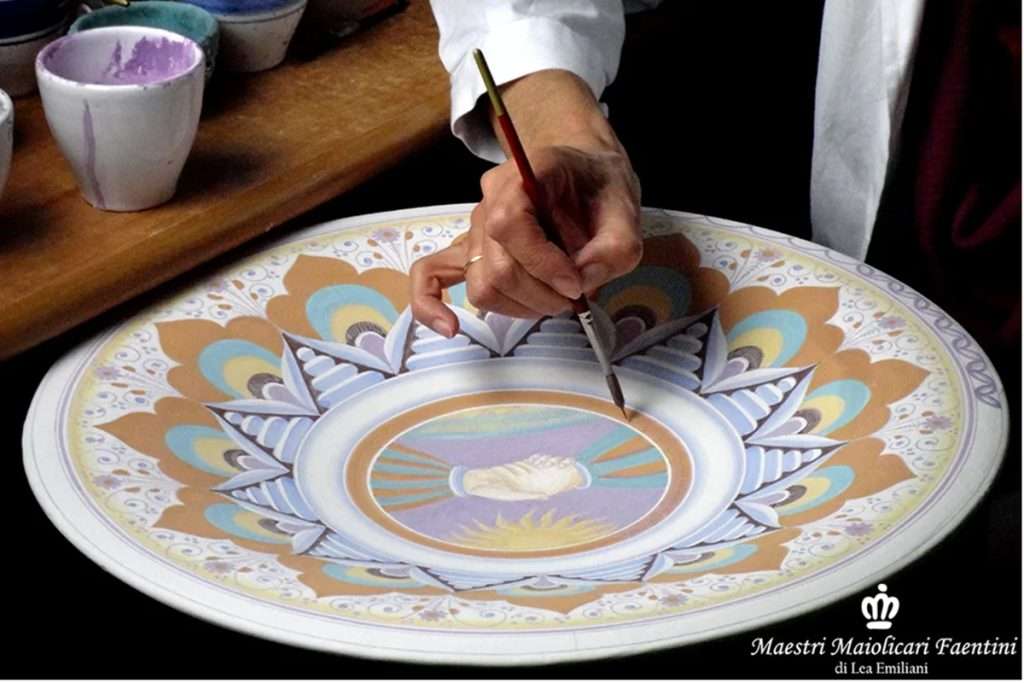
Where the artisan’s brush first touches the clay surface, a higher concentration of mineral pigment is left behind, creating a thicker ridge. As the stroke continues across the curve of the plate, the paint organically thins out, showing fine lines where the individual hairs of the brush head separated the damp paint.
These fluid shifts change how the finished object reflects light. When illuminated, hand-painted ceramics scatter light softly and unevenly across the pattern, while factory prints maintain a uniform, flat gloss across the entire surface.
Natural Pattern Layout Variations
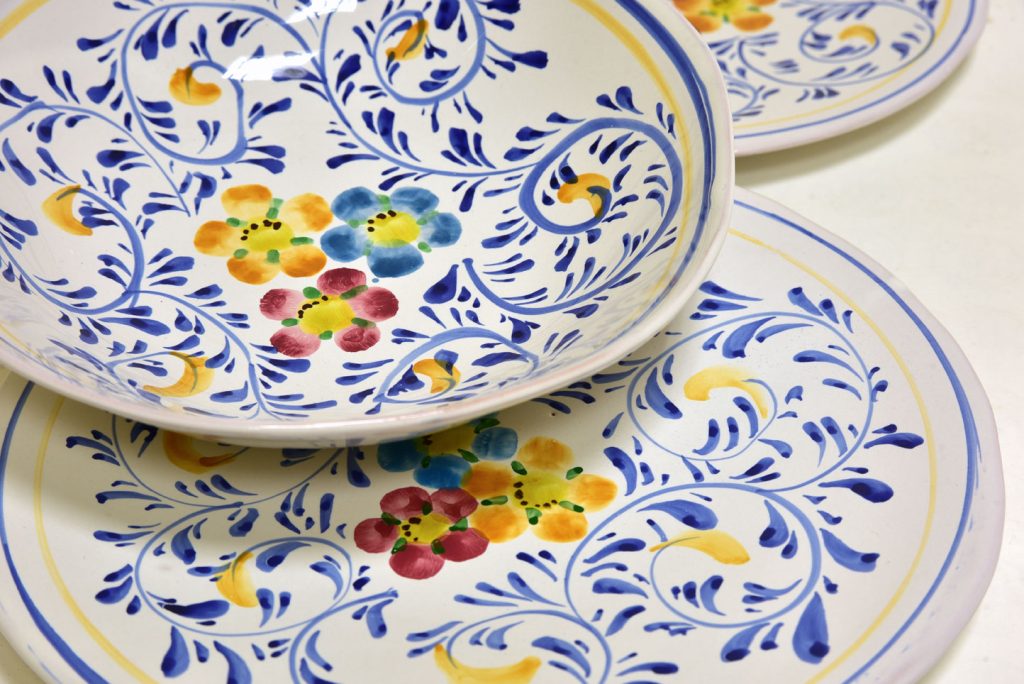
Industrial production lines copy patterns perfectly across thousands of units using precise digital templates. When reviewing a set of dinner plates for an event or a home collection, design professionals must look closely at how the repeating patterns match across different dinnerware components.
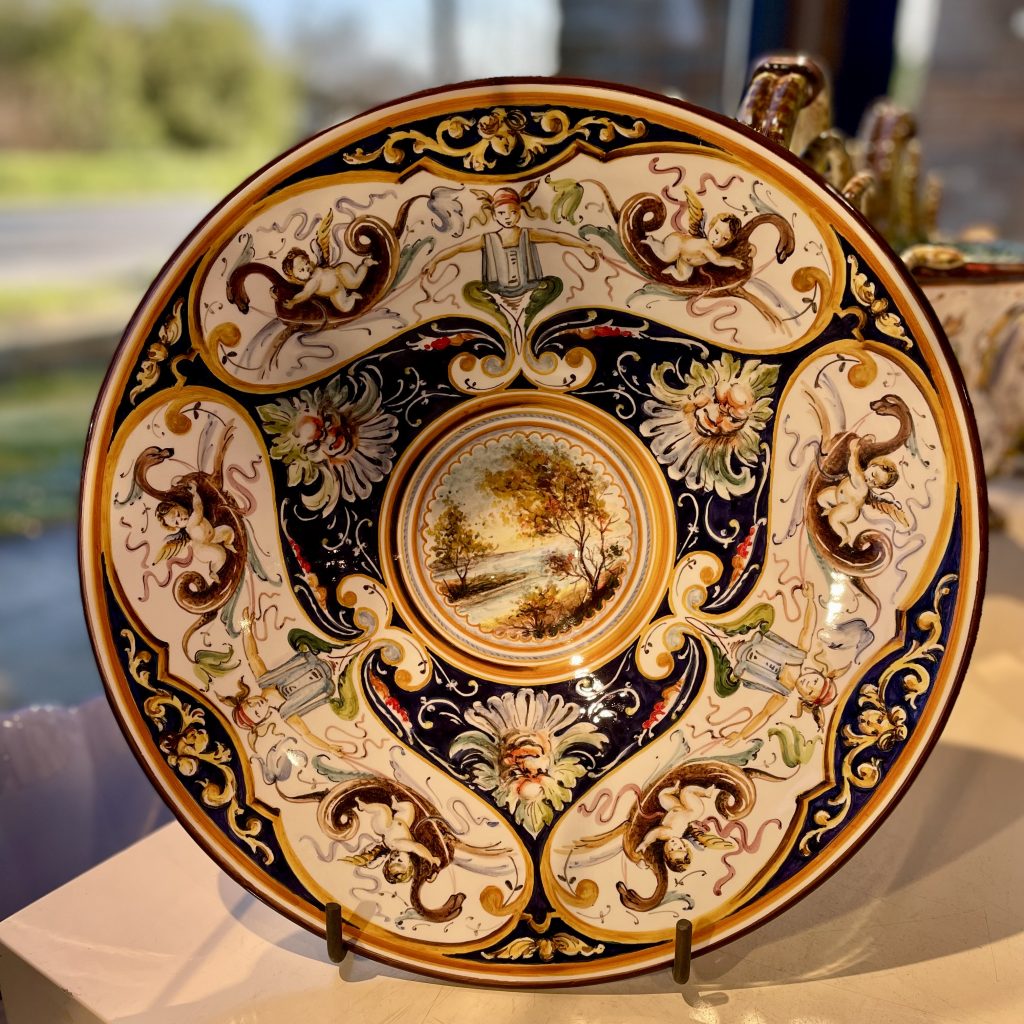
Authentic hand-painted dinnerware always features micro-variations in pattern spacing, stroke angles, and design details. If a traditional floral scroll or border design is painted around the edge of a platter, human muscle memory naturally introduces small differences in the curve of each leaf and the placement of each line.
These variations are the organic result of an artisan working by hand in changing studio temperatures and humidity levels. To compare these traditional details, collectors can study the digital ceramic archives at the Museo Internazionale delle Ceramiche in Faenza, which document these specific physical pattern characteristics across heritage Italian workshops.
Section 3: The Structure of Hand Block-Printed Linens
The Reverse Side Bleed-Through Effect
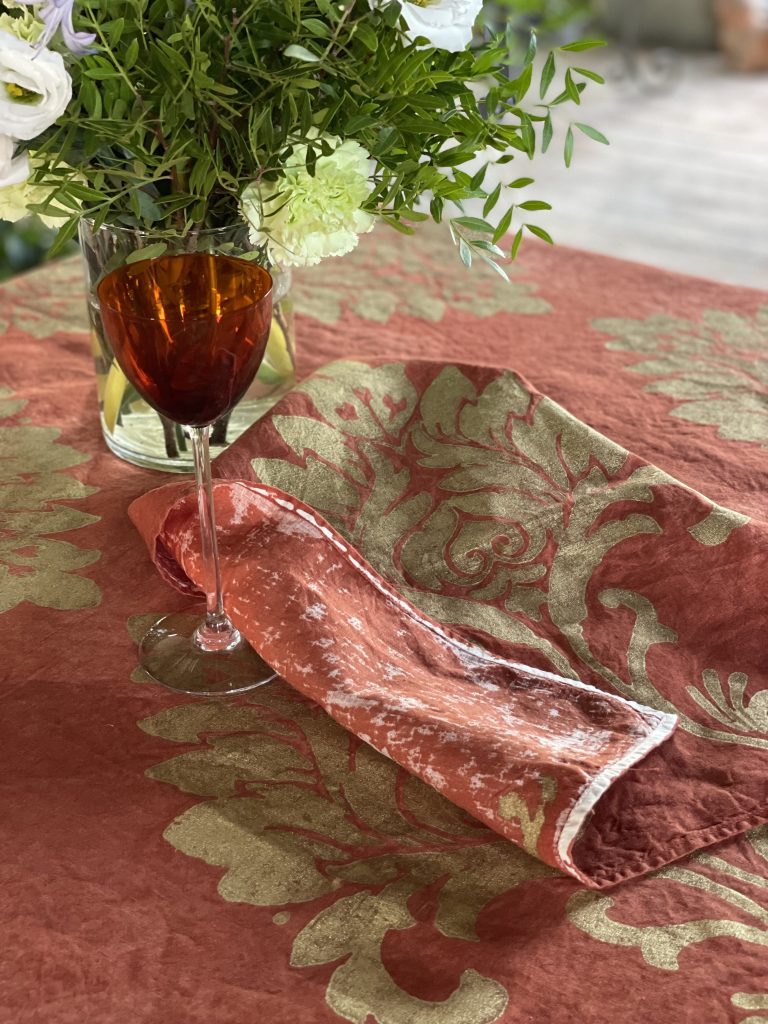
When moving from ceramics to luxury linens, authenticity can be verified by studying the weave structure and checking the reverse side of the fabric.
Factory textile printing uses large rotary machines or digital printers that apply a set amount of machine pressure to push ink onto the top layer of the fabric. This process only coats the very surface of the yarns, leaving the deep gaps in the linen weave completely untouched, meaning the back of the fabric remains plain and white.
In complete contrast, traditional Italian hand woodblock printing, found in regions like Emilia-Romagna, relies on gravitational impact force. The artisan coats a hand-carved woodblock with dense mineral dyes, positions it by hand on the raw canvas, and strikes the back of the block with a heavy iron or traditional wooden mallet.
This heavy strike drives the thick dye deep into the core of the natural flax fibres. When the fabric is turned over, an authentic hand-printed linen tablecloth reveals a softened version of the pattern on the back, proving the traditional printing paste has saturated all the way through the material. This deep saturation ensures long-term colourfastness and exceptional durability.
Wood-Grain Textures and Stamp Overlaps
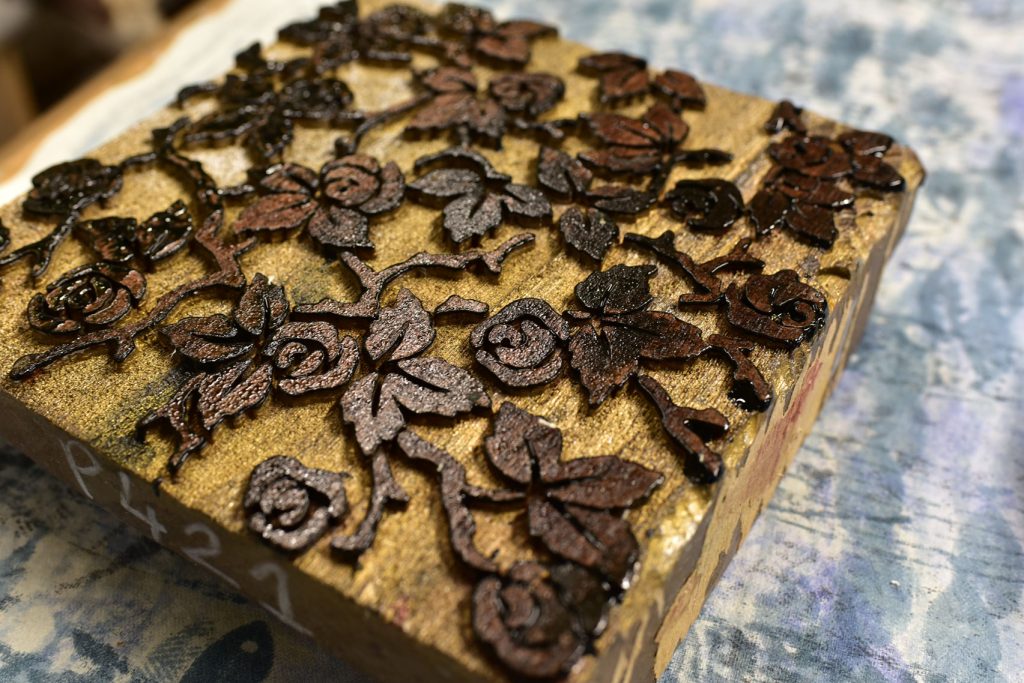
Because wood is an organic, porous material, it features a unique grain structure that absorbs and releases dyes in an unforced way. When a master carver creates a printing block, the microscopic natural ridges of the wood grain remain on the raised design.
When the block is pressed firmly against a tight linen weave using mallet impact, these subtle wood-grain textures are stamped directly onto the fabric. Under close inspection, authentic hand-blocked textiles reveal fine lines and organic shading within solid areas of colour, reflecting the growth rings of the original pearwood or walnut block.
Furthermore, because standard hand-carved blocks are relatively small, the artisan must repeat the stamping process multiple times to complete a long table runner or seamless tablecloth. This manual repetition creates subtle border overlaps where the edges of the block meet.
At these intersection points, one can often find thin lines of double-pigment density where the block slightly overlapped the previous stamp. This creates a visible record of the artisan’s journey down the fabric, which cannot be copied by continuous factory rollers.
Shuttle Loom Patterns and Organic Texture Nodes
The quality of handmade textiles is found within the construction of the base fabric itself. Mass-produced commercial linens are woven on high-speed industrial looms that run at extreme speeds to produce a completely uniform, flat textile surface.
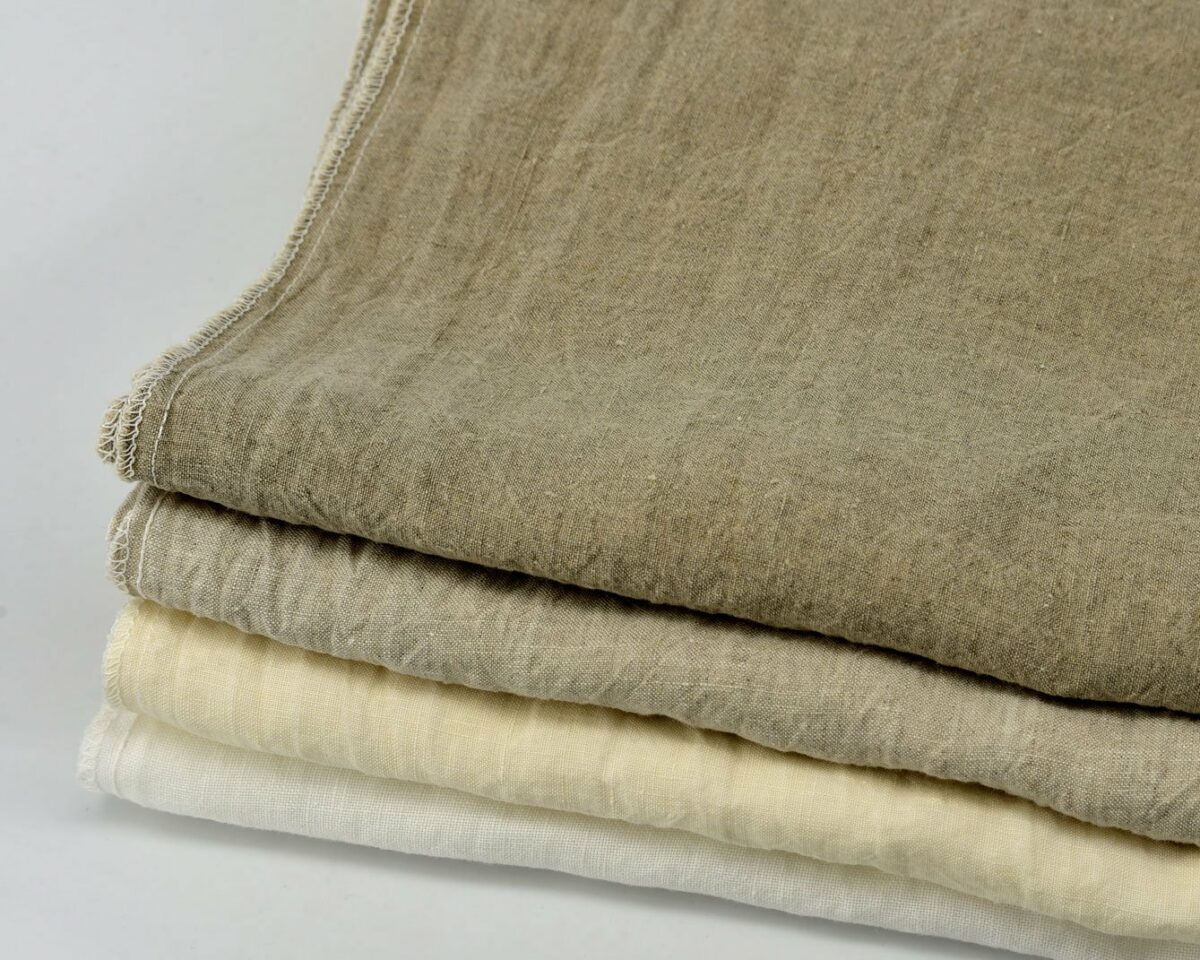
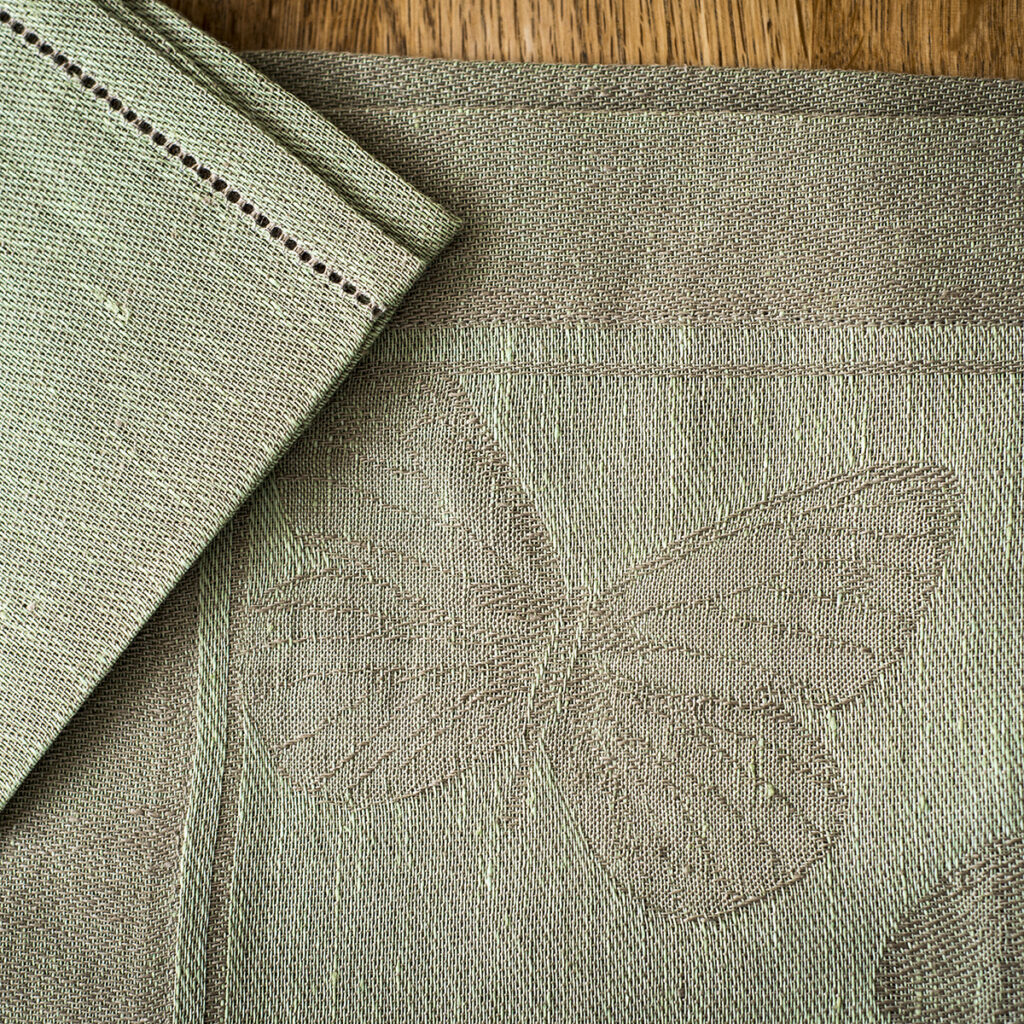
Authentic artisanal linen is woven on traditional, low-speed shuttle looms. These slower heritage looms easily accommodate organic, long-staple flax yarns that retain their unmodified structural variations, which are commonly known as natural slubbing nodes or neps.
These structural features are small, unforced thickenings in the flax fibre that occur during the biological harvesting and spinning stages. When inspected closely, authentic hand-printed linen displays a beautifully irregular distribution of these texture anomalies across the weave.
The resulting variations create tiny pockets of air that improve the insulation and breathability of the fabric. To explore how these traditional textile structures are preserved, designers and collectors can review the archival records at the Museo del Tessuto in Prato, which tracks traditional Italian weaving developments.
Section 4: Summary for Curating Your Spaces
Whether selecting tableware for an interior design project, a premium hospitality event, or a private dining room, checking these physical markers ensures an investment in true durability. Authentic hand-painted maiolica features deep mineral glazes that resist scratches from cutlery, while hand-stamped natural linens offer deep fibre saturation that handles regular washing without losing crisp pattern definition.
By focusing on these clear, physical realities, both professional interior designers and private hosts can ensure that dining spaces display true material integrity and exceptional functional performance for many years to come.