

News
Hand-Painted Italian Plates: Exploring the Timeless Beauty

Sep
The timeless artistry of Italian plates
Across Italy, tables have always been more than places to dine. They are stages for family stories, celebrations, and rituals of everyday beauty. At the heart of these settings often lies an object that is both humble and extraordinary: the hand-painted Italian plate.
Each plate carries a history stretching back centuries, painted stroke by stroke with motifs that echo Renaissance frescoes, Tuscan hillsides, or mythological tales. These pieces are at once functional and poetic, bridging daily life with the grandeur of Italy’s artistic heritage.
A heritage shaped by centuries
The tradition of hand-painting ceramics flourished during the Renaissance, when the Medici family in Florence and other noble patrons elevated pottery to the realm of fine art. Workshops in Deruta, Faenza, Sicily and Tuscany began producing richly decorated plates that reflected both local identity and broader cultural exchange.
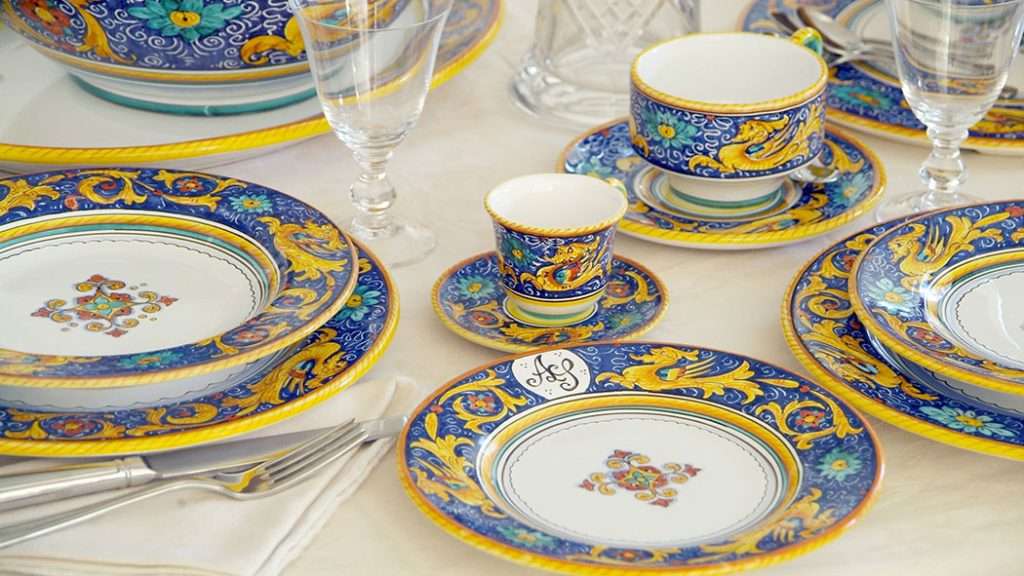
Credit: L’Antica Deruta Moretti
From the fifteenth century onwards, Italian artisans experimented with colour, glaze, and pattern, creating regional styles that remain distinctive today. Faenza became famous for its vivid maiolica, Deruta for geometric brilliance and gold details, Sicily for sunlit yellows and deep blues. To this day, each region continues to cultivate its own unmistakable visual language.
The making of a masterpiece
Behind every plate lies a demanding process, largely unchanged for generations.
- Clay shaping – The journey begins with fine clay, formed on a potter’s wheel or moulded into plates and left to dry.
- Glazing – Layers of glaze are applied to create a smooth, luminous surface.
- Sketching & painting – Artisans sketch a design lightly, then paint using delicate brushes and mineral pigments. Details can be so fine that magnifying glasses are used to capture every petal or vine.
- Firing – The painted plate is fired in a kiln at high heat, fixing colours into a surface both durable and radiant.
The entire process is patient and precise, often requiring days for a single piece. What emerges is not only tableware, but an object imbued with time and care.
Techniques that define Italian ceramics
The character of a hand-painted Italian plate is shaped as much by technique as by design. Over centuries, artisans have perfected methods that not only enhance colour and form but also give each region its distinctive voice. Three approaches, remain central to Italian ceramic artistry:
Maiolica

Credit: Maestri Maiolicari Faentini
Maiolica, perhaps the most celebrated technique, is a form of tin-glazed earthenware that dates back to the Renaissance. The glaze, made opaque and bright white through the addition of tin oxide, transforms the surface into a perfect canvas for painting. Artists could finally render complex scenes with the vibrancy and clarity of fresco painting – landscapes, allegories, coats of arms, even biblical stories. A plate decorated in maiolica was never just a vessel; it was a status symbol, often commissioned by noble families to mark marriages, victories, or special feasts. Today, workshops in Deruta and Faenza continue to create dazzling maiolica, balancing historical motifs with contemporary reinterpretations.
Sgraffito
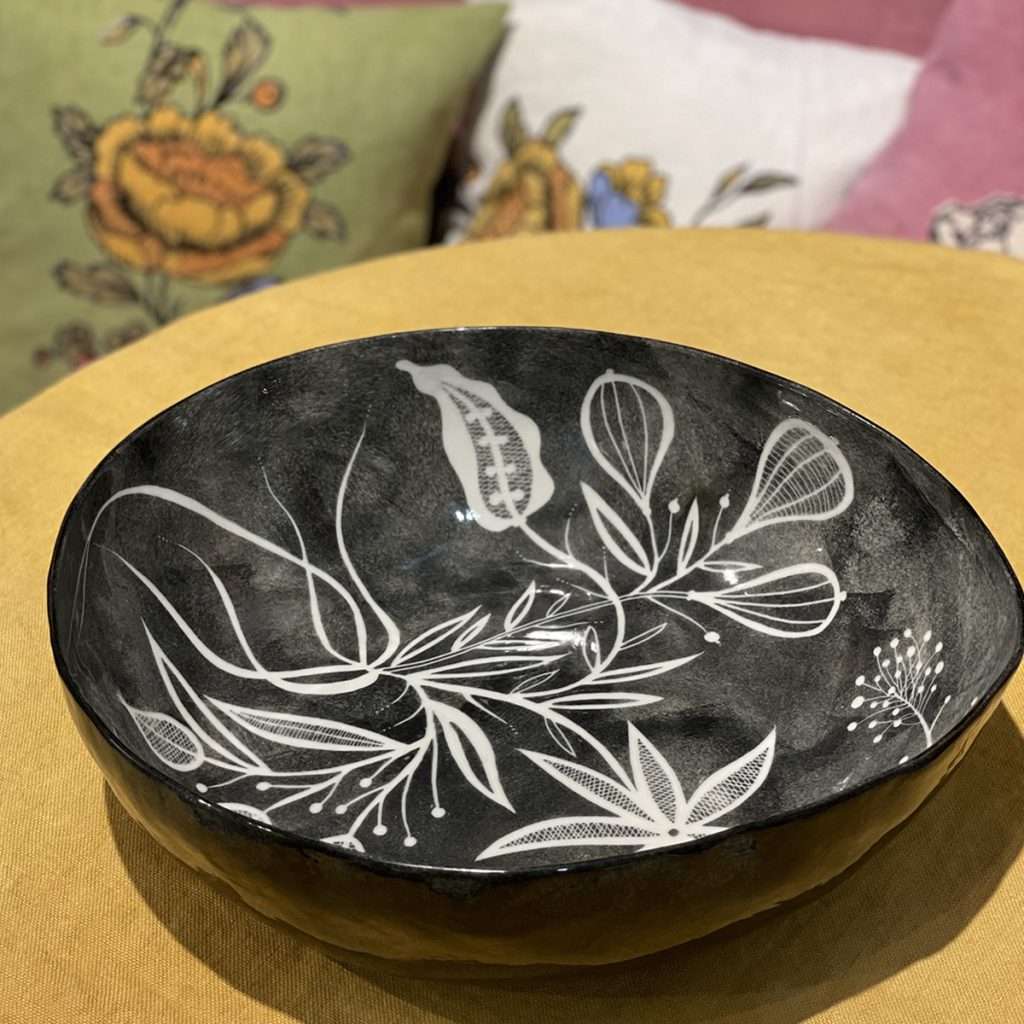
Sgraffito takes its name from the Italian word sgraffiare, “to scratch.” In this method, artisans apply layers of coloured slip or glaze, then incise designs to reveal the contrasting tone underneath. The results are bold and tactile – scrolling borders, geometric patterns, or stylised animals that seem to leap from the clay. Because the decoration is literally carved into the surface, sgraffito plates often carry a striking graphic quality, almost like woodcuts or engravings. This technique has roots in medieval pottery but flourished during the Renaissance, particularly in Tuscany and Emilia-Romagna, where potters used it to bring drama and depth to everyday wares.
Camaieu

Camaieu, by contrast, is about restraint and subtlety. Here, artists limit themselves to shades of a single colour, most famously blue, green, or manganese brown, layering washes of tone to create shadow, depth, and atmosphere. The effect can be serene and contemplative, reminiscent of ink drawings or watercolours. Camaieu plates often depict delicate botanical studies, portraits, or mythological figures, their simplicity allowing the artistry of brushwork to shine. Collectors value these pieces not for exuberance but for quiet sophistication: a reminder that elegance sometimes lies in what is left unsaid.
Together, these techniques demonstrate the range of Italian ceramic art. From the luminous storytelling of maiolica to the bold incisions of sgraffito and the subtle shading of camaieu, each approach reveals a different dimension of beauty. A collection that combines them is not just visually diverse but historically resonant – a miniature journey through Italy’s artistic past.
Designs alive with story and symbol
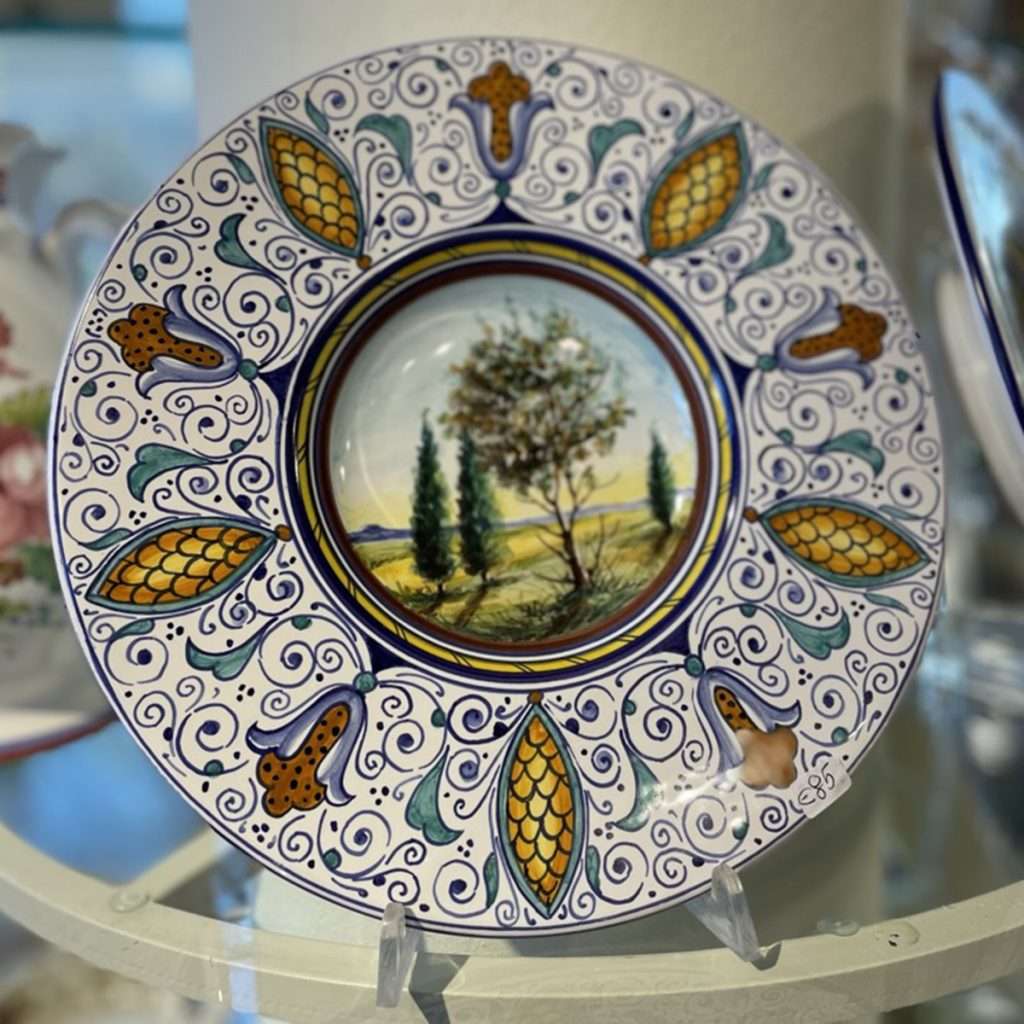
The motifs on Italian plates are far more than decoration; they carry cultural resonance and symbolic meaning.
- Tuscan landscapes evoke abundance and harmony with nature.
- Floral designs bring freshness and renewal to the table.
- Mythological scenes connect daily rituals with timeless narratives.
- Olives and vines symbolise peace, prosperity, and fertility.
Every brushstroke has a voice, transforming the surface into a canvas of cultural memory.
From the Renaissance to modern interiors
 Credit: Ceramiche Torretti
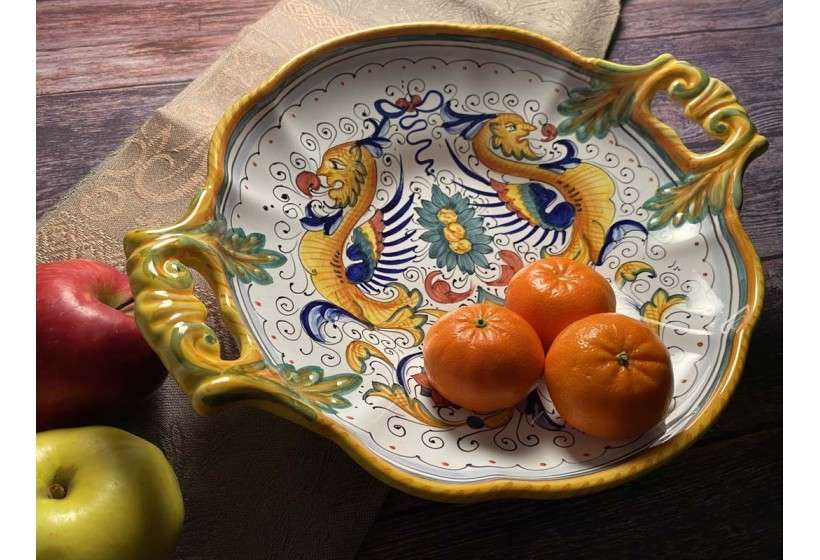
Hand-painted plates were once the treasures of aristocratic dining rooms. Today, they continue to inspire collectors, designers, and anyone drawn to Italian style. Displayed on walls, arranged as a table centrepiece, or integrated into contemporary interiors, they bridge past and present with quiet elegance.
Many interior designers favour the play of mixing plates from different regions – a Deruta sunburst alongside a Faenza blue, or a Sicilian citrus motif beside a Tuscan vineyard scene. The dialogue of patterns creates a dynamic visual rhythm that enlivens a room.
Living with and caring for hand-painted plates
Though decorative, these plates are designed for life. When cared for gently – washed by hand, protected from extremes of temperature, stored with care – they endure for generations. Their durability is part of their charm: each use adds to their story.
Collectors often describe them not just as objects, but as companions in daily rituals turning an ordinary meal into an aesthetic moment, or a gathering into a celebration.
Where tradition thrives today
 The artistry of hand-painted Italian plates thrives in the same regions that first gave it life. Workshops in Faenza, Deruta, Vietri sul Mare and Sicily remain vibrant, producing new pieces while respecting heritage. Artisan markets, specialist studios, and select online platforms connect today’s collectors with authentic creations, often signed and dated by the makers themselves.
This continuity is part of what makes Italian ceramics so compelling: the knowledge is never static but evolves as each generation adds its own interpretation to the tradition.
Enduring beauty, everyday poetry

Like the artisans themselves, these plates remind us that beauty is best when it is lived with, shared, and carried forward. Their timeless allure lies not just in colour and form, but in the stories they keep alive.