

News
Fabric Patterns for the Home: A Guide to Motifs, Techniques and Everyday Use
May
Fabric patterns are often the first element you notice in a room, but they do more than decorate a surface. They shape how a space feels, how different elements come together, and how textiles are used in everyday life.
Looking at fabric patterns in the home means considering not only the motif itself, but also how it is made. A pattern can be woven into the structure of the cloth, printed by hand, or painted directly onto the fabric. Each approach produces a different result, even when the motif is similar.
Understanding these differences makes it easier to choose textiles that feel right, whether for the table, the bedroom, or the wider home.
Natural and Figurative Patterns
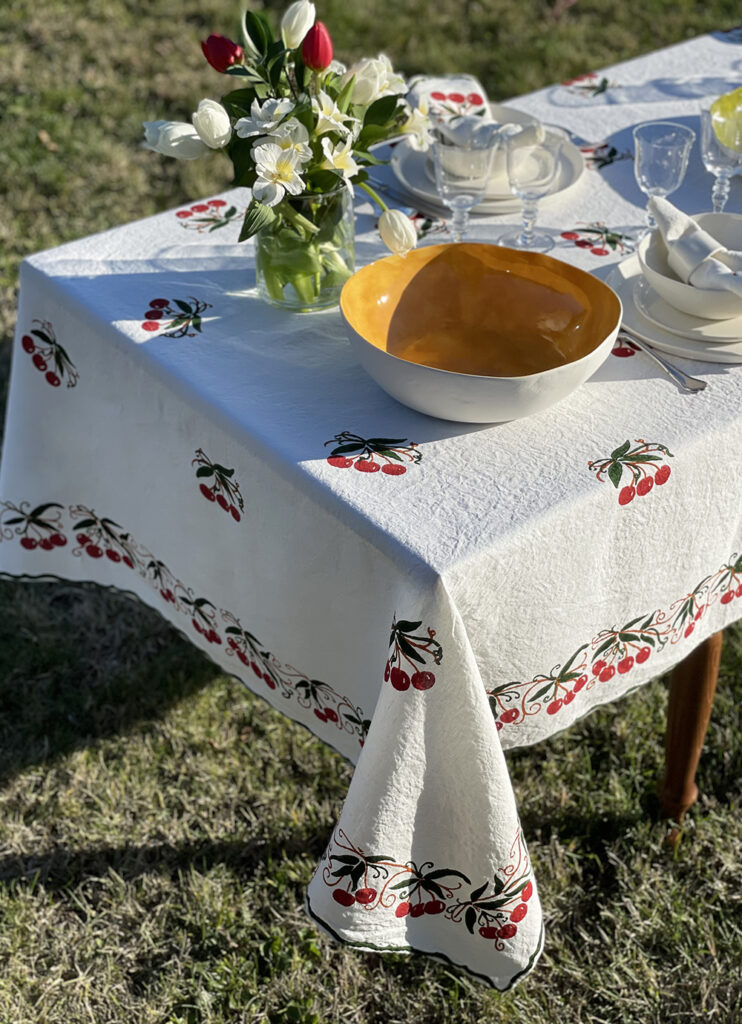
Some of the most familiar patterns are those drawn from nature. Leaves, fruits, flowers, and branches appear across many fabrics, particularly in Italian design.
These motifs are often arranged in a way that feels balanced without being rigid. Grapes, pomegranates, citrus fruits, or small blossoms repeat across the surface, creating a rhythm that works well on larger pieces such as tablecloths or curtains.
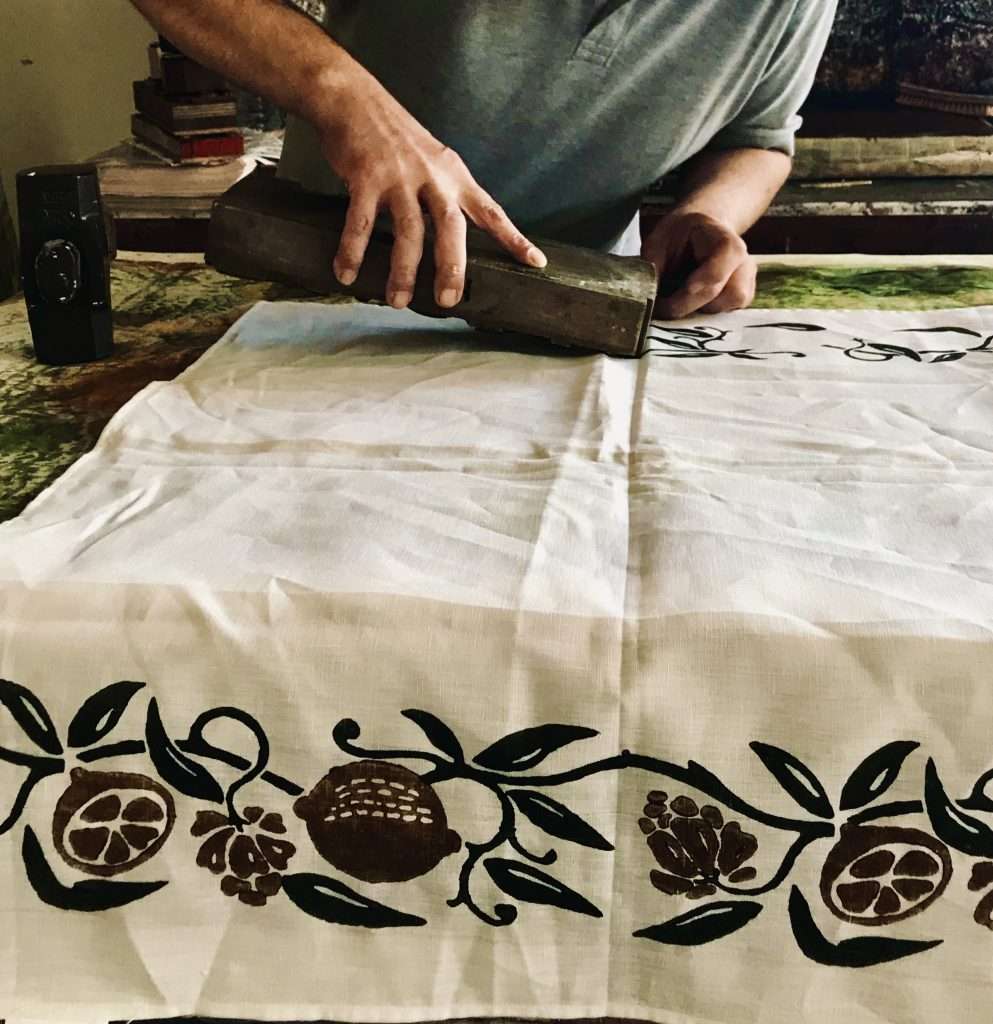
In block-printed or hand-painted fabrics, these patterns tend to retain a certain clarity. Each element is defined, and the repetition gives structure without making the design feel heavy. This is one of the reasons they work so well in everyday settings: they are detailed enough to be interesting, but not so complex that they dominate the space. On a dining table, for example, fruit or floral motifs sit comfortably around plates and serving dishes, remaining visible without competing with what is placed on top.
In woven textiles, the same motifs take on a different quality. The pattern emerges through the weave, often with a softer contrast, making it more subtle when seen from a distance, such as on curtains or blinds where the design becomes more apparent as light passes through the fabric.
Animal and Decorative Patterns
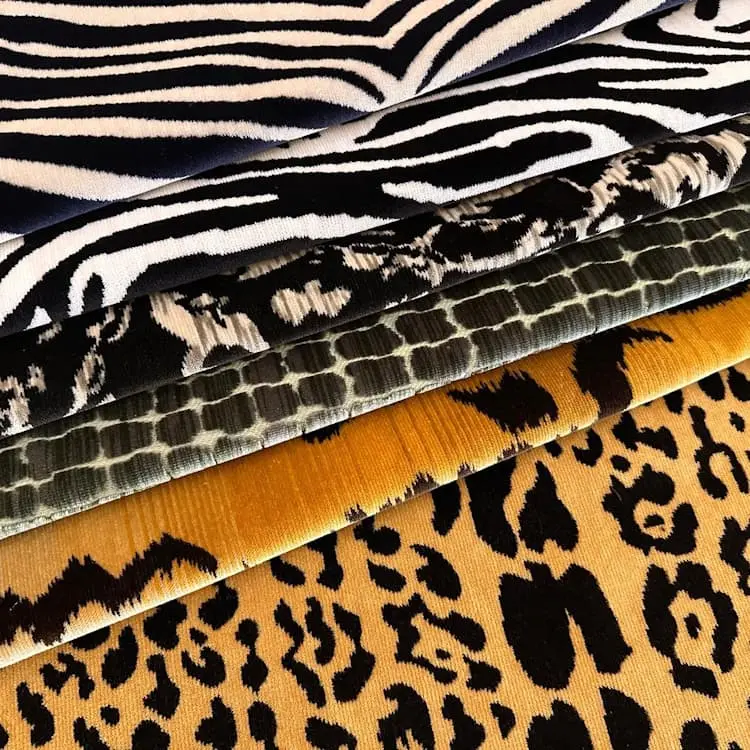
Credit: Luigi Bevilacqua
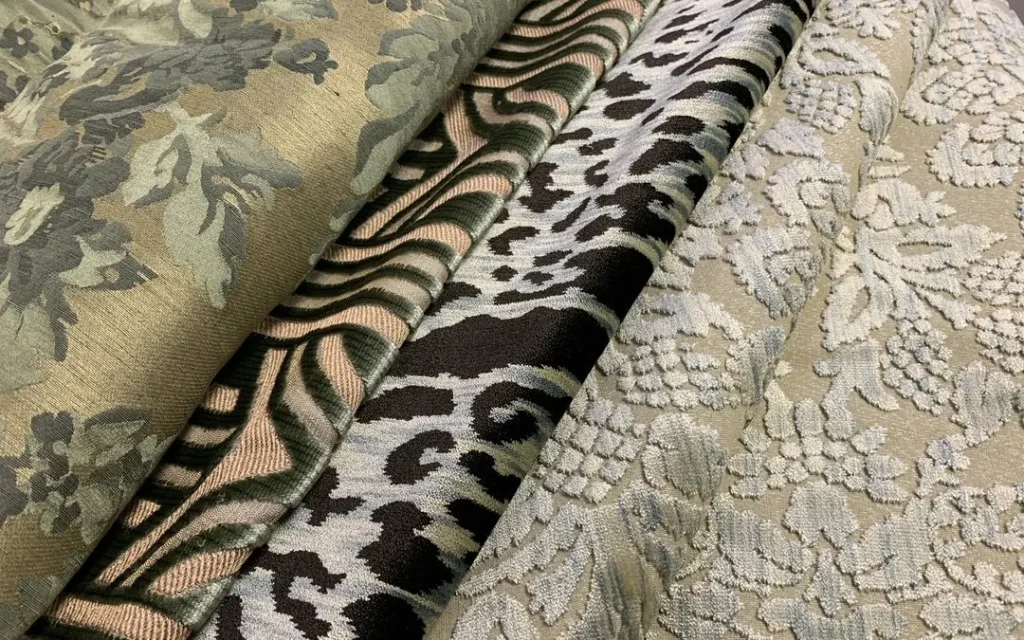
Animal-inspired patterns introduce a different type of presence. Designs such as zebra or leopard are more graphic and rely on contrast rather than detail.
Used in smaller elements, such as cushions or throws, they can add definition without overwhelming a room. A pair of zebra cushions on a plain sofa, for example, introduces variation without changing the overall balance. In larger formats, they create a stronger visual effect and tend to work best when balanced with simpler surroundings.
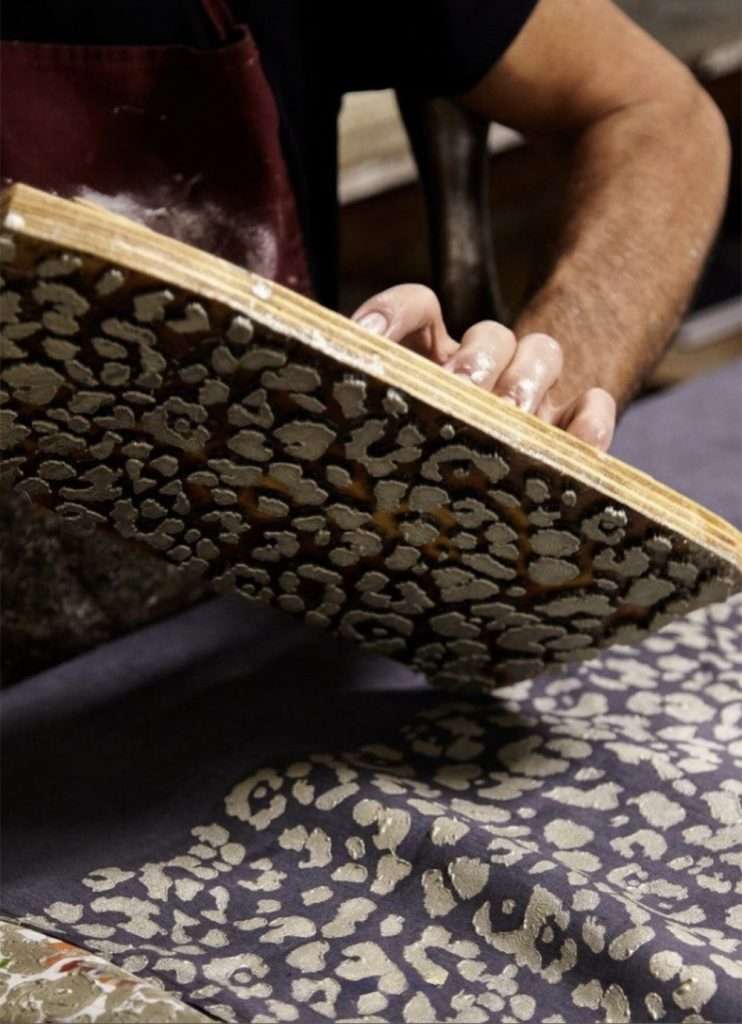
These patterns are not traditionally associated with Italian textile heritage in the same way as floral or fruit motifs, but they have become part of contemporary interiors. When applied through hand-printing or painting, they retain a certain irregularity that softens their appearance.
In this context, they are less about bold statements and more about introducing variation within a broader scheme, for instance when combined with plain linens or neutral bedding.
Geometric and Structured Patterns
Geometric patterns are defined by repetition and order. Stripes, checks, and bordered designs are among the most widely used because they are easy to combine with other elements.

Stripes, in particular, are versatile. Narrow stripes create a more refined look, while wider ones feel more relaxed. They are often used in table linens, bedding, cushions, and curtains, where they provide structure without adding complexity. On a table, stripes can help organise the setting visually, guiding the placement of plates, glasses, and cutlery.
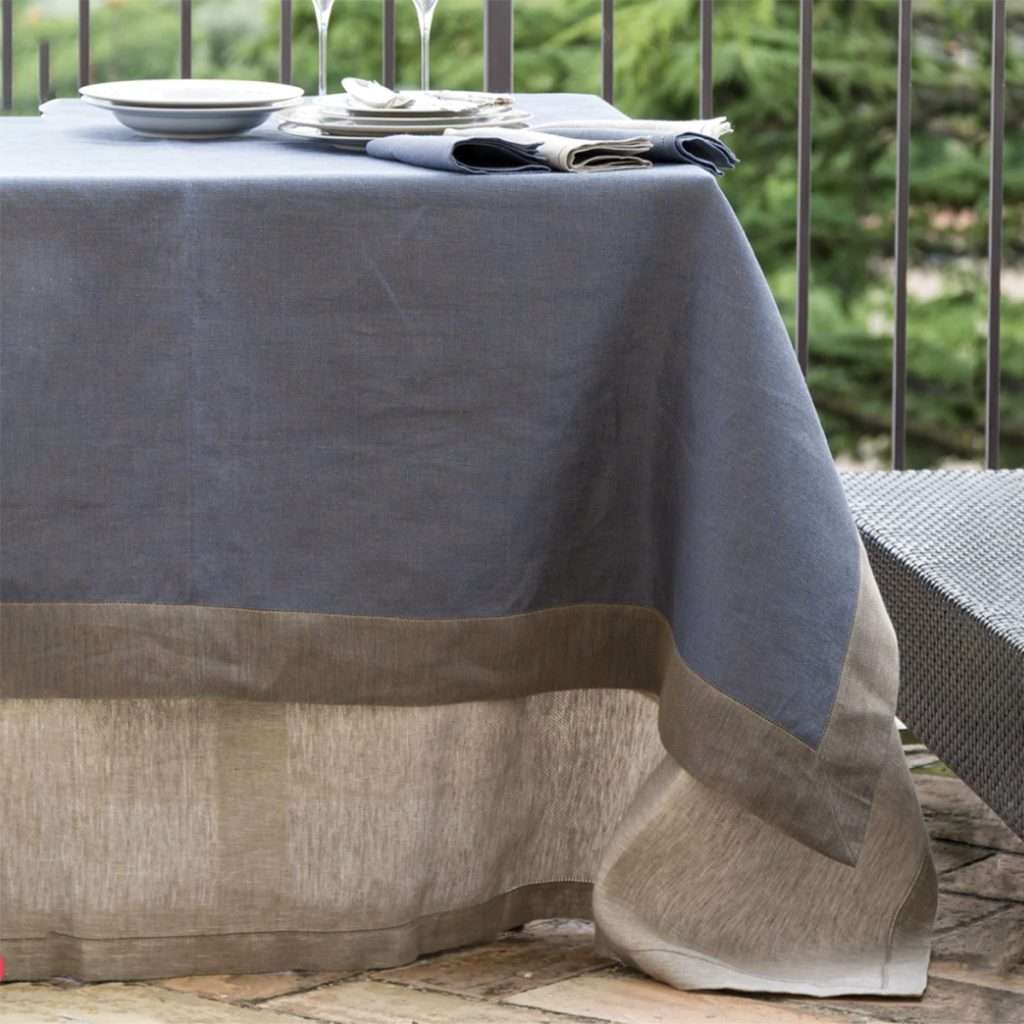
Borders play a similar role. A defined edge, whether simple or more decorative, helps frame the textile and gives it a clearer presence on the table or bed. A bordered tablecloth, for example, creates a natural boundary that defines the space where the setting takes place.
These patterns appear across different techniques. They can be woven into the fabric or applied through block-printing and hand-painting. Woven versions tend to sit more quietly within the cloth, while printed or painted patterns stand out more clearly on the surface.
Herringbone and Directional Patterns
Patterns such as herringbone or chevron are built through direction rather than motif. The design is created by the way the lines move across the fabric, forming a repeated V-shaped structure.
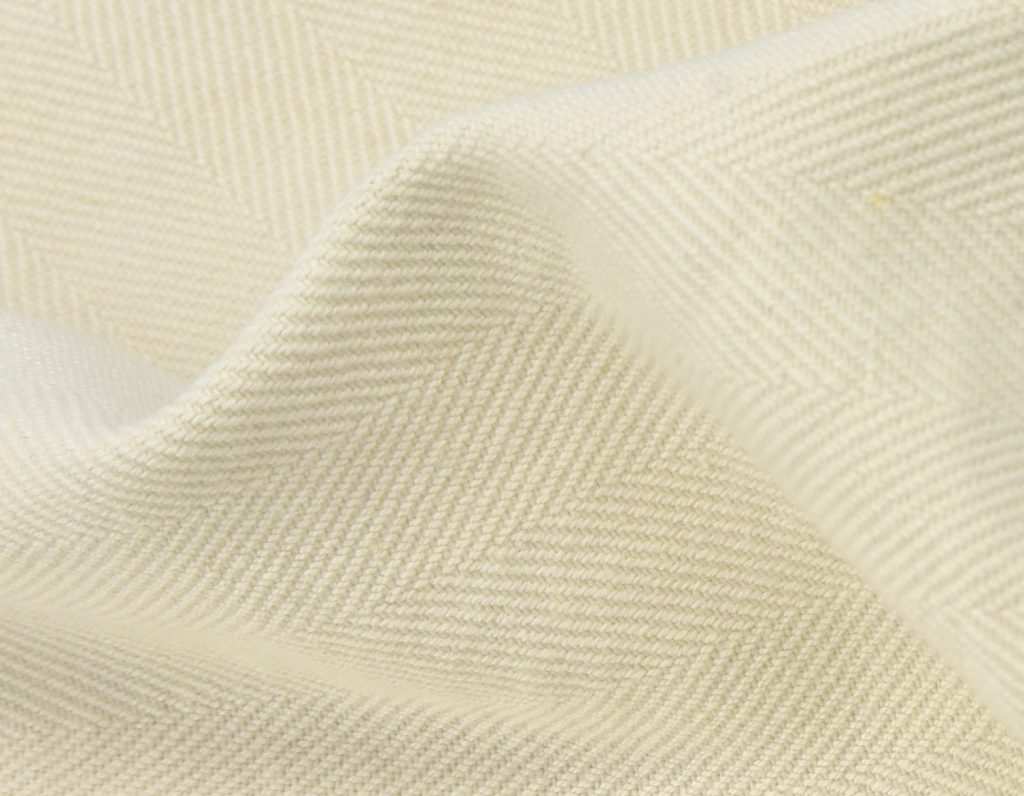
In woven textiles, this pattern is created directly through the structure of the weave, where the yarns are arranged to form the characteristic zigzag. This gives the surface a subtle texture as well as a visual pattern.
At the same time, herringbone can also be interpreted through other techniques. In hand-printed or hand-painted fabrics, the pattern is applied onto the surface, often with slight variations that reflect the manual process. This creates a more irregular effect while maintaining the recognisable structure of the design.
This flexibility allows the same pattern to shift in character depending on how it is made, from more defined and regular to softer and more varied.
In the home, these patterns work well in bedding, throws, and cushions, where the repetition helps connect different elements across the room. A herringbone throw, for example, can link plain bedding with patterned cushions without introducing a completely different motif.
Damask and Renaissance-Inspired Patterns
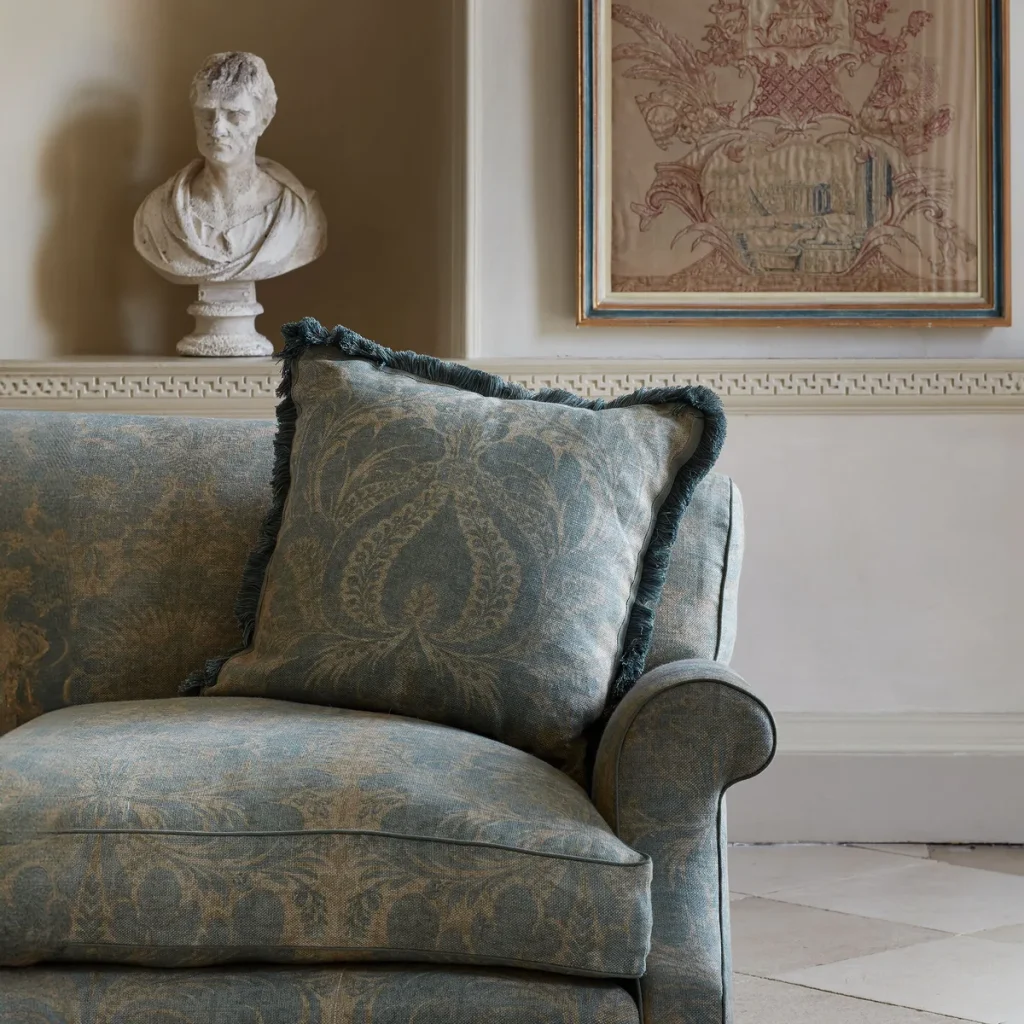
Credit: Chelsea Textiles
More elaborate patterns, such as damask or Renaissance-inspired motifs, are rooted in decorative traditions.
Damask is typically woven, with the pattern emerging through a contrast between matte and slightly more reflective surfaces. The design often features large-scale floral or ornamental elements arranged in a symmetrical layout. This type of weaving has a long history, particularly in Venice, where historic workshops such as Luigi Bevilacqua continue to produce complex textiles on traditional looms.
In contemporary use, damask works best when it is allowed to sit beneath the setting rather than compete with it. A damask tablecloth, for example, can be paired with plain ceramics or glassware, where the pattern becomes more noticeable as the table clears.

Renaissance-inspired patterns follow a similar logic, drawing on architectural and decorative references. These designs tend to be more structured, with repeated elements that become clearer when seen across larger surfaces.
In bedding or curtains, both damask and Renaissance patterns benefit from space. Spread across a full bed or a length of fabric, the repetition becomes more legible, while softer tones reduce contrast and allow the pattern to settle into the room.
Tropical and Contemporary Patterns
Tropical patterns take a different approach. Larger leaves, more open compositions, and a wider use of colour create designs that feel more spread out across the fabric.
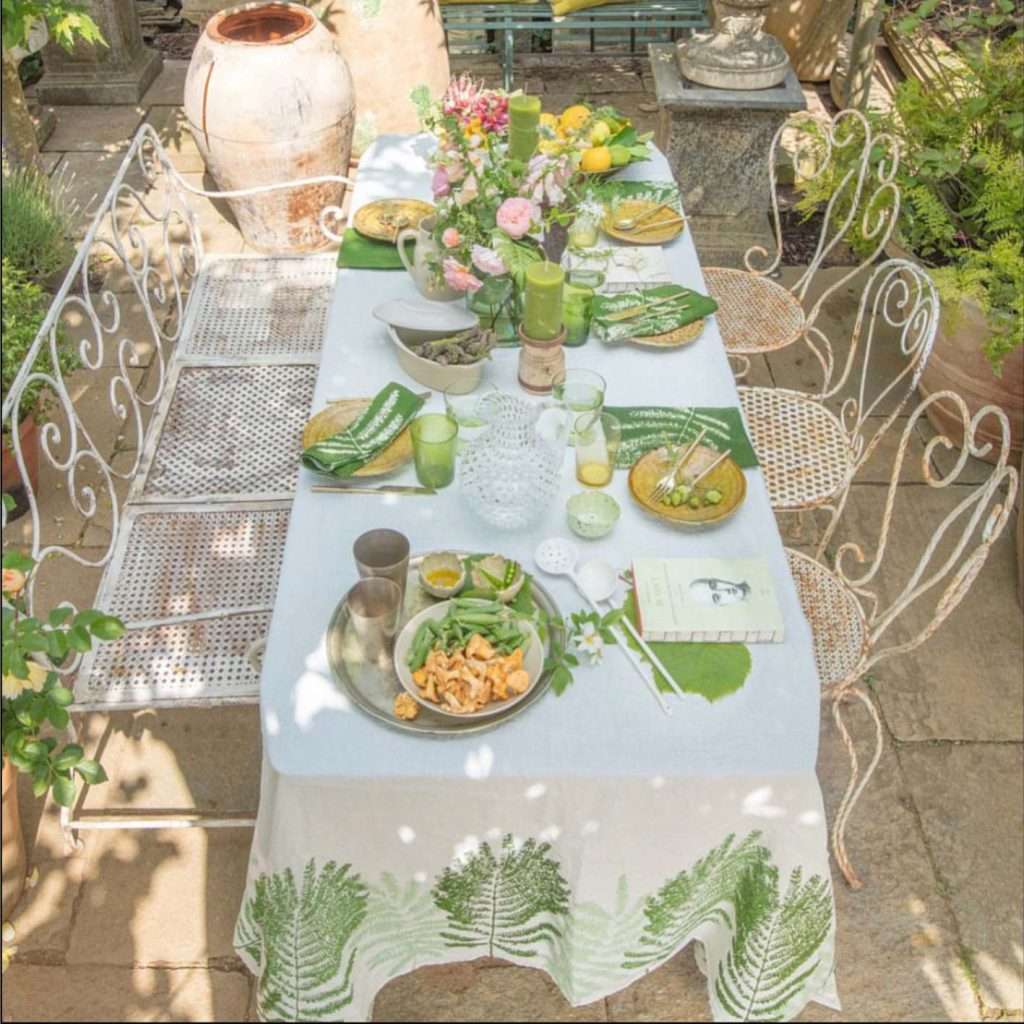
These patterns are often associated with warmer climates, but they can be adapted to different interiors depending on how they are used. On the table, they introduce movement across the surface, especially when combined with simple tableware. In curtains or cushions, they can break up more structured arrangements, adding variation without changing the overall layout.
Compared to traditional motifs, tropical patterns rely less on tight repetition. The spacing between elements allows more of the base fabric to remain visible, giving the design a lighter appearance and making it easier to combine with plain textiles.
How Patterns Are Made
The technique used to create a pattern has a direct effect on how it appears.
In woven textiles, the pattern is part of the fabric from the beginning. It is created on the loom, often using methods such as jacquard weaving. This means the design is formed by the interlacing of threads rather than applied afterwards, becoming fully integrated into the cloth. As the light changes, the pattern can appear slightly different, with areas of the weave catching light in different ways, for example on a curtain where the design shifts throughout the day.
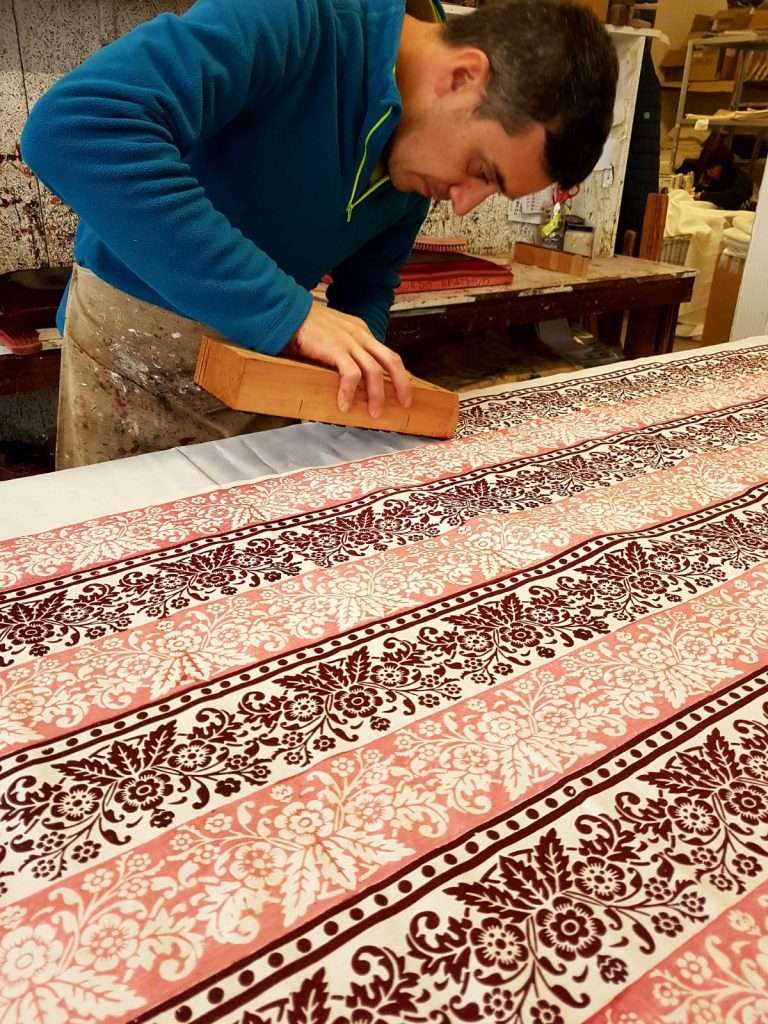
Block printing and hand-painting follow a different approach. The pattern is applied to the surface after the fabric has been made, allowing for more variation, as each impression or brushstroke introduces slight differences. This is often visible on table linens, where small irregularities become part of the overall character.
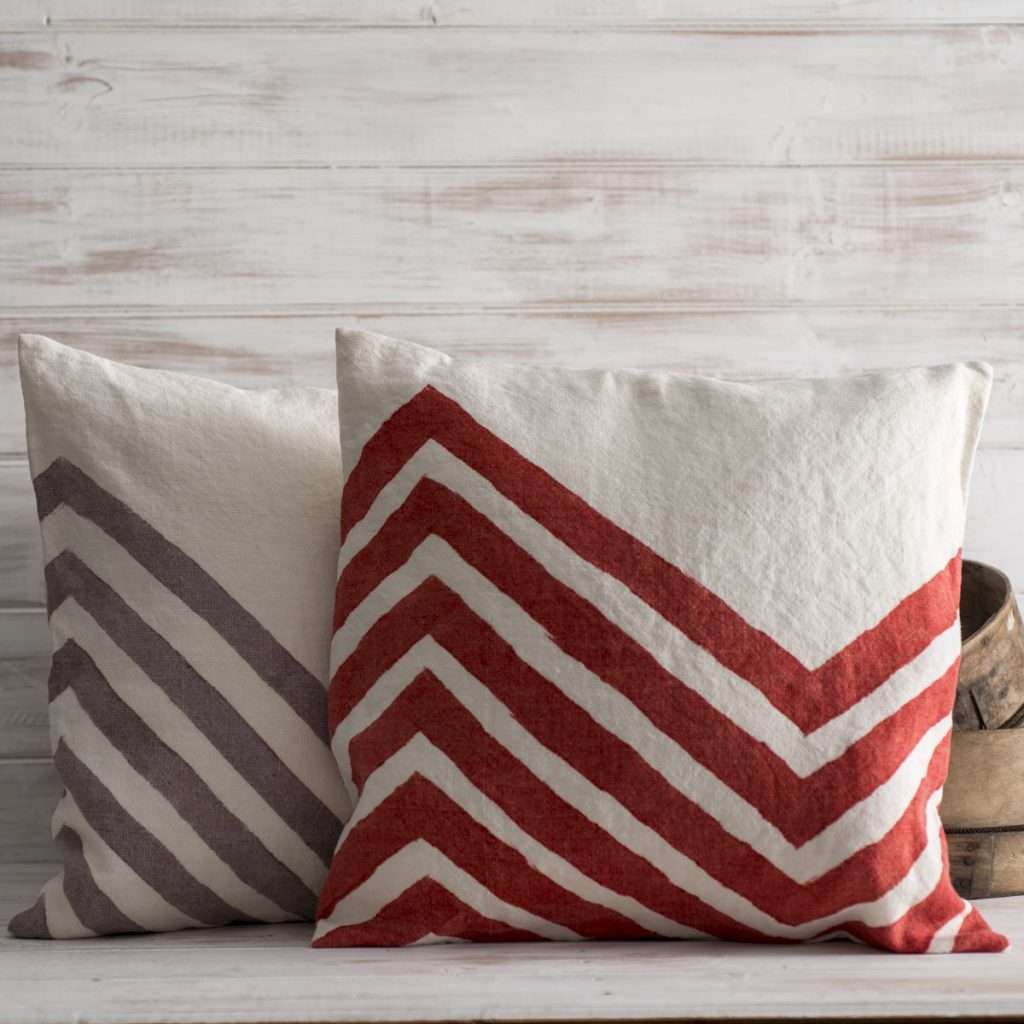
A pattern such as herringbone, for example, can look very precise when woven but more irregular and expressive when printed or painted by hand. The same applies to floral or geometric motifs.
Understanding this distinction helps in choosing between textiles that feel more structured and those that have a more visible handmade quality.
Patterns in Different Spaces
Patterns interact differently with a room depending on where they are used.
On the table, designs are seen at close range and in combination with other elements such as plates, glassware, and food. This means they need to be clear without being overwhelming. Structured borders and balanced motifs tend to work well here, remaining elegant when the table is in use.
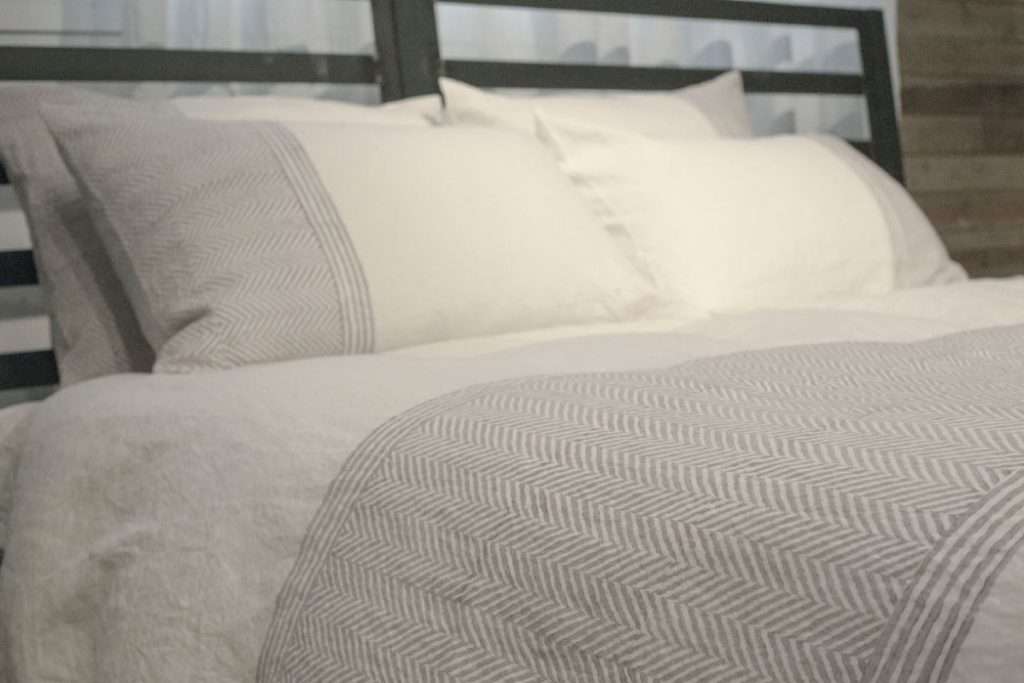
In the bedroom, patterns are often seen across larger surfaces. Bedding and cushions benefit from designs that can be repeated without becoming tiring. Directional patterns, soft florals, and subtle geometric designs are particularly effective, for example when layered across sheets, pillowcases, and throws.
Curtains sit somewhere in between. They frame a space and are visible from a distance, so patterns need to work both up close and from afar. Larger motifs or more open designs suit this context perfectly, especially when light passes through the fabric and highlights the pattern.
Choosing and Combining Patterns
Selecting patterns depends on how they interact within a space.
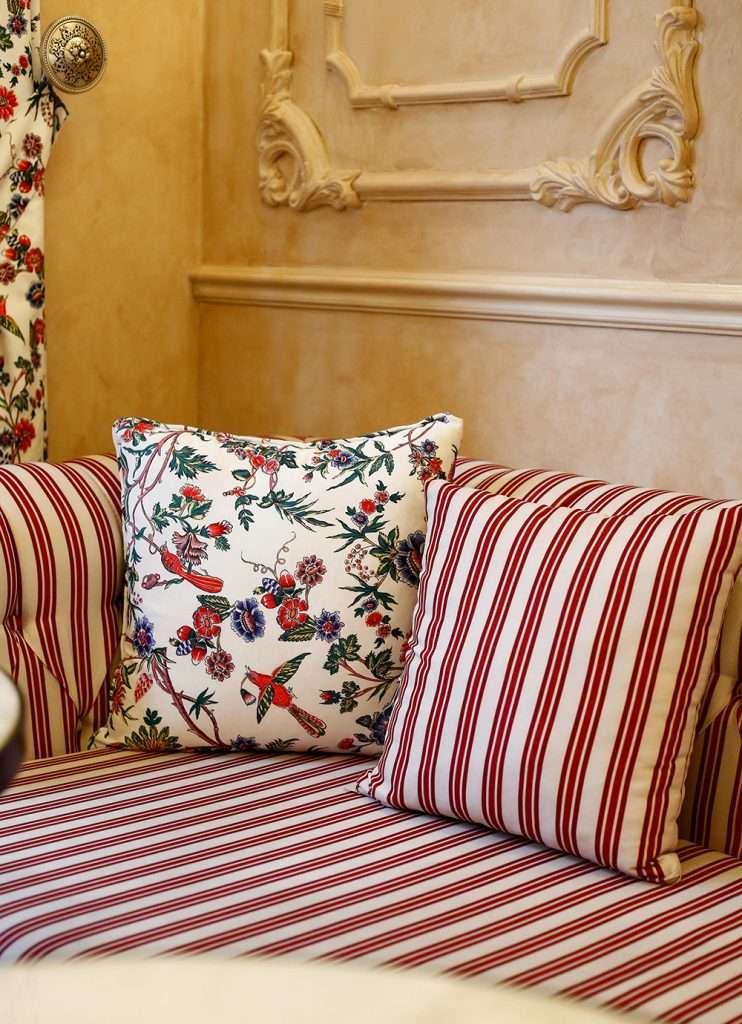
Combining different types of patterns work best when there is a clear contrast between them. A geometric design can sit alongside a more organic motif, provided there is a link in colour or scale. For example, striped cushions often pair well with a floral bedspread if the colours remain consistent.
In many cases, letting one dominant pattern stand out is enough. Keeping other textiles simpler, such as a patterned tablecloth paired with plain napkins, allows the main design to remain the focus without creating visual confusion.
Smaller elements like cushions or tea towels can then be used to introduce variation, adding detail without changing the overall balance.
Conclusion
Fabric patterns are not just decorative details. They influence how textiles are perceived and how they function within a space.
Looking at patterns through their motifs, their techniques, and their use in the home provides a clearer understanding of how to work with them. Whether woven, block-printed, or hand-painted, each approach offers a different way of bringing design into everyday life.
By considering both the visual aspect and the method behind it, patterns become easier to place and to combine, creating spaces that feel coherent without being overly planned.
FAQ
What are the main types of fabric patterns used in the home?
The most common include floral and organic motifs, geometric patterns such as stripes and checks, directional designs like herringbone, and more decorative styles such as damask. In practice, these are often chosen based on where they are used: structured patterns tend to work well on the table, softer repeats in bedding, and larger motifs for curtains or wider surfaces.
What is the difference between woven and printed patterns?
Woven patterns are created directly on the loom, forming part of the fabric itself. Printed or hand-painted patterns are applied afterwards, sitting on the surface. This affects both the appearance and the texture of the textile.
Can the same pattern exist in different techniques?
Yes. A pattern like herringbone can be woven into the structure of the fabric or applied through block printing or hand-painting. Each method produces a different result, from more regular and structured to softer and slightly varied, depending on how the pattern is made.
How do you choose the right pattern for a table setting?
Table patterns should harmonize with the plates, glassware, and decorative accents. Designs with a clear structure, such as borders or evenly spaced motifs, tend to be more effective because they remain visible around the setting rather than competing with it. You can explore examples in our table linens collection.
Are bold patterns like zebra or leopard suitable for interiors?
They are most impactful when used in smaller pieces such as cushions or throws. This allows them to introduce contrast without taking over the whole space, especially when paired with plain fabrics or neutral bedding.
Which patterns work best for bedding?
Patterns that repeat evenly, such as stripes, soft florals or directional designs, tend to be ideal for the bedroom. They can be layered across sheets, pillowcases and throws without creating visual breaks. You can see how these are used across our bed linen collection.
How can different patterns be combined in the same space?
Combining patterns works best when there is contrast in type but a link in colour or scale. For example, a striped fabric can sit alongside a floral one if both share similar tones, or if one pattern is more open and the other more dense. Smaller elements such as cushions or kitchen textiles can then introduce variation without changing the overall balance.