

News
Italian Table Setting: Creating a Beautiful Mediterranean Dining Table

Apr
An Italian table setting has a distinctive quality. It never feels overdone, yet it is always inviting. There is an ease to it — a sense that everything belongs, without appearing carefully arranged.
More than a visual style, it reflects a way of living. In Italy, the table is where meals unfold slowly, conversations stretch, and time is allowed to pass without urgency. The setting supports this rhythm.
Bringing a Mediterranean dining table into your own home is not about copying a fixed look. It is about understanding a few simple principles — materials, balance, and restraint — letting them guide the way you set the table. The result is something that feels natural, functional, and quietly considered.
Understanding the Italian Approach to the Table
To create an authentic Italian table setting, it helps to start with how the table is used.
Meals are rarely rushed. Even a simple lunch can last longer than expected, with dishes arriving gradually and people staying seated well after the meal is finished. Because of this, the table is not static. Plates are added or cleared, glasses move, bread is shared, and serving dishes come and go.
This shapes how the table is arranged. It needs to remain practical and comfortable, with enough space for interaction. Nothing should feel too delicate or fixed in place.
A rustic Italian table reflects this naturally. Linen may crease, tableware may not match perfectly, and objects are chosen for use rather than display. The setting feels lived-in rather than styled.
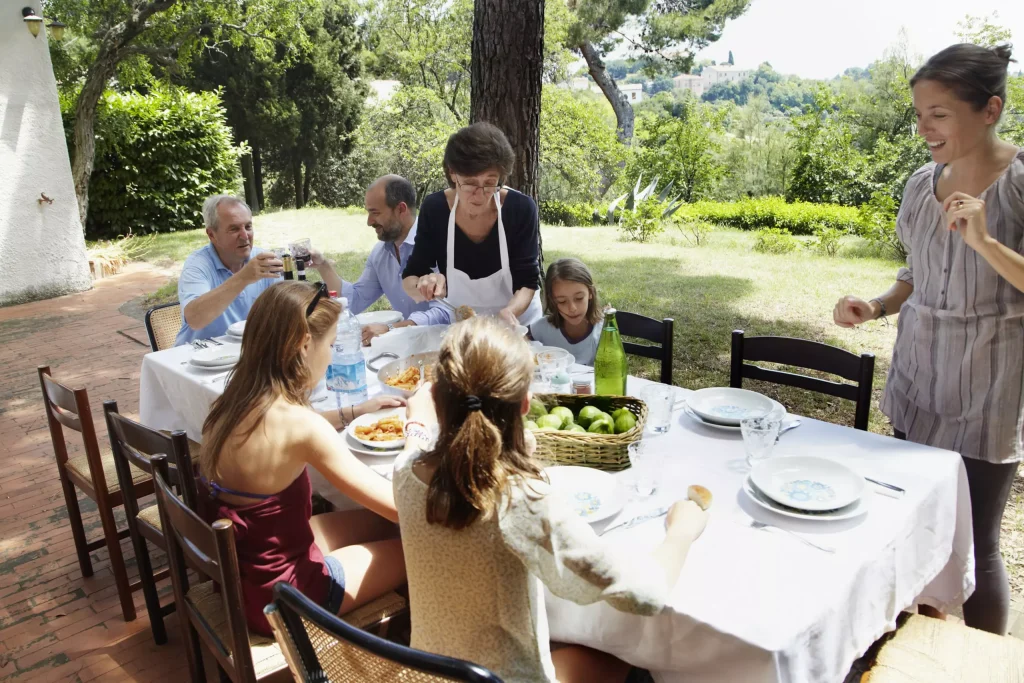
At its core, the Italian table is about conviviality — creating a space where people can gather easily. The visual aspect matters, but it never takes priority over the experience itself.
Natural Materials: The Foundation of a Mediterranean Table Setting
Linen Tablecloths: A Soft and Versatile Base
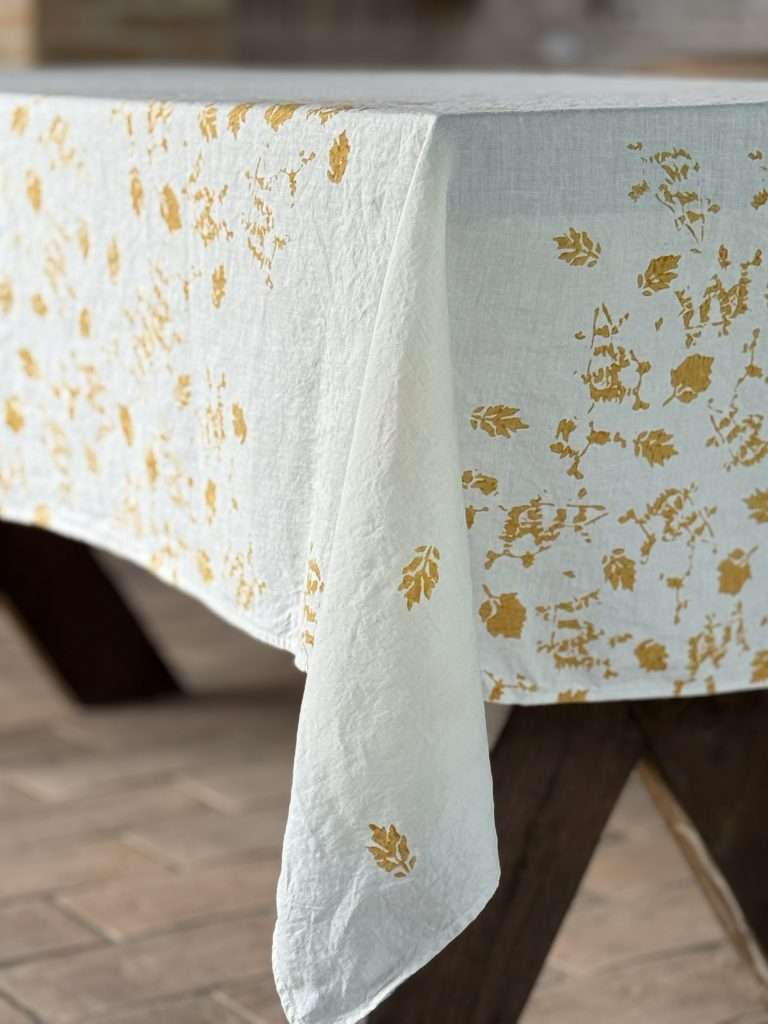
A linen tablecloth sets the tone for the entire table. It softens the surface and creates a relaxed foundation that works for both everyday meals and more considered occasions.
Unlike stiffer fabrics, linen falls naturally. Its folds and slight creases are part of its character rather than something to correct. This gives the table an effortless quality that is difficult to achieve with more structured materials.
Over time, linen becomes softer and more flexible. This makes it particularly suited to regular use, where the table is part of daily life rather than something reserved for special moments.
A simple linen tablecloth or runner is often enough. It allows other elements — plates, glassware, and decorative objects — to sit comfortably without competing for attention.
Ceramic Tableware: Variation and Craftsmanship
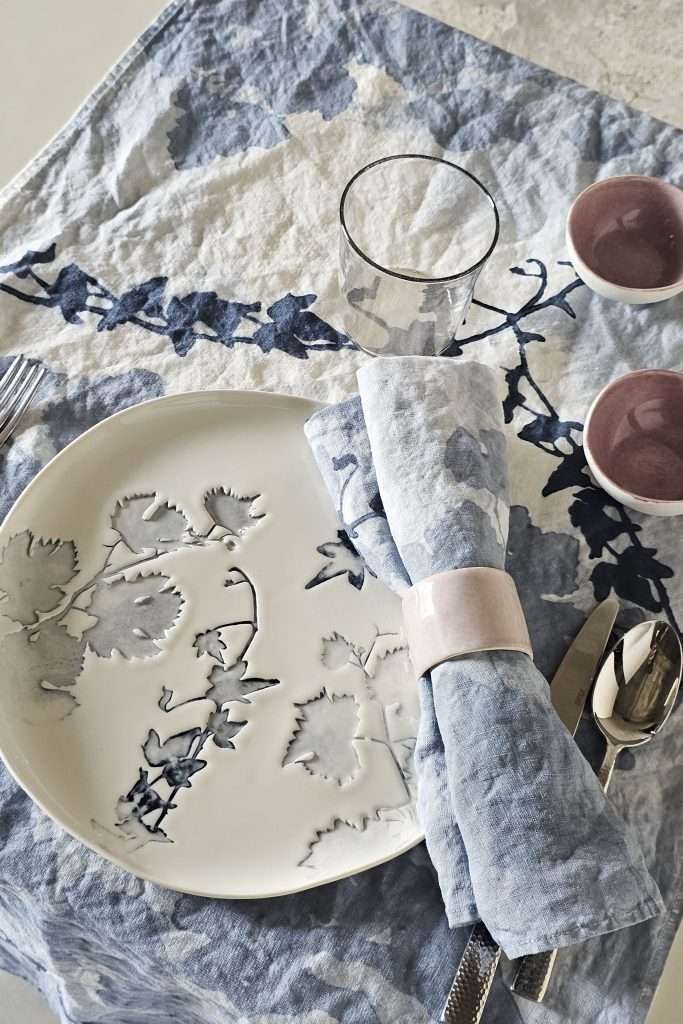
Ceramics add depth and individuality to the table. In Italian dining table styling, uniform sets are less important than the overall balance.
Plates and bowls may vary slightly in colour, glaze, or shape. These small differences prevent the table from feeling too coordinated and give it a more relaxed appearance.
Ceramic tableware also connects the table to a long tradition of craftsmanship. Across Italy, pottery has always been both practical and decorative, designed to be used every day.
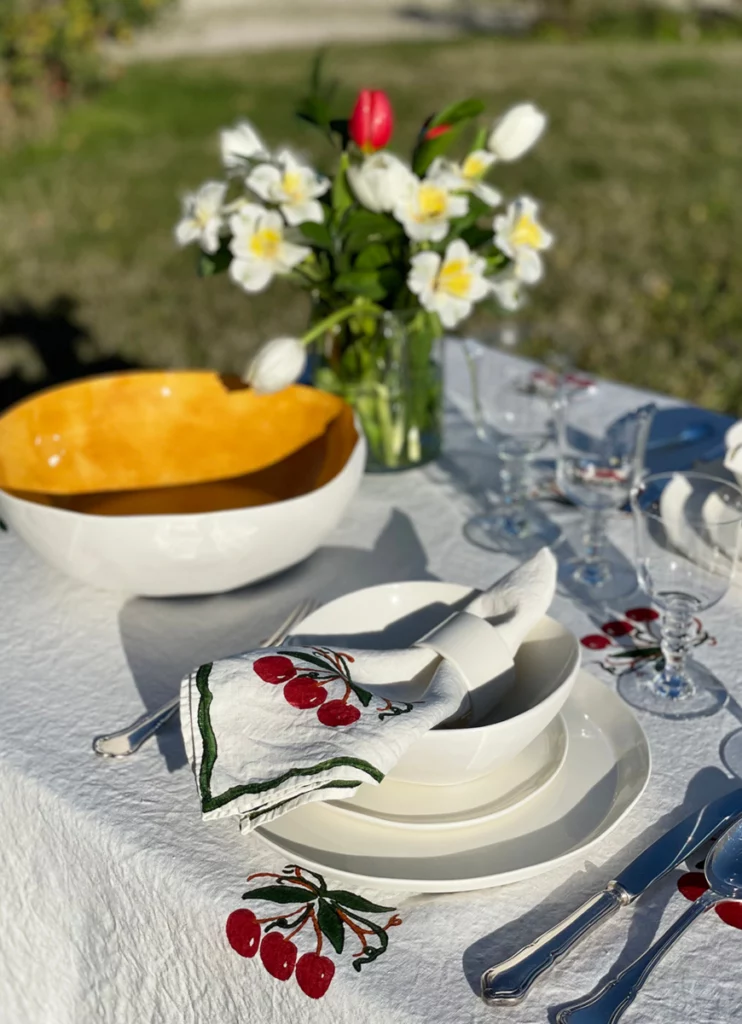
Placed on linen, ceramics create a pleasing contrast between texture and form. The softness of the fabric offsets the solidity of the plate, giving the table a grounded, tactile quality.
Glassware: Lightness and Reflection
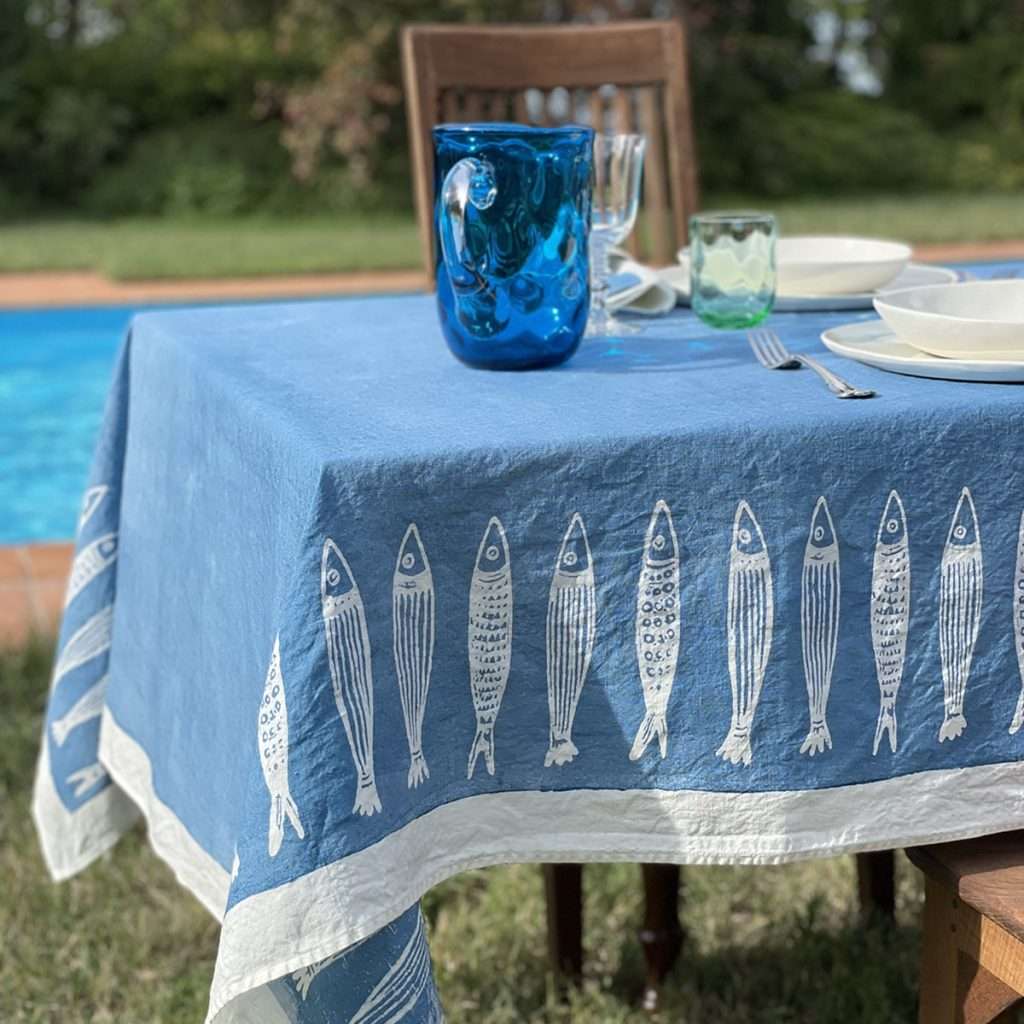
Glass introduces a lighter element to the table. It reflects natural light and adds subtle movement, especially during daytime meals.
Hand-finished or slightly irregular glass has a softness that works particularly well in a Mediterranean setting. Small variations in thickness or shape catch the light differently, adding interest without needing additional decoration.
There is no need to use many pieces. A few well-chosen glasses or a simple bowl can be enough.
A central bowl — filled with fruit or left empty — often becomes a natural focal point. It serves a purpose while contributing to the overall composition.
Simple and Natural Centrepieces
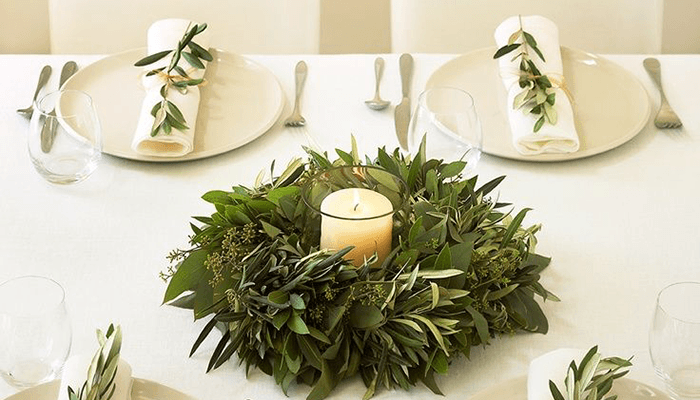 Mediterranean table décor is defined by restraint. Centrepieces are kept simple and are often made up of objects that would already be present in the home.
Instead of elaborate arrangements, the focus is on a few natural elements:
- a bowl of seasonal fruit
- a handful of fresh herbs
- a few loosely arranged stems
- candles in the evening
These are chosen because they feel appropriate to the setting.
Scale is important. The centre of the table should never obstruct conversation or take up too much space. It remains a shared surface, used for serving, eating, and gathering.
This approach keeps the table functional while still feeling considered.
Seasonal Changes in a Mediterranean Table Setting
Spring and Summer
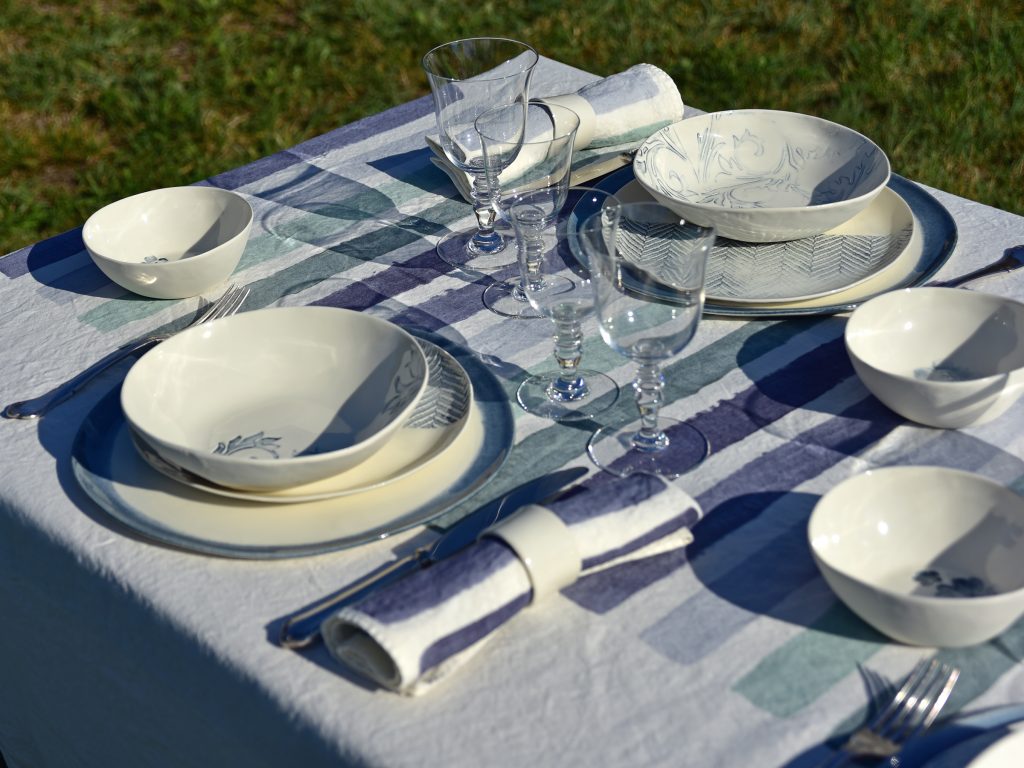
In warmer months, the table becomes lighter and more open.
Natural light does much of the work. Linen in softer tones, simple centrepieces, and fresh elements such as herbs or flowers create a sense of freshness. Meals often move outdoors, where the surroundings become part of the setting.
The overall effect is informal, but never careless.
Autumn and Winter
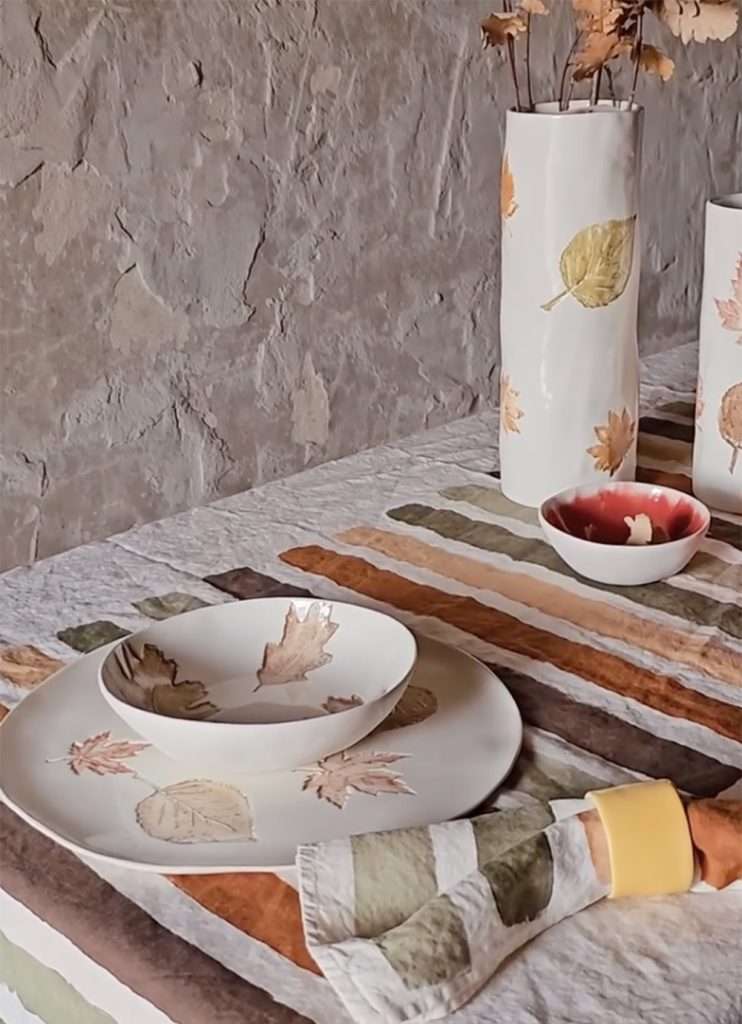
As the seasons change, the table takes on a more intimate character.
Colours deepen, and materials feel slightly heavier. Candlelight replaces daylight, creating a softer atmosphere. The table may feel more enclosed, but the arrangement remains simple.
Even with these changes, the same principles apply — nothing is overly arranged, and the table is always ready to be used.
Balancing Colours and Textures
An Italian table setting feels effortlessly put together, with a natural sense of balance.
A linen base is often enriched with hand-printed or hand-painted patterns that bring subtle character to the table. Rather than staying purely neutral, these textiles can introduce colour and movement without overwhelming the setting.
From there, other elements add variation:
- ceramics bring colour and depth
- glass adds lightness
- wood introduces warmth
These materials sit comfortably alongside one another, without needing to match exactly.
The overall palette often reflects the Mediterranean landscape – soft neutrals, muted greens, terracotta tones, and subtle blues – but it can also be guided by the tones within the textile itself.
If you are drawn to a coastal aesthetic, you can introduce lighter textures and sea-inspired elements in a restrained way. Pieces from our coastal collection can be explored here:
https://www.allorashop.com/product-category/unique-collections/coastal-home-decor/
Used sparingly, these elements add brightness without disrupting the relaxed character of the table.
How to Create an Italian Table Setting at Home
Bringing together a Mediterranean dining table does not require many elements. A few simple steps can guide the process:
- start with a linen tablecloth or runner
- choose practical, well-made tableware
- add one or two natural elements
- leave enough space for serving and sharing
- avoid over-arranging
It also helps to think about how the table will be used. A well-set table supports the meal rather than drawing attention away from it.
This approach reflects a broader Italian way of living, where food, materials, and craftsmanship are closely connected. Organisations such as Slow Food have long emphasised the importance of quality, tradition, and a slower, more considered approach to dining: https://www.slowfood.com
A Simple Italian Table Setting for Everyday Use

For a relaxed meal at home, an Italian table setting can be put together in just a few steps.
Start with a linen tablecloth or runner to soften the surface. There is no need to smooth it perfectly — a few natural creases help the table feel more at ease.
Place your plates at the centre of each setting, keeping the arrangement simple and functional. Glasses can sit just above or to the side, without strict positioning. The table should be practical and easy to use rather than formally structured.
At the centre, add one element that feels natural to the meal. A bowl of fruit, a small dish of olives, or a few sprigs of herbs is often enough. In the evening, a candle can replace this, bringing a softer atmosphere without changing the overall simplicity.
Leave space between each element so the table does not feel crowded. This also allows room for serving dishes to be added as the meal unfolds.
The result is a table that feels balanced and welcoming, ready to adapt as people gather, eat, and spend time together.
A Table That Evolves Over Time
An Italian table is not created all at once. It develops gradually.
Objects are added over time, combinations change, and the table begins to reflect the habits of the people who use it. This gradual process gives it character.
Rather than aiming for a fixed style, the focus is on creating a table that works in daily life — one you can set quickly, adjust as needed, and use without hesitation, whether for a simple meal or a longer gathering.
In the end, the most successful Mediterranean table setting is one that feels natural, balanced, and quietly inviting. It is a table designed not only to be seen, but to be used and enjoyed.
FAQ – Italian Table Setting & Mediterranean Dining
- What makes an Italian table setting different from other styles?
An Italian table setting emphasises balance, natural materials, and practicality. Unlike overly formal or rigid arrangements, it focuses on comfort, conviviality, and a sense that every item belongs. This approach creates a table that is both welcoming and visually appealing.
- Can I use hand-painted or hand-printed linens for everyday dining?
Yes. Hand-painted or hand-printed table linens add character and colour while remaining practical for regular use. They reflect the Italian tradition of combining craftsmanship with functionality and can be explored on our AllÓRA linen collection.
- How do I create a Mediterranean-style table at home?
Start with a tablecloth or runner from natural materials, such as our hand-printed linens, and add ceramic tableware, glassware, and one or two natural elements like fruit or fresh herbs. Leave enough space for serving and sharing, and avoid over-arranging. For subtle coastal touches, explore our Coastal Home Décor collection.
- What colours and textures work best for an Italian table setting?
Mediterranean-inspired tables often combine soft neutrals, muted greens, terracotta tones, and subtle blues. Using different textures—linen, ceramics, glass, and wood—adds depth and interest. Hand-painted or hand-printed linens can also introduce colour and patterns without overwhelming the table.
- Can Italian table settings be adapted for different seasons?
Absolutely. In spring and summer, use lighter linens, simple centrepieces, and fresh herbs or flowers to create brightness. In autumn and winter, deeper colours, candlelight, and slightly heavier textures bring warmth and intimacy. The principles of simplicity, balance, and practicality remain the same year-round.