

News
Beyond the Standard Drop: A Guide to Large, Round, and Oval Tablecloth Sizes
May
Credit: Henry Bonas
Whenever we step into a dining space, it is the presence of a grand table that instantly sets the tone for the gathering ahead. Before a single glass is poured or a single plate is placed, the tablecloth establishes the baseline for the entire setting. Once it is laid, every piece of glassware, porcelain, and silverware sits entirely within its frame. Because of this, size and shape are never secondary choices; they govern how the textile drapes, how it skims the edges of the piece, and how the entire dining space breathes.
The Design Discipline of Large Tables
A grand table commands immediate presence, whether it anchors an intimate residential dining room or a grand event venue. Because of its sweeping proportions, the slightest flaw in the cut, alignment, or tailoring of the fabric becomes an immediate visual distraction. For extra-long rectangular tables or expansive square layouts, the linen must track perfectly parallel to the floorboards, falling straight without sagging, bowing, or shifting along the long hems.
Curved perimeters introduce an entirely different technical discipline. While a round table allows fabric to cascade in continuous, symmetrical folds, an oval tabletop requires a bespoke tailoring approach.
If a table features a rectangular-oval silhouette (a straight central surface with rounded ends), the linen can be measured and cut along a traditional linear grid. However, a true elliptical-oval table defies standard geometry. Dress an ellipse with a standard straight-cut cloth, and the hemline will twist, ripple, and distort unevenly. To ensure a flawless sweep of fabric that tracks the curve with millimetre precision, the linen must be hand-cut by artisans using a custom, one-to-one paper template, or alternatively, a precise quadrant taken from the table’s exact outline.
Tailoring the Drop: Proportion and Presence

The “drop”- the precise distance a tablecloth extends past the tabletop down toward the floor – defines the formality, movement, and architectural mood of your setting.
- The Casual Drop (15 – 20 cm): This shorter length keeps the hem safely clear of guests’ knees and chair frames. It is perfectly tailored for high-traffic breakfast rooms, casual daily settings, or loggias where movement is frequent and simplicity is key.
- The Editorial Standard (25 – 30 cm): This length provides a classic, balanced proportion. The table is framed beautifully without the fabric pooling or feeling sparse. It remains the traditional baseline for formal dinners and sophisticated residential entertaining.
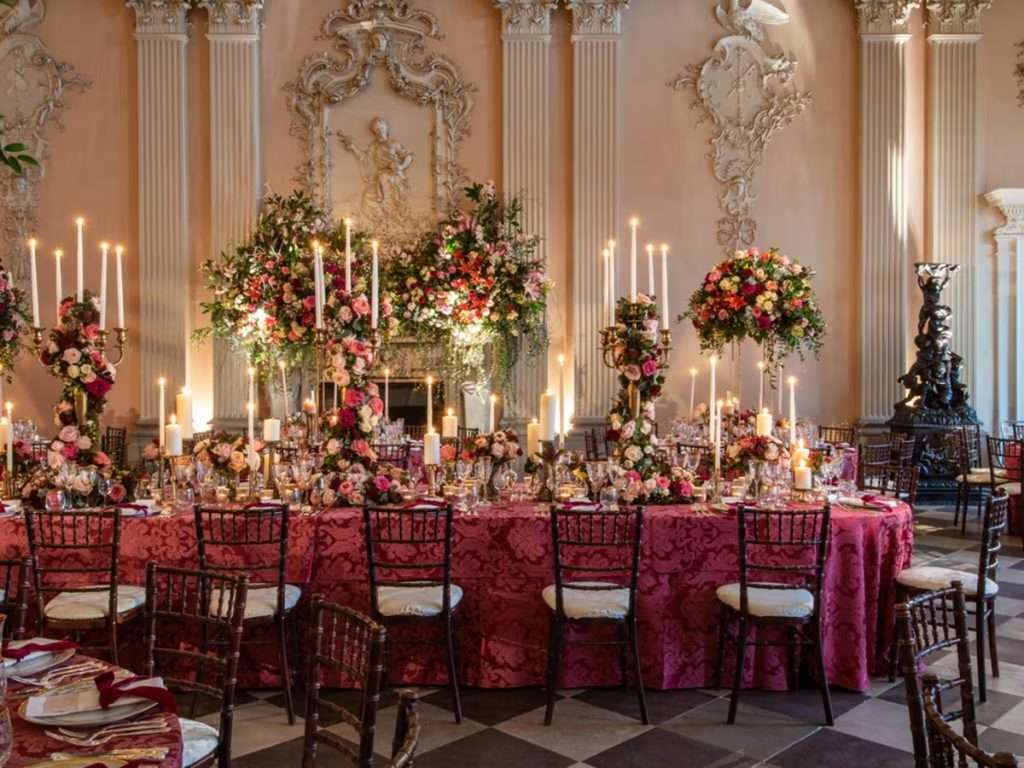
- The Grand Drop (30 cm to Floor Length): This transforms the presence of the table entirely. The textile becomes a structural element, anchoring the furniture and covering the table legs. Extending the drape all the way to the floor delivers a highly sought-after look of dramatic luxury, making it the preferred choice for high-end hospitality, formal galas, and bespoke interior commissions.
When Standard Retail Sizes Fall Short
 In practice, off-the-shelf tablecloth sizes rarely align with the character of a unique residential space or the exacting requirements of a bespoke event venue. Finding a premium, large linen tablecloth in the correct size – whether a grand banquet rectangular, oversized square, round, or oval – with a perfectly calculated drop is an arduous task.
The more specific your aesthetic – whether you are dressing a minimalist contemporary room, a rustic country estate, or a classical dining space – the more limited mass-market options become. Most commercial luxury linens are cut to rigid, standardised dimensions, leaving those with irregular, extra-long, or unusually wide tables without a solution. Antique dining tables, extendable tables, or custom-built event pieces do not follow uniform retail guidelines and demand a precise, tailored fit.
In these instances, a bespoke tablecloth is the only practical path forward. Rather than forcing your dining room or event venue to conform to standard store measurements, a made-to-measure cloth allows the textile to adapt seamlessly to your furniture.
You can explore these tailored options through the AllÓRA Bespoke Linen Tablecloths Service.
A tailored tablecloth allows you to adjust the drop down to the exact centimetre on all four sides. It accommodates massive or complex geometries, covering them flawlessly so you can select premium artisan textiles without compromising on the fit.
Fabric Behaviour: How Linen Dictates the Drape
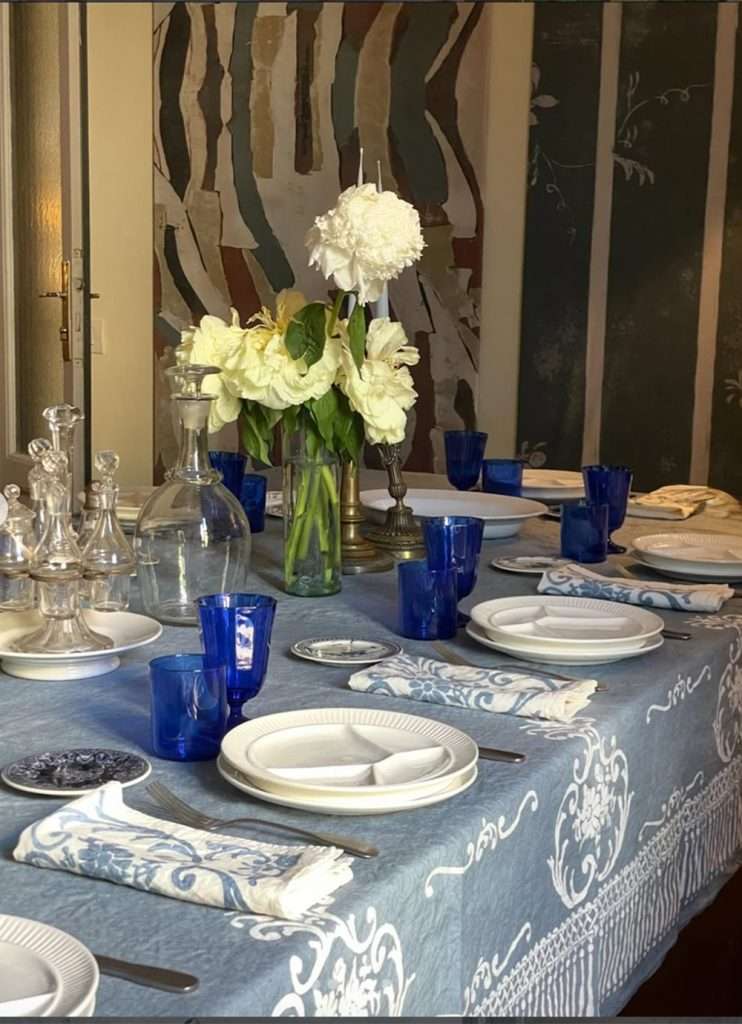
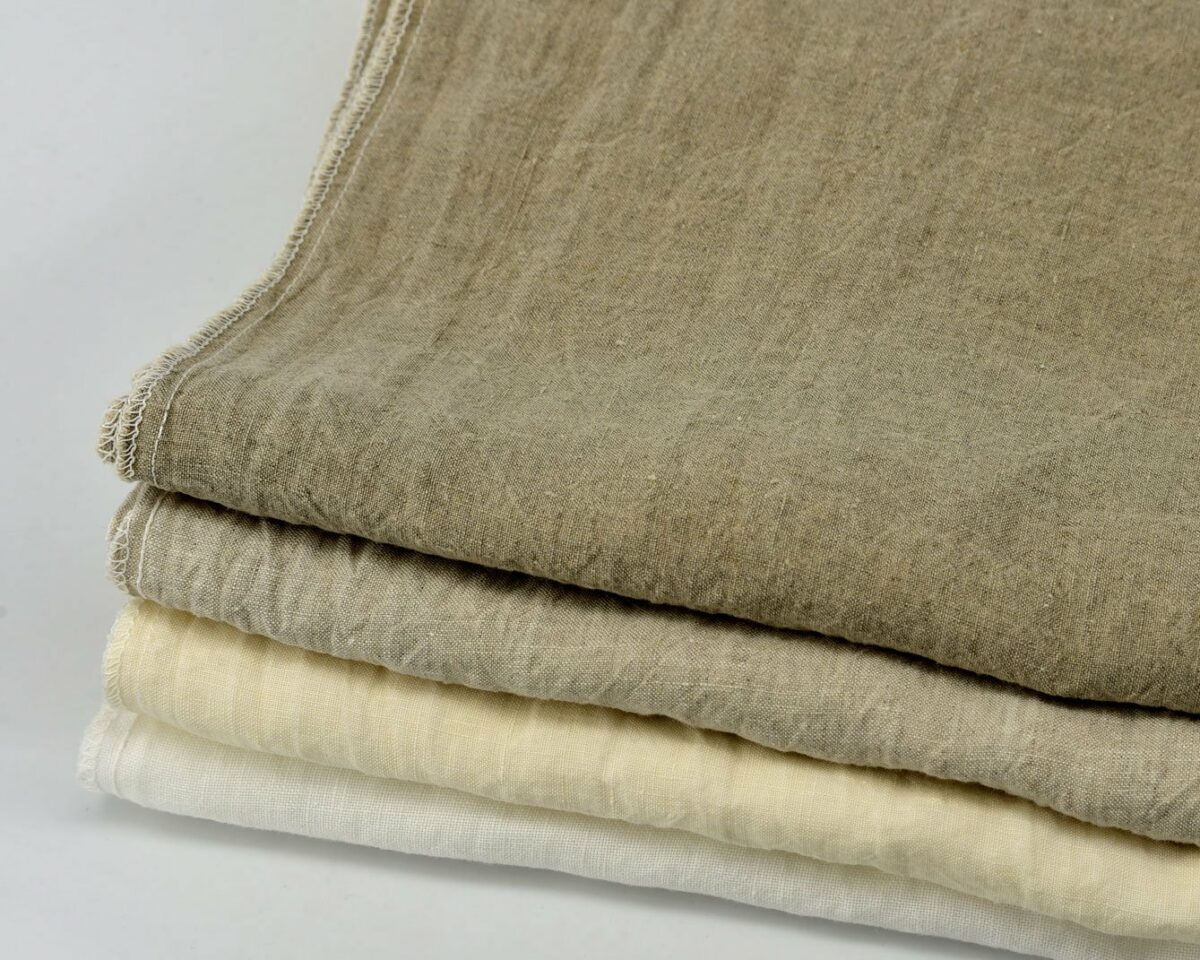
Pure flax linen is the most versatile and adaptive textile for large, long tablecloths, as well as for less common geometries like round and oval shapes. It moves confidently between two distinct styles, making it an indispensable asset for interior designers and event organisers alike. When crisply ironed, heavy-weight linen achieves a flat, flawless drape that feels stately, formal, and exclusive – ideal for large-scale rectangular banquet settings. Alternatively, when stone-washed, it reveals a relaxed, beautifully draped lived-in look that feels casual yet retains an unmistakable sense of understated luxury across square and curved layouts.
Traditional Italian production methods, utilising shuttle looms, give the fabric an inherent memory and substantial body. This structural integrity ensures that the tablecloth retains its calculated dimensions over years of domestic use, high-turnover event wear, and repeated laundering. Over time, high-quality linen relaxes and develops a soft, supple patina, yet it never loses its original tensile strength or tailored silhouette. This longevity makes it a reliable investment for a private home or an event inventory.
Designing for Scale and Proportion
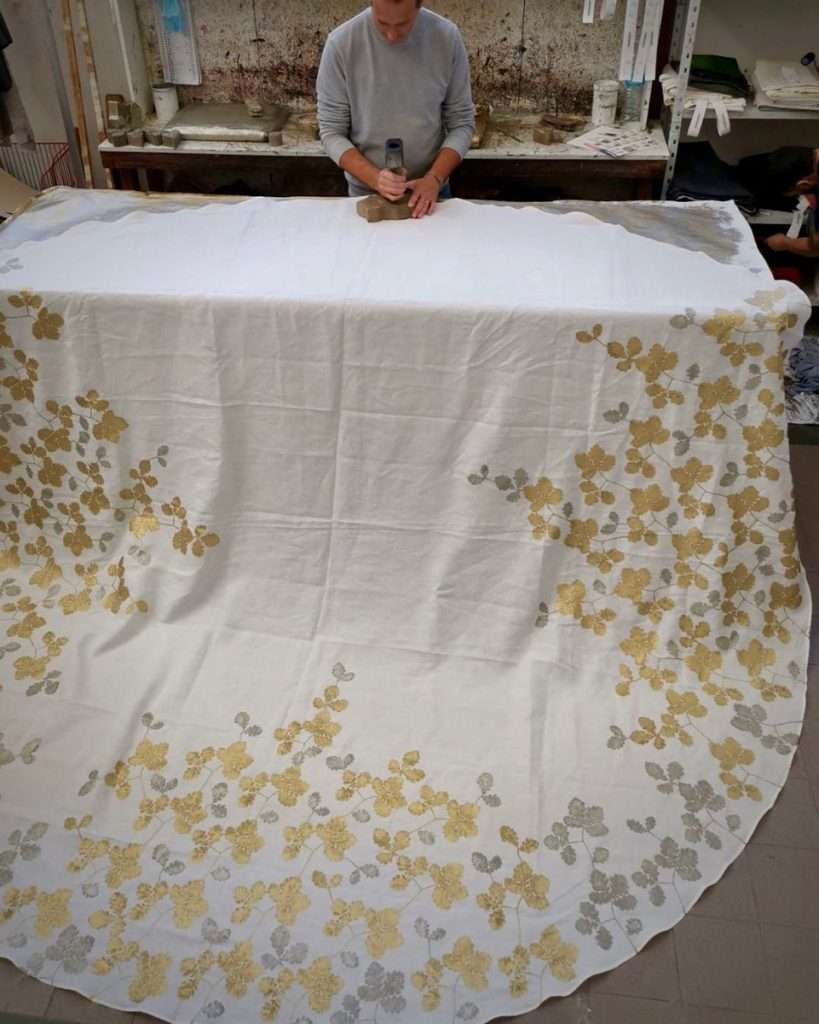
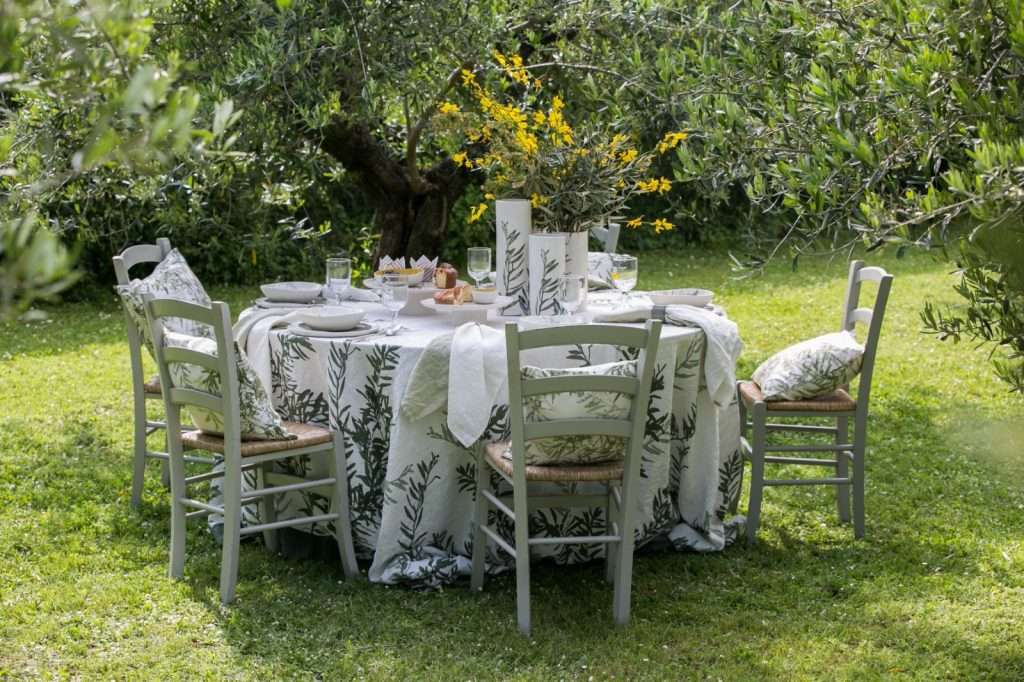
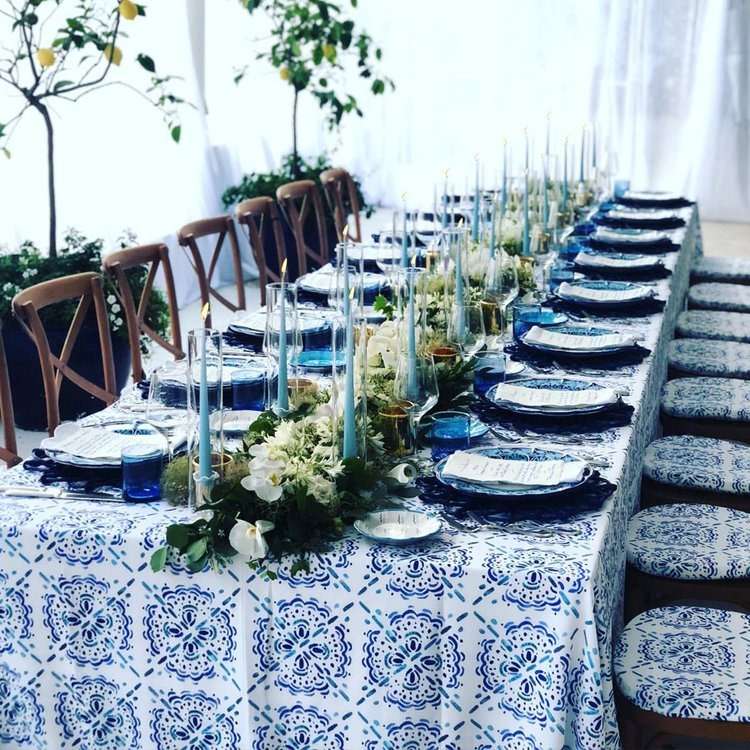
While single-colour linens remain a design classic, dressing a sweeping rectangular banquet or an unusually shaped table offers an opportunity to work with strategic pattern layouts that complement the room’s aesthetic and proportions. On an extra-long dining table, specific configurations work exceptionally well to break up a vast expanse of fabric without cluttering the space. A hand-painted centre border anchors the surface beautifully, while woodblock-printed stripes draw the eye down the length of long rectangular tables, emphasising the room’s perspective. For a more organic aesthetic, flowing floral motifs or leafy designs bring movement and grace to large-scale tables.
Through a bespoke service, you gain access to an expansive library of artisan designs suited for any interior style or special occasion. Rather than settling for a repetitive, generic machine print, these hand-carved blocks and painted motifs can be artfully laid out and scaled to match the exact shape and size of your tablecloth, ensuring the pattern aligns perfectly with the edges and drop of your specific furniture.
For a broader perspective on selecting textures and themes for different settings, read our guide on how to choose the right linen tablecloth for your dining space.
Conclusion
A linen tablecloth is never a mere accessory; it creates the canvas upon which an entire dining experience is built. Its size, shape, and drop determine how a table is perceived and how the space functions during a gathering. Understanding how geometry alters the perimeter of a room, how large scales interact with fabric weight, and how a calculated drop impacts guest comfort allows you to design your home or venue with confidence. Where standard options fall short, a bespoke approach provides a seamless solution, ensuring your textiles match your table with absolute precision. By aligning shape, size, material capability, and perfectly proportioned motifs, you create a balanced foundation that elevates the entire room.
Frequently Asked Questions (FAQ)
Q: How do you measure an oval table for a tablecloth?
A: Measure the absolute longest axis (length) and the widest axis (width) across the centre of the tabletop. Then, add double your desired drop length to both dimensions. For instance, an oval table measuring 200 cm x 100 cm requiring an elegant 30 cm drop will need a finished tablecloth size of 260 cm x 160 cm.
Q: What is the correct tablecloth drop for a formal dinner or event?
A: The traditional standard for formal residential dining is a drop of 25 – 30 cm. This frames the furniture beautifully while keeping the linen clear of guests’ knees. For high-end events, weddings, and galas, a dramatic floor-length drape is preferred to anchor the room and completely conceal the underlying framework.
Q: Why do rectangular tablecloths look wrong on oval tables?
A: When a rectangular cloth is placed over an oval perimeter, the fabric at the corners loses its baseline support. Without the table edge to hold its weight, the excess material pulls downward into heavy, uneven points, causing the entire hemline to sag and distort the symmetry of your floor plan.
Q: How do you care for and iron a very large linen tablecloth?
A: Care depends entirely on the finish of your linen. For a crisp, formal look, the fabric should be ironed while noticeably damp using high heat and plenty of steam. Alternatively, stonewashed linen requires minimal effort; it should simply be tumble-dried or line-dried to preserve its relaxed, lived-in texture without any ironing at all. For extra-long banquet cloths, professional laundering ensures the fabric retains its tailored silhouette over years of use.