

News
The Art of Preservation: Caring for Hand-painted and Artisan Linens
Jun
Investing in masterfully crafted heritage tableware brings a distinct material history to the dining room. Whether it is the singular brushstrokes of an individually hand-painted tablecloth or the geometric alignment of a hand-stamped block print, these textiles function as structural focal points for the table.
However, for many collectors, the initial pleasure of acquiring these pieces is accompanied by a distinct hesitation when it comes to laundering. The fear that a standard washing cycle might degrade the artwork, dull the pigments, or warp handmade perimeters often leads to fine linens being kept tucked away in drawers, reserved only for the rarest of occasions.
True luxury textiles are inherently resilient. When woven from premium natural flax and cotton fibres, they respond beautifully to laundering, provided the care protocol is grounded in a technical understanding of the fabric. By following a precise preservation method, you ensure that these artisanal objects do not merely survive daily use, but actively improve in texture, drape, and character over decades.
The Science Behind Artisanal Dyes and Fixed Pigments
To care for hand-painted and hand-printed linens confidently, one must first understand how the artwork is permanently bound to the fabric. On mass-produced digital prints, ink sits merely as a superficial film on top of the threads, making it highly susceptible to fading, cracking, and friction damage within the drum of a washing machine.
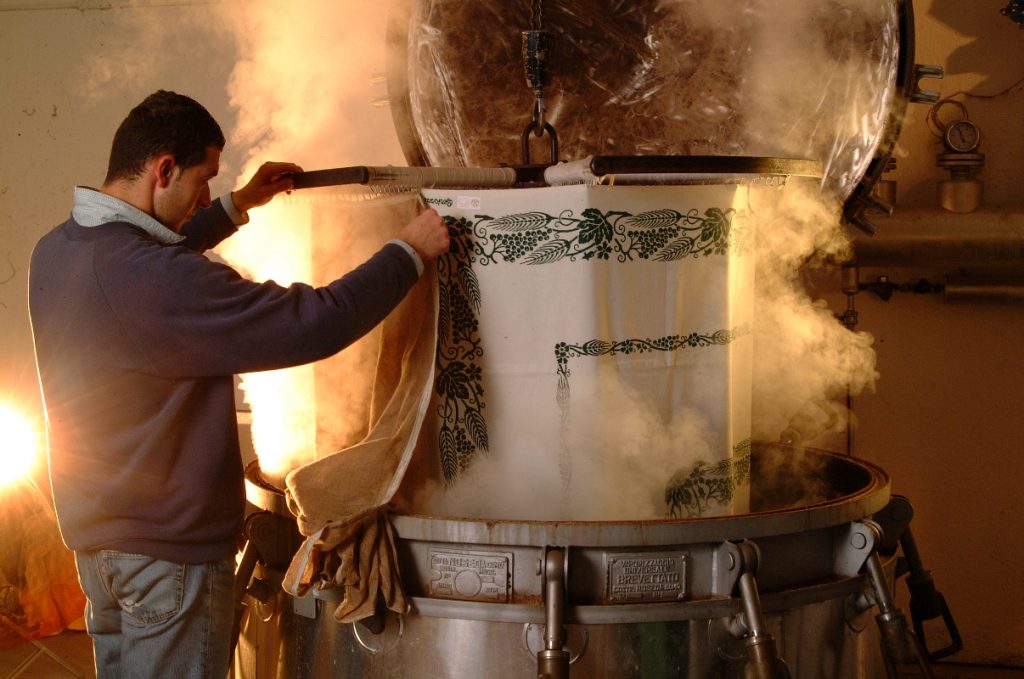
In contrast, a traditional stamperia (print workshop) like Stamperia Bertozzi utilises traditional fixing processes that fundamentally alter the state of the textile. Master artisans apply natural pigments using hand-carved pear wood blocks or fine brushes directly onto pure, premium loomed fibres. The fabric then undergoes a specialised steam and heat-fixation process.
This thermal treatment forces the dye molecules to interlock directly with the cellular structure of the natural yarn matrix. The artwork ceases to be a surface decoration; it becomes a physical component of the yarn itself. Because the pigments are chemically bound within the core of the fibres, they resist bleeding and fading, allowing the intricate designs to maintain their visual clarity through years of laundering.
Technical Washing Protocols: Temperature and Fibre Variations
Because different artisanal techniques alter the structure of textiles in distinct ways, a generic “one-size-fits-all” laundry setting will not suffice. Your washing protocol must adapt to the specific construction and embellishment of the cloth.
Hand-Stamped Block Prints (The 60°C Standard)
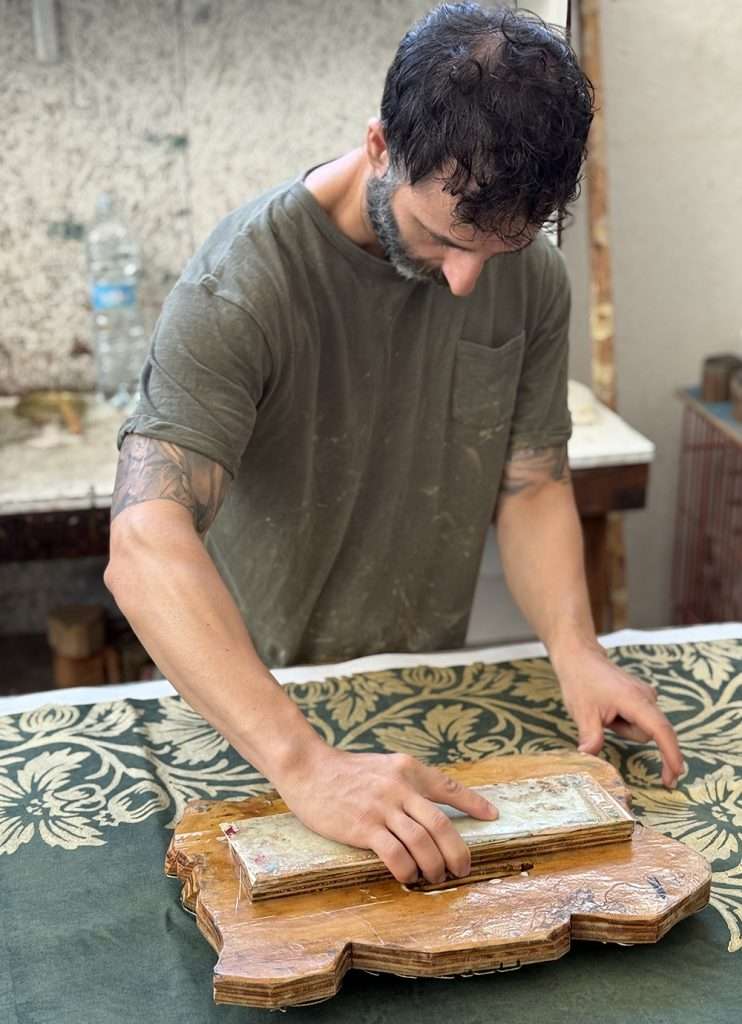
Due to the exceptional durability of the Stamperia Bertozzi heat-fixing methodology, their hand-printed pure linen collections possess remarkable thermal resistance. For these specific pieces, machine washing at up to 60°C is not only safe, but highly effective.
Washing at this higher temperature allows the linen fibres to fully relax, releasing embedded organic oils and culinary stains efficiently without compromising the intensity of the fixed mineral dyes. It is a testament to the structural integrity of traditional craftsmanship that these hand-worked designs easily endure temperatures that would ruin standard commercial prints.
Delicate Hemstitched and Woven Borders (The 30°C–40°C Rule)
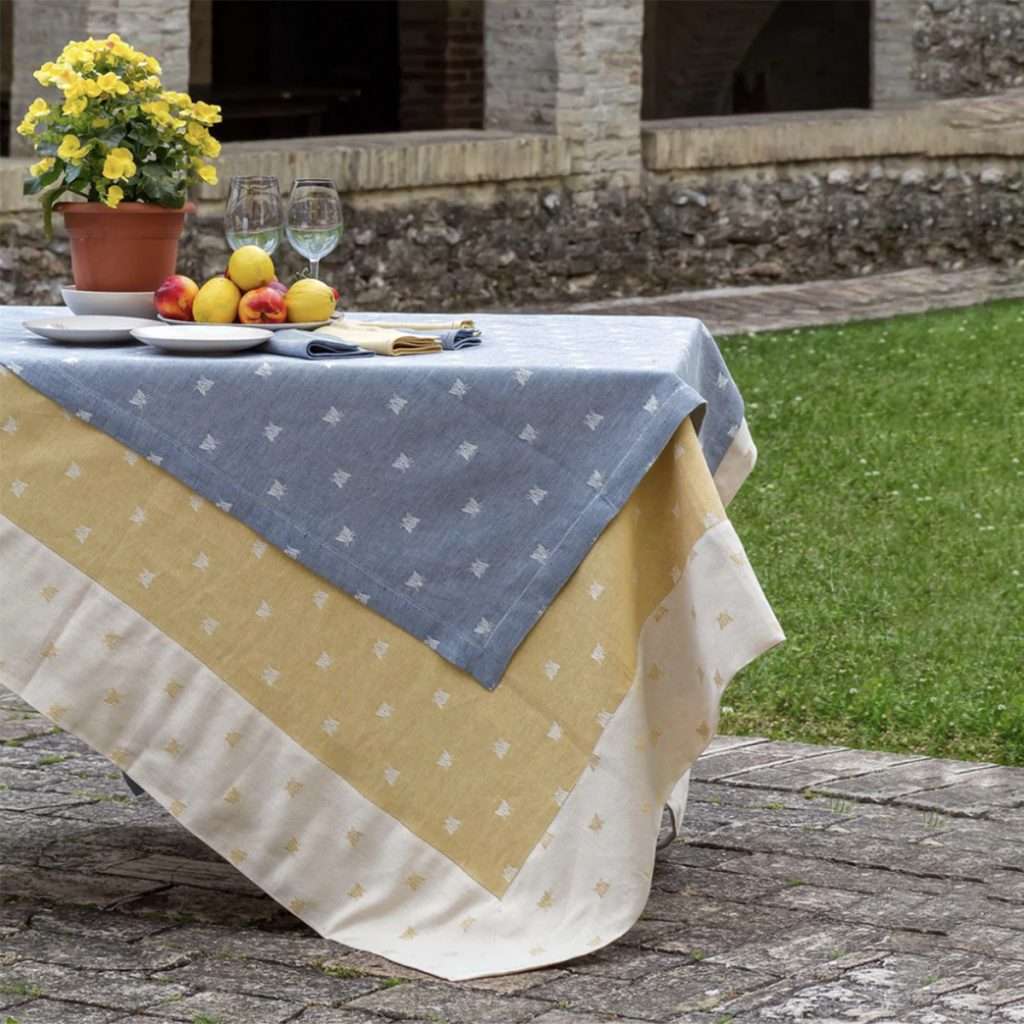
While the pigments themselves are highly resilient, the physical construction of a tablecloth often requires a gentler mechanical approach. Collections featuring intricate Jacquard weaves or traditional open-thread hemstitched borders must be treated with structural caution.

Hemstitching involves the deliberate pulling and binding of warp and weft threads to create a delicate, decorative frame along the outer edges. High temperatures combined with aggressive mechanical agitation can cause these fine, exposed threads to contract unevenly, leading to a warped or puckered perimeter.
For any linen or linen-blend tablecloth finished with a hemstitched border, restrict the washing temperature to a maximum of 30°C or 40°C. Select a gentle or medium cycle and manually cap the spin speed at 800 RPM. This reduces the centrifugal pull inside the drum, protecting the tension of the border and ensuring the cloth maintains a perfectly straight, tailored drop around the sides of the table.
Hand-painted and Hand-Printed Metallic Collections (The Acrylic Base Protocol)
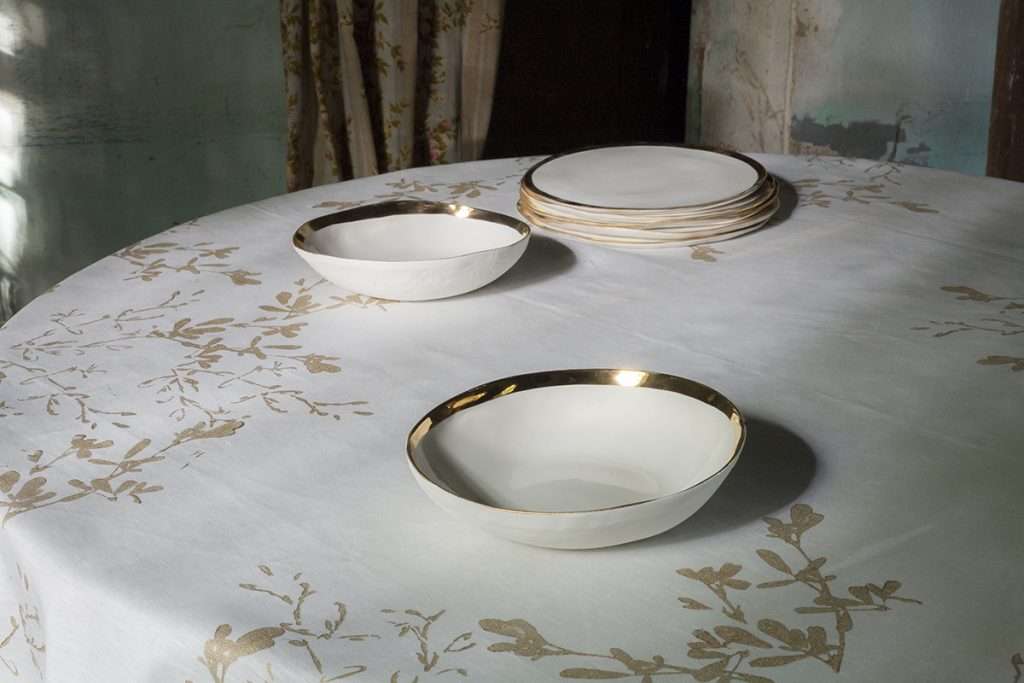
For avant-garde pieces featuring hand-painted or hand-printed artwork in metallic Gold and Silver colourways, the care strategy pivots to protect the specialized acrylic base pigments. Unlike standard mineral dyes, these metallic formulations require a careful balance of temperature control and mechanical action to maintain their radiant, reflective lustre.
To preserve the brilliance of the metallic strokes, wash these tablecloths at a maximum temperature of 30°C using mild, gentle soaps. Crucially, avoid using a gentle or delicate wash cycle; standard mechanical agitation is preferred to prevent the fabric from sitting in pooled water, but the thermal limit must be strictly observed. Professional dry cleaning must be entirely avoided, as the harsh chemical solvents used in the process can dissolve the acrylic binders and strip the metallic sheen. When it comes to pressing, always perform your ironing ritual entirely on the reverse side of the cloth to prevent direct heat from compromising the delicate metallic surface.
Detergent Selection and the Chemical Risk
The choice of detergent is just as critical as the water temperature. Standard supermarket laundry powders frequently contain optical brighteners and bleaching agents designed to artificially whiten fabrics. When applied to natural textiles, these chemicals are highly destructive. Optical brighteners leave a chemical residue that alters the natural, cream tones of flax and can permanently shift subtle dyed shades, such as sage greens or pale mineral blues. Furthermore, powder detergents contain undissolved abrasive granules that physically scour the fabric, wearing down fine hand-stamped details over time.
Always employ a mild, neutral liquid detergent specifically formulated for delicate natural fibres. Ensure it is entirely free of chlorine, optical brighteners, and enzymes. Liquid detergents dissolve instantly and rinse away completely, leaving the natural fibres clean, breathable, and unburdened by chemical build-up.
The Drying and Reverse-Ironing Ritual
The preservation process extends well past the wash cycle. For traditional, smooth-finished linens, intense heat is the enemy of fibre stability, meaning standard high-heat tumble drying should be avoided. Excessive machine heat dehydrates the core of the flax fibre, making it brittle and causing uneven shrinkage along hemmed boundaries.
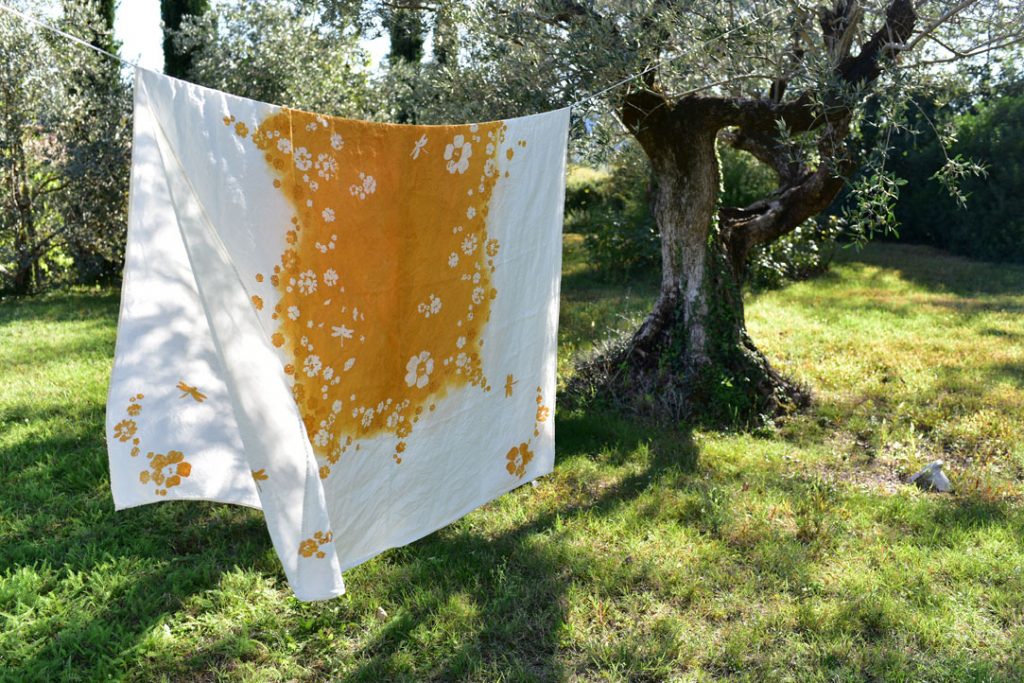
Instead, remove the linen from the washing machine immediately after the cycle ends. Give the fabric a firm shake to release deep creases, reshape the outer edges manually, and line dry the piece flat, away from direct, midday sunlight to prevent uneven UV fading.
The Relaxed Variant: Stone-Washed Linen
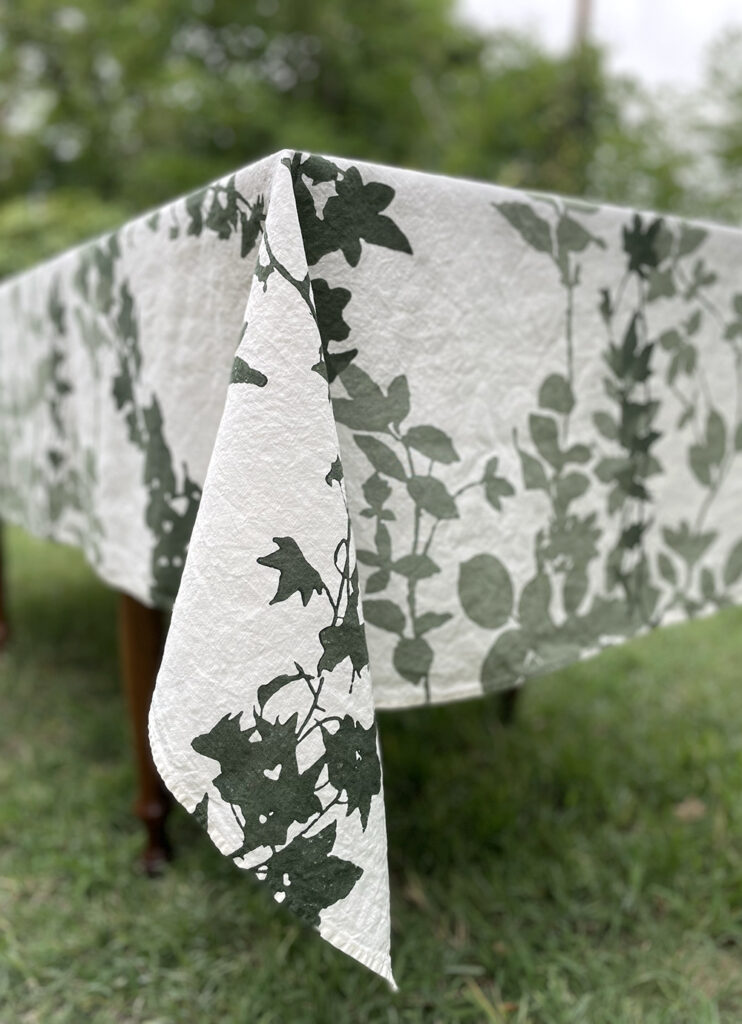
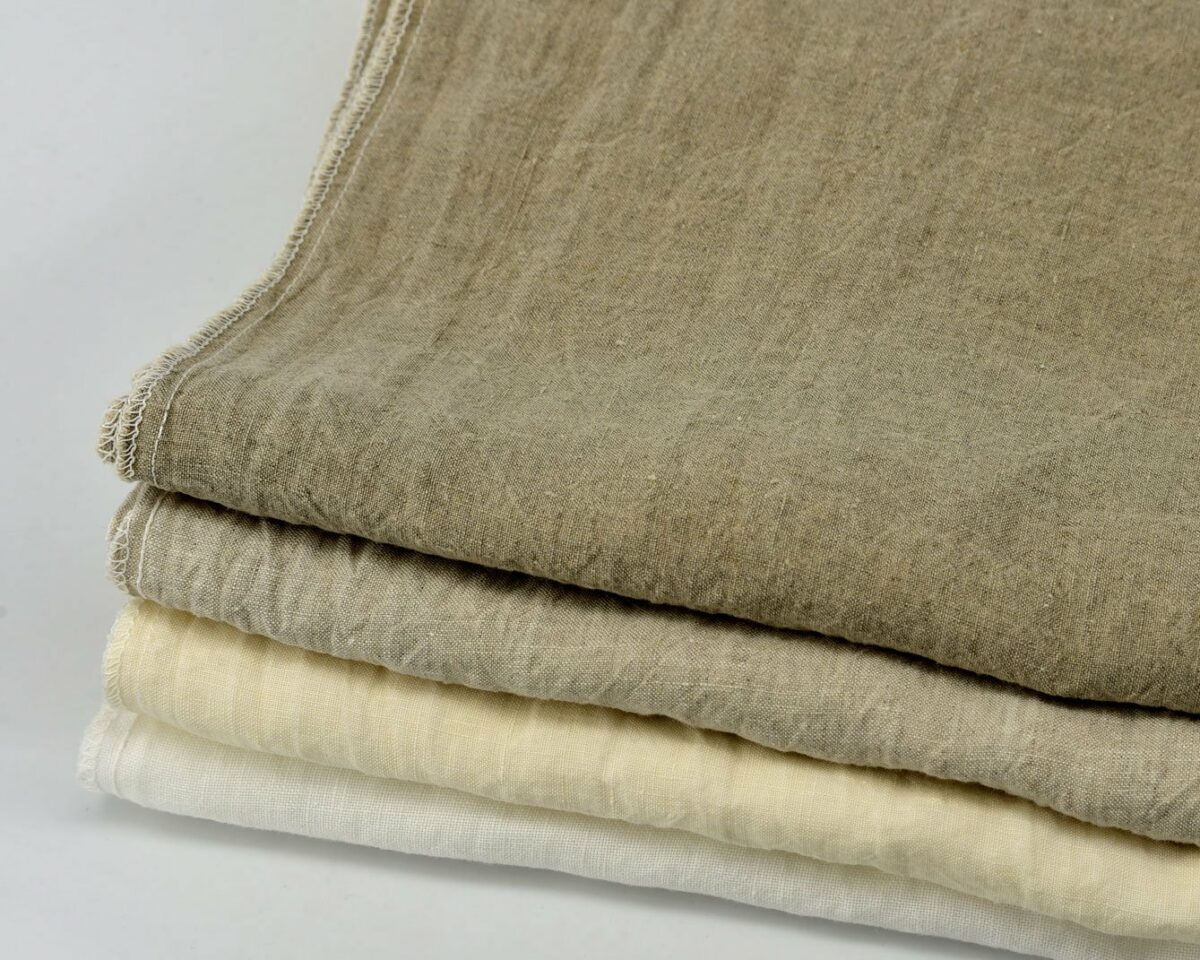
If your collection includes stone-washed linens by Stamperia Bertozzi, the care protocol adapts to preserve their distinctive, relaxed texture. To maintain the signature creased effect, these pieces can either be dried naturally on a line or tumbled gently on a low-heat setting. Once dry, do not iron the main body of the cloth; instead, pass a gentle iron solely along the edges to flatten the hems while keeping the beautifully rumpled character of the central fabric intact.
The Traditional Ironing Method
For smooth linens, pressing is the final step that restores the fabric’s natural lustre and weight:
- The Moisture Factor:Never iron bone-dry linen. For the best result, press the fabric while it is still significantly damp. If the tablecloth has dried completely, use a clean spray bottle to mist the surface evenly with water until it feels supple.
- The Reverse Method:Always place the tablecloth face down, pressing entirely on the reverse side. This prevents the direct heat of the iron plate from glazing hand-painted brushstrokes or flattening the raised texture of a Jacquard weave.
- The Technique:Use a high heat setting with heavy steam, moving the iron smoothly parallel to the grain of the weave. This relaxes the fibres entirely, leaving a smooth finish with a beautiful, heavy drape over the table corners.
A Foundation for Generations
Unlike mass-produced commercial alternatives that degrade with every encounter with water, masterfully spun natural textiles are designed to evolve. These balanced natural fibres possess an inherent longevity; with proper care, laundering actually accelerates the softening process, making the linen increasingly supple, rich, and tactile over time, developing a beautiful patina of use.
By employing these precise preservation steps, you protect both the physical structure and the artistic integrity of your collection. Your table linens cease to be items kept in storage out of caution, becoming reliable foundations for daily meals and formal gatherings alike—growing more beautiful with every single wash.
Frequently Asked Questions
Will washing my hand-printed or hand-painted linen cause the colours to bleed onto the white background?
No. Because the pigments used by workshops like Stamperia Bertozzi are set using a deep thermal steam-fixation process, the dye molecules are chemically fused within the core of the fibres. They do not sit superficially on the surface, meaning they will not bleed or run into the surrounding fabric during a correct wash cycle.
Can I use a starch spray to get a crisp finish on my table linens?
While commercial spray starch provides a temporary crispness, it can leave a synthetic coating that attracts dust and weakens natural fibres over time. For a traditional, elegant body and lustre, we recommend ironing the linen while it is still distinctly damp, using a high-steam setting on the reverse side of the fabric.
How do I store luxury linens to prevent permanent creasing or yellowing?
Store your linens flat or gently rolled in a dark, well-ventilated cupboard. Avoid plastic storage boxes or zipped bags, which trap moisture and cause natural fibres to turn yellow. Always ensure the linen is completely dry before storing to prevent mildew.